Podocarpus lawrencei
Hook. f.
Mountain Plum Pine
iNaturalist· cc-by
(c) Nina Kerr, some rights reserved (CC BY)
iNaturalist· cc-by
(c) Nina Kerr, some rights reserved (CC BY)
iNaturalist· cc-by
(c) Nina Kerr, some rights reserved (CC BY)
Summary
Source: WikipediaPodocarpus lawrencei is a species of podocarp native throughout the Australian high country, from southern Tasmania through to the New South Wales highlands. Common names are Errinundra plum-pine and mountain plum-pine (though it is neither a pine nor a plum). It grows on exposed sites to 1,800 m, often forming living carpets over rocks through wind pruning. Mountain plum-pine can live up to 600 years, and the growth rings vary with the temperature of the growing season, with narrower rings indicating unusually snowy years. These factors make it useful for determining past climate conditions in the Australian Alps.
Description
A low growing pine. It grows 0.4-4 m high and spreads 1-3 m wide. It is small and gnarled. Young growth is pale green and has a waxy layer. The branches can lie along the ground. It becomes taller in sheltered sites. The small branches are ribbed. The leaves are small, closely packed and blue-green. They are 0.5-1.5 cm long by 0.15-0.4 cm wide. They are alternate. They are deep green above and paler underneath. The male cones are about 0.4 cm long. They can occur singly or in clusters. They are cylinder shaped and pink or purple. The female cones are in the axils of leaves and do not have stalks. The fruit are bright red. They are succulent. Several different forms of this plant exist.
Edible Uses
The fruit can be eaten raw or cooked. It is on the small side — measuring about 6 x 5mm — but has a pleasant, slightly sweet flavour and a mucilaginous texture.
Traditional Uses
The fruit are eaten.
This uses section is brief — help expand it
Medicinal Uses
None known.
Known Hazards
Superficially similar to Taxus species, but this plant is definitely not poisonous.
Distribution
It is a temperate plant. It grows in alpine regions. It grows above 1000 m altitude. They need well drained acid soil. They can tolerate frost and snow. They can withstand strong winds. Often it grows on rocky scree slopes. Hobart Botanical gardens. Melbourne Botanical Gardens. It suits hardiness zones 7-10. Tasmania Herbarium. Arboretum Tasmania.
Where It Grows
Australia*, New Zealand, Tasmania*,
Cultivation
Prefers a rich moist non-alkaline soil. Grows best in sheltered areas with a humid climate. Plants in this genus are notably resistant to honey fungus. There is some confusion over this species, the Flora of Australia says that it is endemic to Australia, whilst our other records say that it is a New Zealand plant. Dioecious. Male and female plants must be grown if seed is required.
Propagation
Seed can be sown at any time of year in sandy soil in a warm greenhouse, though sowing as soon as it is ripe is ideal. Prick seedlings into individual pots once large enough to handle and grow them on in the greenhouse for at least their first winter. Plant out into permanent positions in late spring or early summer, after the last expected frosts. Cuttings of half-ripe terminal shoots, 5–10cm long, can be taken in July or August and rooted in a frame.
Other Uses
None known.
Production
It is slow growing.
Notes
There are about 100 Podocarpus species. They are mostly in the tropics and subtropics.
References (15)
- Bodkin, F., 1991, Encyclopedia Botanica. Cornstalk publishing, p 814
- Codd, P., Payne, B. & Woolcock, C., 1998, The Plant Life of Kosciusko. Kangaroo Press. p 54
- Cundall, P., (ed.), 2004, Gardening Australia: flora: the gardener's bible. ABC Books. p 1064
- Elliot, W.R., & Jones, D.L., 1997, Encyclopedia of Australian Plants suitable for cultivation. Vol 7. Lothian. p 395 (Photo)
- Hibbert, M., 2002, The Aussie Plant Finder 2002, Florilegium. p 237
Show all 15 references Hide references
- Holliday, I., 1989, A Field Guide to Australian Trees. Hamlyn. p 288
- London. J. Bot. 4:151. 1845
- Kirkpatrick, J., 1997, Alpine Tasmania, An Illustrated guide to the flora and vegetation. Oxford, p 20
- Lord, E.E., & Willis, J.H., 1999, Shrubs and Trees for Australian gardens. Lothian. p 88
- Low, T., 1992, Bush Tucker. Australia’s Wild Food Harvest. Angus & Robertson. p 44, 45
- Ratcliffe D & P., 1987, Australian Native Plants for Indoors. Little Hills press. p 118
- Ryan, S., 2008, Dicksonia. Rare Plants Manual. Hyland House. p 70
- Salmon, J.T., 1989, The Native Trees of New Zealand. Heinmann Reid p 62 (As Podocarpus lawrencii)
- Tasmanian Herbarium Vascular Plants list p 94
- Whiting, J. et al, 2004, Tasmania's Natural Flora. Tasmania's Natural Flora Editorial Committee PO Box 194, Ulverstone, Tasmania, Australia 7315 p 12
More from Podocarpaceae
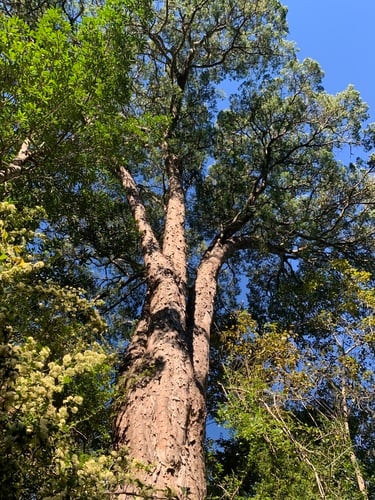
Afrocarpus falcatus
East African Yellowwood, Common Yellow Wood
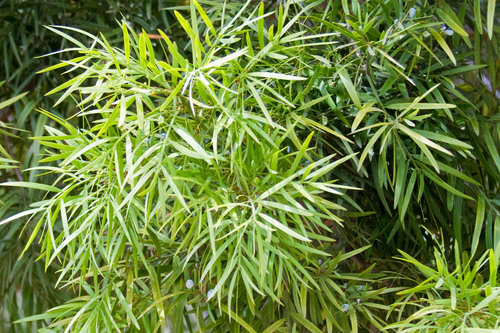
Afrocarpus gracilior
African fern pine, East African yellowwood
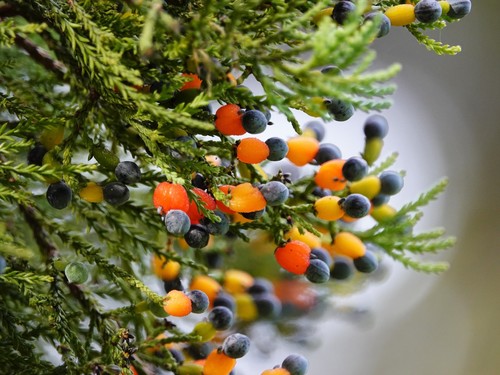
Dacrycarpus dacrydioides
New Zealand white pine
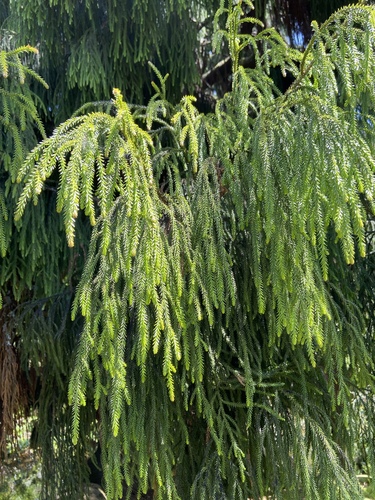
Dacrydium cupressinum
Rimu, New Zealand Red Pine
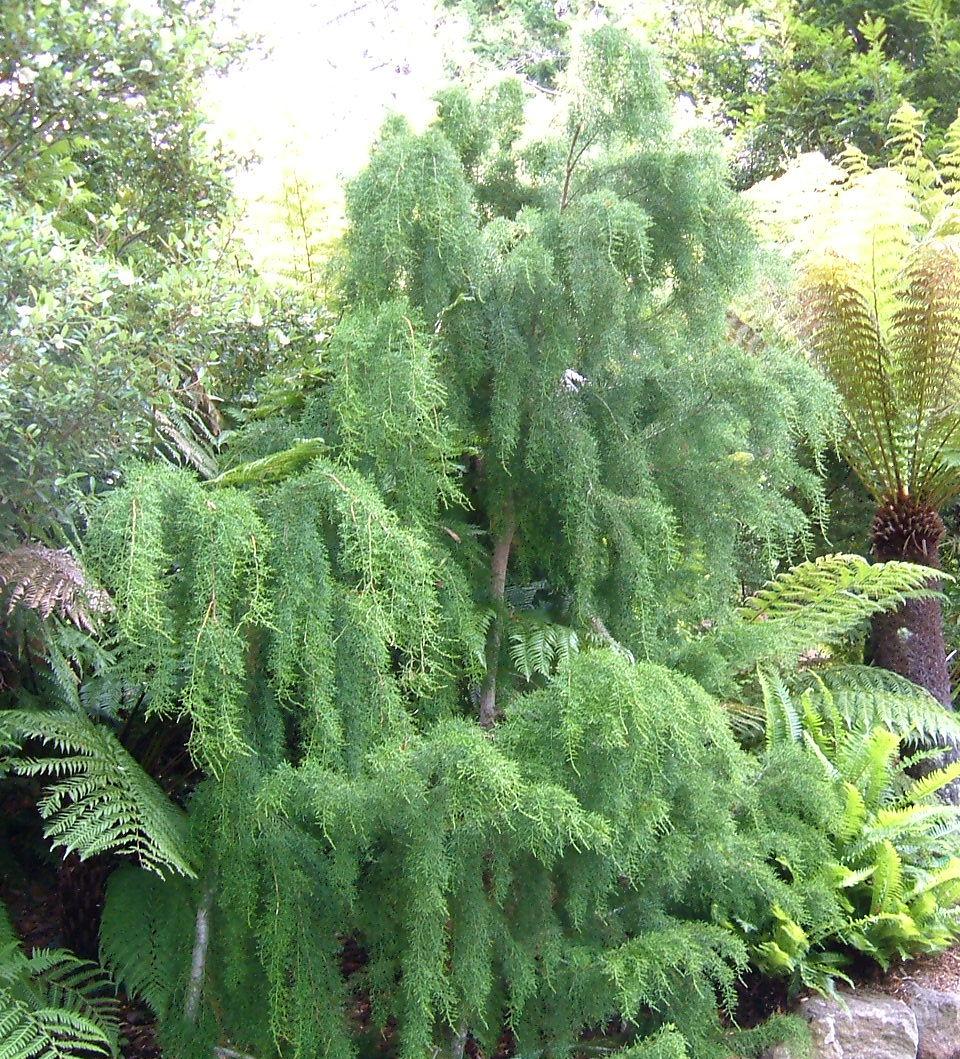
Lagarostrobos franklinii
Huon pine
Lagarostrobus franklinii - (Hook.f.)Quinn.
Huon Pine