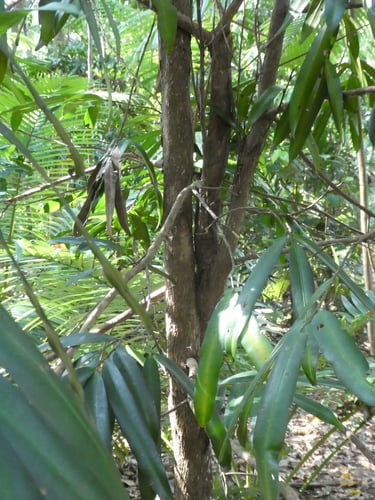
Podocarpus neriifolius
D.Don
Oleander Podocarp, Brown Pine
wikimedia· cc-by
Crusier (via Wikimedia Commons)
wikimedia· cc-by-sa
Menchi (via Wikimedia Commons)
Description
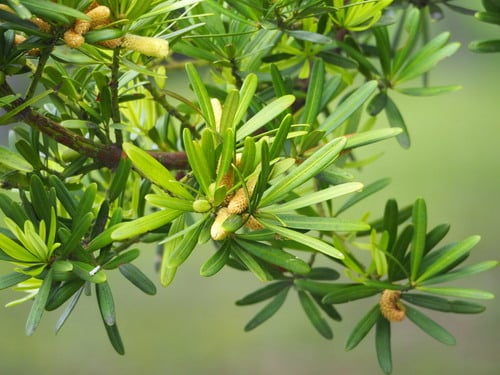
Podocarpus neriifolius is an evergreen Tree growing to 25 m (82ft) by 25 m (82ft) at a medium rate. See above for USDA hardiness. It is hardy to UK zone 10 and is frost tender. The species is dioecious (individual flowers are either male or female, but only one sex is to be found on any one plant so both male and female plants must be grown if seed is required). and is pollinated by Wind. The plant is not self-fertile. Suitable for: light (sandy), medium (loamy) and heavy (clay) soils and prefers well-drained soil. Suitable pH: mildly acid and neutral soils and can grow in very acid and saline soils. It can grow in semi-shade (light woodland) or no shade. It prefers moist soil and can tolerate drought. The plant can tolerates strong winds but not maritime exposure.
Edible Uses
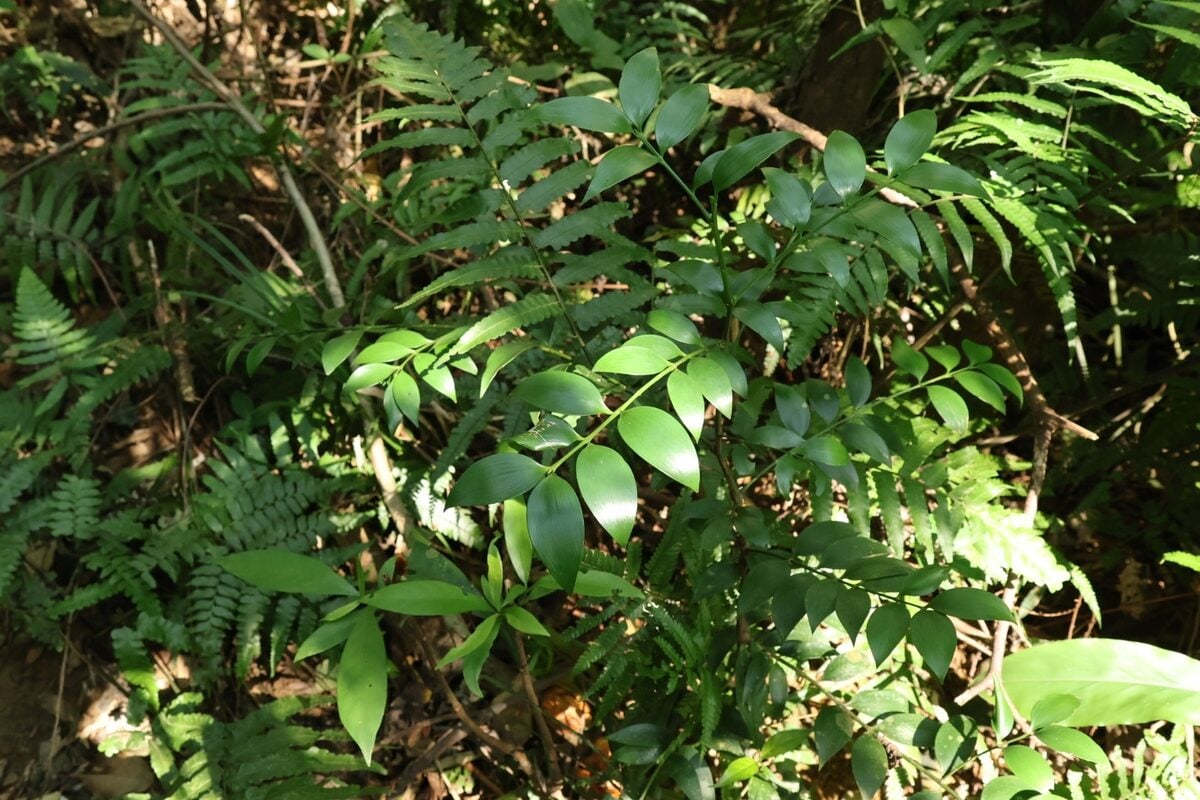
Fruit - raw. The orange-red fruit is about 8 - 10 _ 5 - 8mm.
Medicinal Uses
Antiarthritic AntirheumaticA decoction of the leaves has been used as a treatment for rheumatism and arthritis. The juice from the leaves is prepared as a remedy against maggot infested sores.
Distribution
E. Asia - India, Sikkim, Nepal, Thailand, Laos, Indonesia, Philippines, Papua New Guinea.
Where It Grows
TROPICAL ASIA: India (Sikkim, Assam), Nepal, Indonesia (Papua), Papua New Guinea, Laos, Thailand, Indonesia (Sulawesi, Jawa, Maluku, Sumatera), Philippines
Cultivation
Found in humid subtropical to tropical areas at elevations from around sea level up to 2,100 metres, though its optimum is between 900 - 1,500 metres. It prefers a mean annual rainfall in the range 1,500 - 3,700mm with a uniformly distributed summer rain and up to 5 months of dry season. Optimal temperature range is 25 - 30°c with the coldest months having only between 8 - 24°c. Prefers a position in full sun or bright shade. Plants are shade tolerant, at least when young. Succeeds in a range of soils, preferring fertile, slightly acid conditions. Most species in this genus are tolerant of hard pruning, being able to regrow from old wood. A dioecious species, both male and female forms need to be grown if fruit and seed are required.
Propagation
Seed - generally slow to germinate, taking one year or more. Seeds that have passed through the gut of an animal germinate faster. Seeds have been known to germinate in the dense shade of a woodland. Cuttings should include an erect lead shoot if a good form is required. If side shoots are used, the resulting plant will be prostrate.
Other Uses
Furniture Hedge Paper Wood. Accent. Planter. Specimen. Screening. Topiary. Large Planter. Conservatory. Agroforestry Uses: Plants are tolerant of pruning and can be grown as a large screen. Other Uses The heartwood is greyish yellow or pale brown to golden brown; it is often not clearly demarcated from the paler sapwood. It is fine and even-textured; close and straight-grained, lustrous. The wood is light in weight, fairly hard, not very durable when exposed but resistant to termites and insects. It is easy to saw, but softer boards show a tendency to crumble on end grain; it can be planed, shaped, turned, mortized, and sanded with good results and to a smooth finish; the results of boring are sometimes rated as moderate; generally the wood holds nails well, but large nails may cause some splitting; gluing, staining, varnishing and painting properties are stisfactory. A high quality timber, it is used for general carpentry, boat making, furniture, musical instruments, carvings etc[46 , 266 , 272 , 404 , 598 ]. The wood is pulped for making paper.
Synonyms
Also Known As
Djadjaruman, Lempega, Penejuak, Seluang, Sensarut, Plum pine, Sentada, Jati bukit, Taji, Wuluan, Handalaska, Ki bima, Ki malela, Ki panchar, Ki putri, Ki sereum, Sangching, Thitmin, Mounteak, Halis, Katbhaluka, Jinari, Dieng-sia-blei, Gunsi, Kherewal-tak, Thlang-phari, Dung kung, Welimada, Tu-far, brown pine, mountain teak.