Podocarpus oleifolius
D. Don
iNaturalist· cc-by-nc-sa
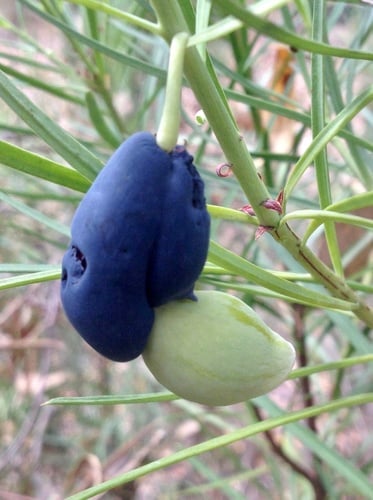
(c) Mateo Hernandez Schmidt, some rights reserved (CC BY-NC-SA), uploaded by Mateo Hernandez Schmidt
iNaturalist· cc-by-nc-sa
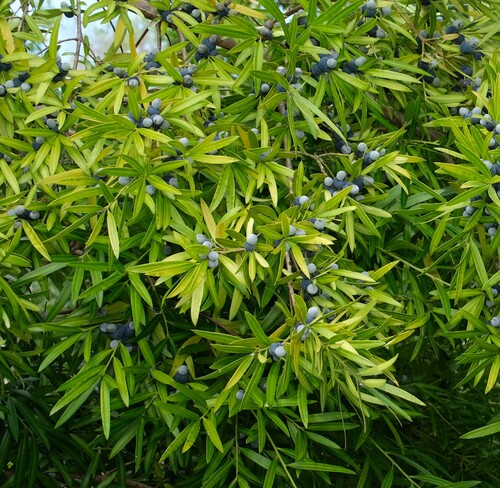
(c) Gabriel Camilo Jaramillo Giraldo, some rights reserved (CC BY-NC-SA)
iNaturalist· cc-by-nc-sa
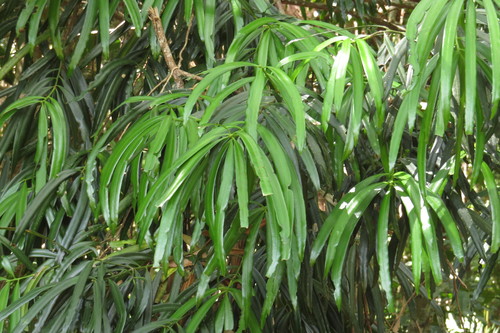
(c) Gabriel Camilo Jaramillo Giraldo, some rights reserved (CC BY-NC-SA)
Summary
Source: WikipediaPodocarpus oleifolius is a species of conifer in the family Podocarpaceae. It is found in Colombia, Costa Rica, Ecuador, El Salvador, Guatemala, Honduras, Mexico, Panama, Peru, and Venezuela. Podocarpus oleifolius contains one subspecies, P. oleifolius subsp. costaricensis, which is considered to encompass all Central American examples of the species.
Description
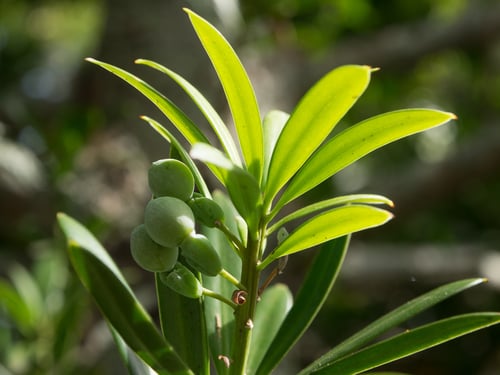
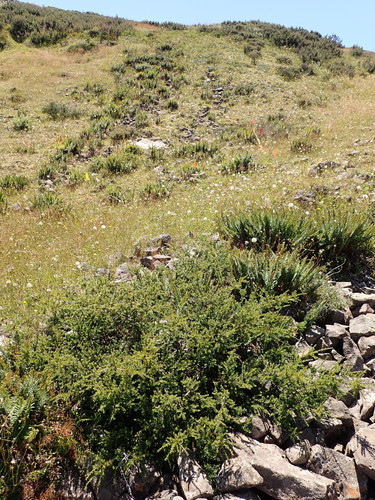
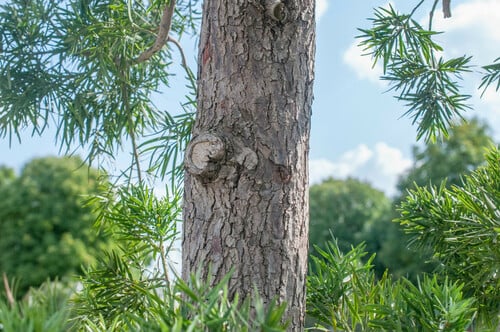
A tree. It grows 20 m tall. The bark is yellow brown. The leaves are narrowly sword shaped and 3-8 cm long by 5-12 mm wide. They can be larger. The cones occur singly in the axils of leaves. They are 3 cm long by 3 mm wide. The seed is oval and 7-8 mm long.
Edible Uses
The fruit is edible.
Distribution
It is a tropical plant. It grows in cloud forests between 2,000-3,200 m above sea level in Guatemala.
Where It Grows
Bolivia, Central America, Colombia, Costa Rica, Ecuador, El Salvador, Guatemala, Honduras, Mexico, Nicaragua, Peru, South America,
Cultivation
Podocarpus oleifolius is a plant of moderate to high elevations in the American tropics. Within its range, the mean annual temperature is 16.8°c, with an average minimum in the coldest month of 10.0°c, and a mean annual precipitation of 1,940mm. It can tolerate short-lived, light frosts with temperatures falling to around -1°c and +4.4°c. Plants are shade tolerant, at least when young. Most species in this genus are tolerant of hard pruning, being able to regrow from old wood. All parts of the plant emit an unpleasant aroma. Species in this genus are generally slow-growing. A dioecious species, both male and female forms need to be grown if fruit and seed are required.
Propagation
Seed - generally slow to germinate, taking one year or more. Seeds that have passed through the gut of an animal germinate faster. Cuttings should include an erect lead shoot if a good form is required. If side shoots are used, the resulting plant will be prostrate.
Other Uses
The yellow wood has a fine, uniform structure and is easy to work. It is used for cabinet work, carving and general carpentry. We do not have any more information on the wood of this species, but a general description of the wood from S. American members of the genus is as follows:- The heartwood is pale yellow to yellowish-brown; it is not distinct from the sapwood. The texture is fine and uniform, without conspicuous zones of latewood; the grain is usually straight but may be slightly interlocked; somewhat lustrous; odour and taste are absent or not distinctive in seasoned wood. The heartwood from trees grown in Belize is reported to be moderately durable in ground contact under tropical exposure; durability of other species from other areas is reported as low. The wood air seasons rapidly with little or no warping or checking. It works easily with hand and power tools; nails easily, and takes stain, varnish, and paint satisfactorily. It is used for purposes such as joinery, millwork, furniture components, boxes and crates, general construction, veneer and plywood, pulp and paper, patternmaking.
Synonyms
Also Known As
Cobola, Pinete, Pino romeron
References (1)
- Kermath, B. M., et al, 2014, Food Plants in the Americas: A survey of the domesticated, cultivated and wild plants used for Human food in North, Central and South America and the Caribbean. On line draft. p 673 (As Podocarpus macrostachys)