Sundacarpus amarus
(Blume) C. N. Page
Black pine
iNaturalist· cc-by-nc
(c) hbexplore, some rights reserved (CC BY-NC), uploaded by hbexplore
iNaturalist· cc-by-nc
(c) hbexplore, some rights reserved (CC BY-NC), uploaded by hbexplore
iNaturalist· cc-by-nc
(c) Rene, some rights reserved (CC BY-NC), uploaded by Rene
Description
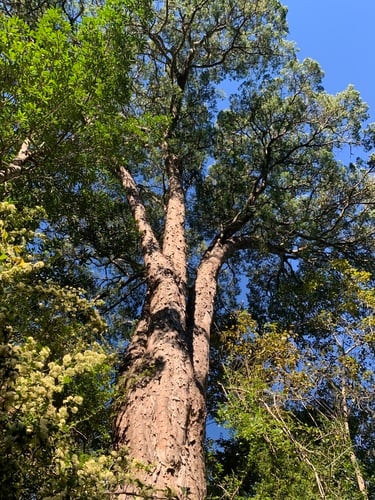
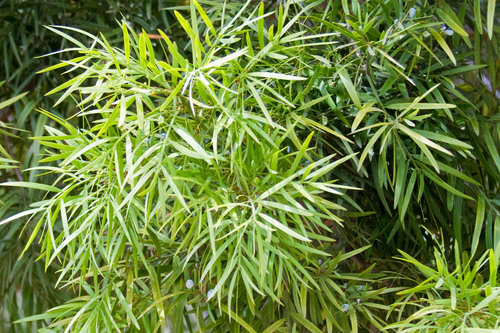
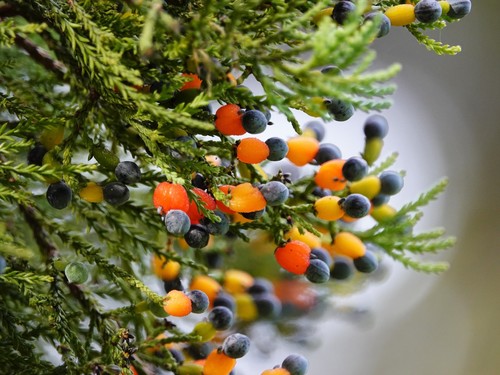
A large tree. It grows 20-40 m tall. The trunk is 1 m across. The crown breaks up into large branches. The young bark is grey and becomes darker with age. It peels off in irregular flakes. The leaves are silvery green. The leaves are alternate and narrow. The leaves are simple and 5-16 cm long. They are smooth. They taper to the tip. They are thin and tough. Male and female flowers are on separate plants. The fruit is a naked seed on a long stalk. It is orange-red. The fruit are 25-35 mm long by 25-30 mm wide. They occur singly or in bunches in the axils of leaves and on the ends of branches. It has a hard brown coat and a thin fleshy layer. The broken shell smells of sweet pine. There is one seed 20-25 mm across and round. The kernel of the seed is edible after prolonged processing.
Edible Uses
The seed is eaten after roasting, crushing, and washing. The kernel is edible after prolonged processing.
Traditional Uses
The seed is eaten after roasting, crushing and washing.
This uses section is brief — help expand it
Distribution
A tropical plant. It grows in mountains between 650-2300 m altitude. It occurs in tropical rainforest in highland regions. It suits hardiness zones 9-12. Arboretum Tasmania.
Where It Grows
Asia, Australia, East Timor, India, Indonesia, Malaysia, Malesia, Myanmar, Pacific, Papua New Guinea, PNG, Philippines, SE Asia, Tasmania, Thailand, Timor-Leste, Vietnam,
Cultivation
Plants can be grown from seeds.
Propagation
Seed - generally slow to germinate, taking one year or more. Seeds that have passed through the gut of an animal germinate faster. Cuttings should include an erect lead shoot if a good form is required. If side shoots are used, the resulting plant will be prostrate.
Other Uses
A fine timber tree, often of large dimension. Easily worked, it is used for boards, posts, beams, joinery and furniture.
Notes
There is only one Sundacarpus species.
Synonyms
Also Known As
Pinus hitam, Pinus merak
References (17)
- Bodkin, F., 1991, Encyclopedia Botanica. Cornstalk publishing, p 814 (As Podocarpus amarus)
- Cherikoff V. & Isaacs, J., The Bush Food Handbook. How to gather, grow, process and cook Australian Wild Foods. Ti Tree Press, Australia p 201 (As Podocarpus amarus)
- Cooper W & Cooper W T, 1994, Fruits of the Rain Forest. RD Press p 236 (As Prumnopitys amara)
- Cooper, W. and Cooper, W., 2004, Fruits of the Australian Tropical Rainforest. Nokomis Editions, Victoria, Australia. p 7
- Cowie, I, 2006, A Survey of Flora and vegetation of the proposed Jaco-Tutuala-Lore National Park. Timor-Lests (East Timor) www.territorystories.nt/gov.au p 52
Show all 17 references Hide references
- Cribb, A.B. & J.W., 1976, Wild Food in Australia, Fontana. p 91 (As Podocarpus amarus)
- Cundall, P., (ed.), 2004, Gardening Australia: flora: the gardener's bible. ABC Books. p 1382
- de Laubenfels, D. J., 1088, Coniferales p 337-453 in Flora Malesiana Series 1 Vol. 10
- Elliot, W.R., & Jones, D.L., 1997, Encyclopedia of Australian Plants suitable for cultivation. Vol 7. Lothian. p 393 and (As Podocarpus amarus)
- Havel, J.J., 1975, Forest Botany, Volume 3 Part 2 Botanical taxonomy. Papua New Guinea Department of Forests, p 10 (As Podocarpus amarus)
- Holliday, I., 1989, A Field Guide to Australian Trees. Hamlyn. p 288 (As Podocarpus amarus)
- Jackes, B.R., 2001, Plants of the Tropics. Rainforest to Heath. An Identification Guide. James Cook University. p 74 (As Podocarpus amarus)
- Jones D, L, 1986, Ornamental Rainforest Plants in Australia, Reed Books, p 241 (As Prumnopitys amara)
- Notes Roy. Bot. Gard. Edinburgh 45:378. 1989 "amara" [ As Sundacarpus amarus)
- Ratcliffe D & P., 1987, Australian Native Plants for Indoors. Little Hills press. p 122 (As Prumnopitys amara)
- Sukarya, D. G., (Ed.) 2013, 3,500 Plant Species of the Botanic Gardens of Indonesia. LIPI p 471
- Townsend, K., 1994, Across the Top. Gardening with Australian Plants in the tropics. Society for Growing Australian Plants, Townsville Branch Inc. p 322 (As Prumnopitys amara)
More from Podocarpaceae
Afrocarpus falcatus
East African Yellowwood, Common Yellow Wood
Afrocarpus gracilior
African fern pine, East African yellowwood
Dacrycarpus dacrydioides
New Zealand white pine
Dacrydium cupressinum
Rimu, New Zealand Red Pine
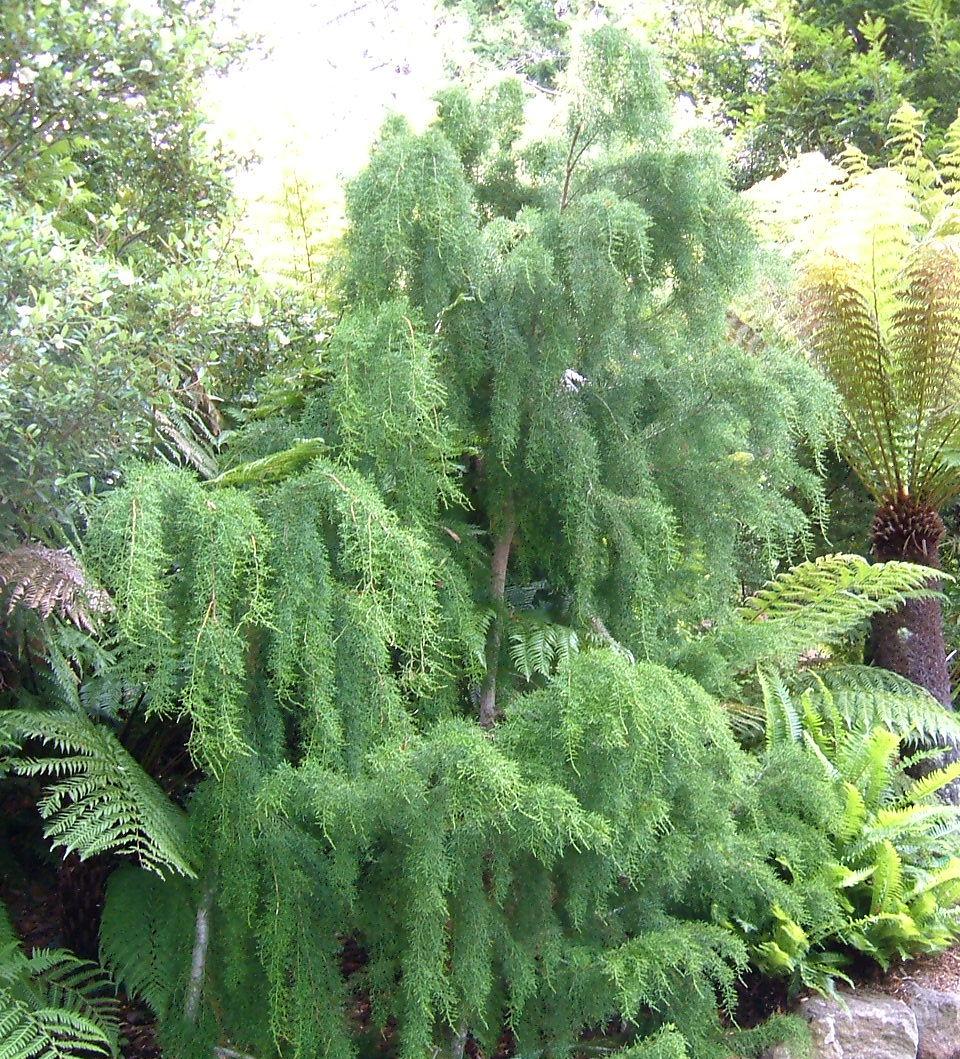
Lagarostrobos franklinii
Huon pine
Lagarostrobus franklinii - (Hook.f.)Quinn.
Huon Pine