Prumnopitys andina
(Poepp. ex Endl.) de Laub.
Plum-fruited yew, Chilean plum yew
iNaturalist· cc-by-nc
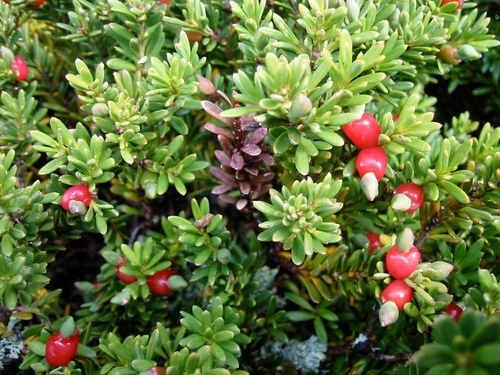
(c) Miguel A. Casado, some rights reserved (CC BY-NC), uploaded by Miguel A. Casado
iNaturalist· cc-by
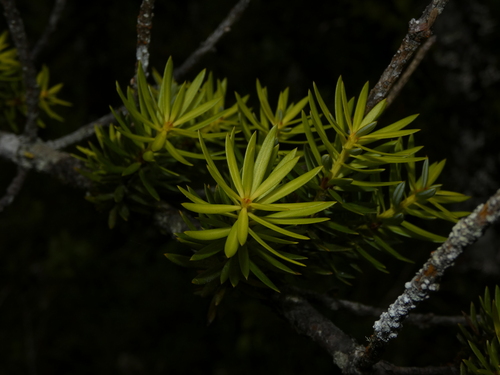
(c) nitsuga74, some rights reserved (CC BY)
iNaturalist· cc-by
(c) nitsuga74, some rights reserved (CC BY)
Summary
Source: WikipediaPrumnopitys andina, the lleuque or Chilean plum yew, is an evergreen coniferous tree native to south-central Chile and a few areas in adjacent parts of westernmost Argentina from 36 to 40° South latitude. It lives on moderately wet soils, preferably on Andean slopes from 500–1,100 meters (1,600–3,600 ft).
Description
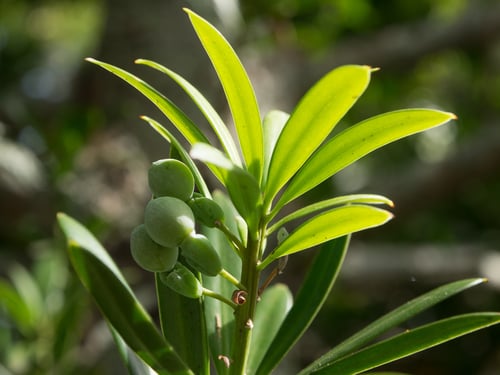
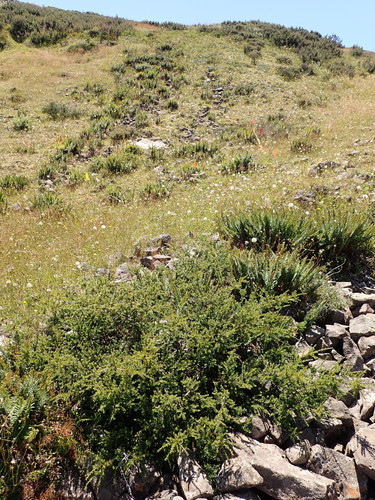
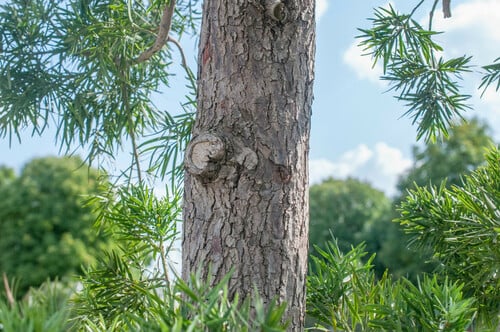
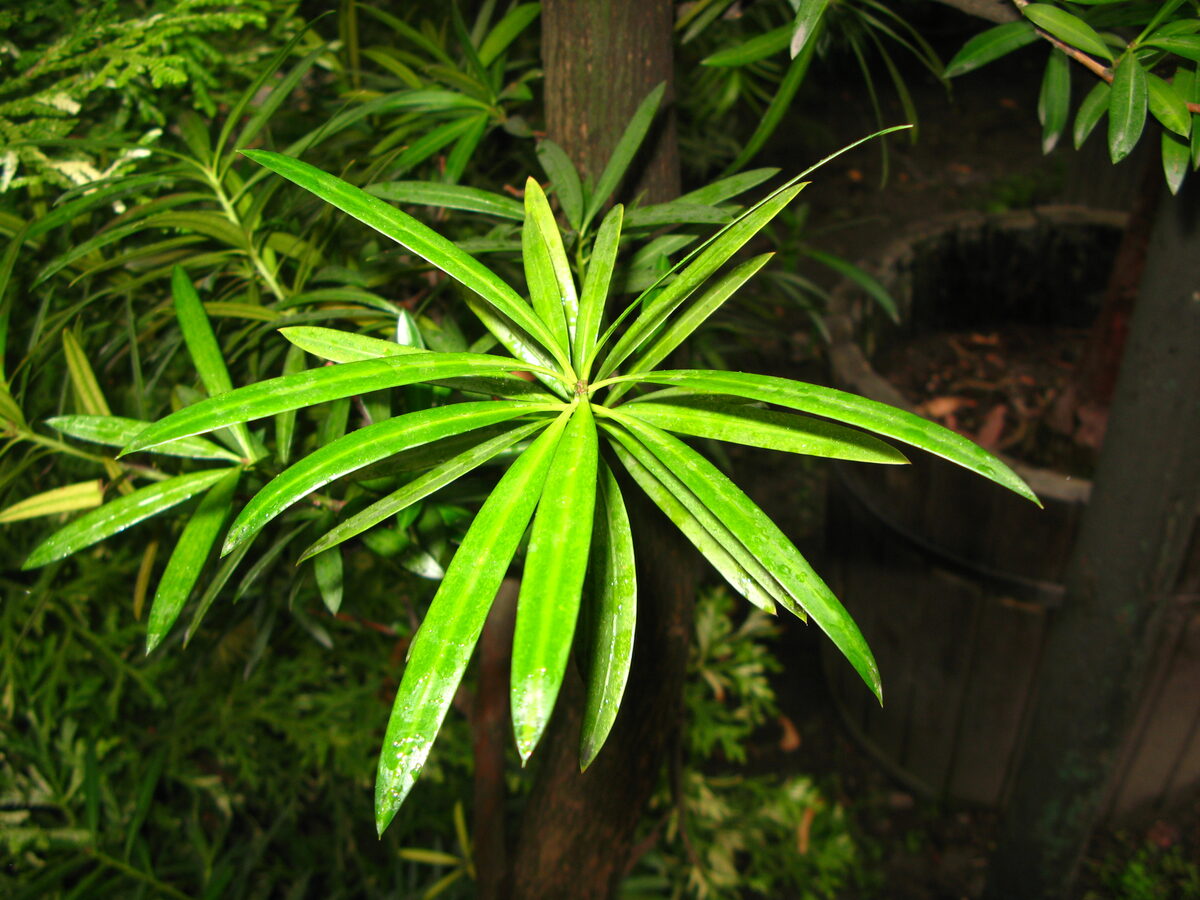
A small bushy tree. It grows 15 -18 m high and spreads 6 m wide. The bark is smooth and dark brown. It becomes grey when old. The crown is broad. The branches often arch over. The leaves are arranged in spirals. They are bright green above and paler underneath. The leaves are needles which are blunt tipped. They are 2.5 cm long. They are bright green on top and have 2 white bands underneath. The male and female flowers are on separate trees. The male flowers are yellow and in clusters. The female flowers are slender and green. The fruit are round and fleshy. They grow in clusters of 2-6. They are green with white flecks. The fruit turns yellow when ripe. They are edible.
Edible Uses
The fruit can be eaten raw or cooked. It is aromatic with a taste likened to sweetwater grapes, grows up to 20mm long and 15mm wide, and contains a single seed. The seed is also edible, though no further preparation details are recorded.
Traditional Uses
The kernel of the nut is eaten. The fruit has a sweet taste and are eaten.
This uses section is brief — help expand it
Medicinal Uses
None known
Distribution
It is a warm temperate plant. It grows naturally in the high Andes mountains. In Chile it grows between 500-2,000 m altitude. It is best in humid areas with constant rainfall but can tolerate some dry periods. It can grow in light shade. It suits hardiness zones 8-10. It can tolerate some frost and snow. Arboretum Tasmania. Hobart Botanical Gardens.
Where It Grows
Andes, Argentina, Australia, Britain, Chile*, Europe, New Zealand, South America, Tasmania,
Cultivation
Plants can be grown from seed or cuttings. The seeds are very difficult to germinate due to the hard seed coat. To get seed to grow they are put in sand and kept moist for several months. The hard shell can be scraped or treated with chemicals.
Propagation
Seed can be sown at any time of year in sandy soil in a greenhouse, though germination may take up to 18 months. Once seedlings are large enough to handle, prick them out into individual pots and grow on in the greenhouse for at least their first winter. Plant out into permanent positions in late spring or early summer after the last expected frosts. Cuttings of half-ripe wood taken in July/August in a frame root easily. Cuttings of ripe wood with a heel can also be taken in late summer.
Other Uses
The plant tolerates trimming well and can be grown as a hedge. The wood is used to make furniture.
Synonyms
Also Known As
Andes prumnopitys, Lleuque, Maniu, Pino, Uva de cordillera
References (19)
- Barreau, A., et al, 2016, How Can We Teach Our Children if We Cannot Access the Forest? Generational Change in Mapuche Knowledge of Wild Edible Plants in Andean Temperate Ecosystems of Chile. Journal of Ethnobiology 36(2): 412–432
- Blumea 24:189. 1978
- Chamorro, M. F., & Ladio, A., 2020, Native and exotic plants with edible fleshy fruits utilized in Patagonia and their role as sources of local functional foods. BMC Complementary Medicine and Therapies. 20:155
- Coombes, A.J., 2000, Trees. Dorling Kindersley Handbooks. p 78 (As Podocarpus andinus)
- Cordero, S. E., Abello, L. A., & Galvez, F. L., 2017, Plantas silvestres comestibles y medicinales de Chile y otras partes del mundo. CORMA p 105
Show all 19 references Hide references
- Crowe, A., 1997, A Field Guide to the Native Edible Plants of New Zealand. Penguin. p 23 (As Podocarpus andinus)
- Cundall, P., (ed.), 2004, Gardening Australia: flora: the gardener's bible. ABC Books. p 1090
- Daly, A. B., 20014, Narrating changing foodways: wild edible plant knowledge and traditional food systems in Mapuche lands of the Andean Temperate Forests, Chile. Masters Thesis Vancouver. p 45
- Grandtner, M. M. & Chevrette, J., 2013, Dictionary of Trees, Volume 2: South America: Nomenclature, Taxonomy and Ecology. Academic Press p 539
- Harris, E & J., 1983, Field Guide to the Trees and Shrubs of Britain. Reader's Digest. p 231 (As Podocarpus andinus)
- Hedrick, U.P., 1919, (Ed.), Sturtevant's edible plants of the world. p 509 (As Podocarpus andinus)
- Kermath, B. M., et al, 2014, Food Plants in the Americas: A survey of the domesticated, cultivated and wild plants used for Human food in North, Central and South America and the Caribbean. On line draft. p 708
- Leon-Lobos, P., et al, 2022, Patterns of Traditional and Modern Uses of Wild Edible Native Plants of Chile: Challenges and Future Perspectives. Plants (Basel) v 11 (6) Table S1
- Marinelli, J. (Ed), 2004, Plant. DK. p 150
- Phillips, R. & Rix, M., 2002, The Botanical Garden Vol. 1. Trees and Shrubs. MacMillan. p 21 (As Podocarpus andinus)
- Plants for a Future database, The Field, Penpol, Lostwithiel, Cornwall, PL22 0NG, UK. http://www.scs.leeds.ac.uk/pfaf/
- Rapoport, E. H. & Ladio, A. H., 1999, Plantas comestibles. Bosque Volume 20 No. 2. ISSN 0314-8799
- Syn. conif. 219. 1847 "andina" (As Podocarpus andinus)
- www.chileflora.com