Prumnopitys taxifolia
(Sol. ex D. Don) de Laub.
Matai
iNaturalist· cc-by-nc-nd
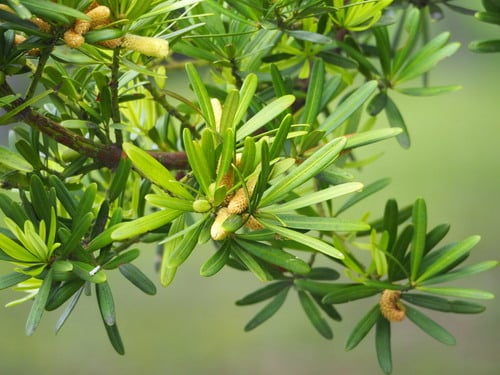
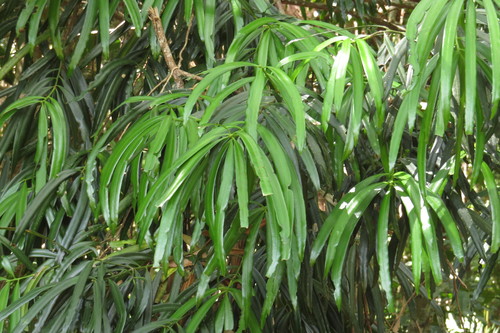
(c) Grahame, some rights reserved (CC BY-NC-ND), uploaded by Grahame
iNaturalist· cc-by
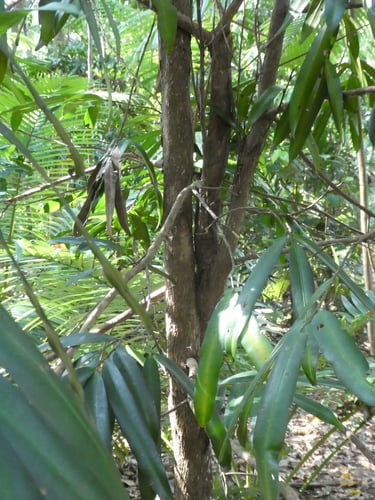
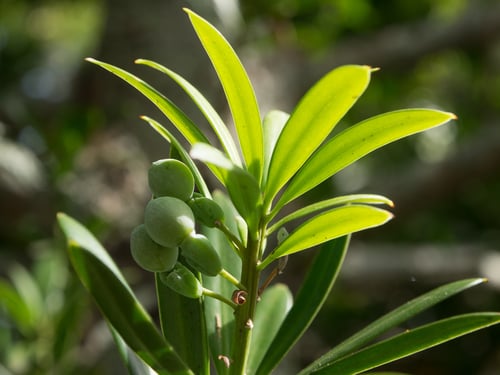
(c) Duncan Cunningham, some rights reserved (CC BY), uploaded by Duncan Cunningham
iNaturalist· cc-by
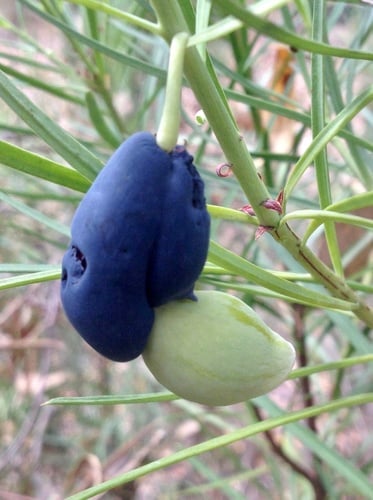
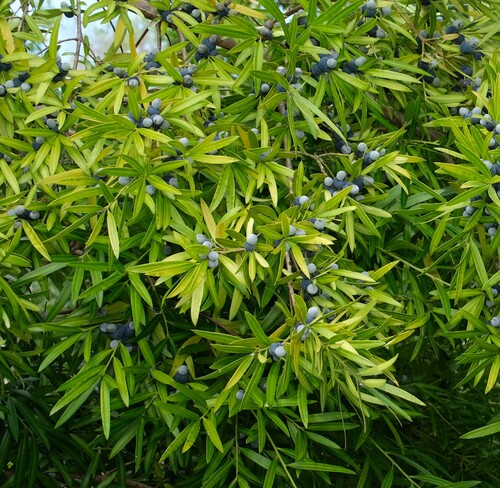
(c) Jon Sullivan, some rights reserved (CC BY)
Summary
Source: WikipediaPrumnopitys taxifolia, commonly known as mataī and black pine, is a species of tree in the family Podocarpaceae. It is a dioecious evergreen conifer reaching 30 metres (100 feet) in height, with a stout trunk up to 2 m (6 ft 7 in) in diameter, typically inhabiting lowland to montane forests. It is endemic to New Zealand; its range mainly covers the North and South Islands, it is also found on Stewart Island, but is uncommon there. P. taxifolia is a slow-growing tree and is highly shade-tolerant. P. taxifolia is profoundly heteroblastic; its young form is distinct and resembles a divaricating-wiry shrub, which may last for up to 60 years. It is unknown why P. taxifolia developed this characteristic. P. taxifolia has an average lifespan of 600 years, although it sometimes may live longer than 1000 years. Prumnopitys taxifolia was first described by the British botanist Aylmer Bourke Lambert in 1832. The fruits of P. taxifolia are dispersed by fruit-eating animals (frugivores), and the tree is pollinated by the wind. It is common on fertile and well-drained soils, although it can still grow well in drier climates. P. taxifolia's timber is noted for its strength and durability, and was historically used for building bridges and houses, railway sleepers, and furniture-making. The conservation status of P. taxifolia was assessed by the IUCN Red List in 2013 as "Least Concern".
Description
Evergreen tree reaching 25m tall, growing at a slow rate. Hardy to UK zone 9. Year-round foliage with seeds ripening October to November. Dioecious species requiring both male and female plants for seed production; wind-pollinated. Tolerates light sandy, medium loamy, and heavy clay soils with mildly acid to basic pH. Grows in semi-shade or full sun and prefers moist soil.
Edible Uses
The fruit is eaten raw and has a sweet flavour. It is about 10mm in diameter and contains one seed. The watery sap can be drunk directly or used to prepare a beer-like beverage, and is best taken from trees that are neither too young nor too old. Alternatively, young shoots are made into a beverage resembling spruce beer.
Medicinal Uses
None known
Distribution
It is a temperate plant. Arboretum Tasmania.
Where It Grows
Australia, New Zealand*, Tasmania,
Propagation
Seed can be sown at any time of year in sandy soil in a greenhouse, though germination may take up to 18 months. Once seedlings are large enough to handle, prick them out into individual pots and grow on in the greenhouse for at least their first winter. Plant out into permanent positions in late spring or early summer after the last expected frosts. Cuttings of half-ripe wood taken in July/August in a frame root easily. Cuttings of ripe wood with a heel can also be taken in late summer.
Other Uses
The plant tolerates trimming well and can be grown as a hedge. The wood is used for furniture, construction, bridges, and similar purposes.
References (2)
- Blumea 24:190. 1978
- Crowe, A., 1997, A Field Guide to the Native Edible Plants of New Zealand. Penguin. p 33