Podocarpus totara
G. Benn. ex D. Don
Totara
iNaturalist· cc0
no rights reserved
iNaturalist· cc-by-nc
(c) kjc001, some rights reserved (CC BY-NC)
iNaturalist· cc-by-nc
(c) Ben Ackerley, some rights reserved (CC BY-NC)
Summary
Source: WikipediaPodocarpus totara (), commonly known as the tōtara, is a species of podocarp tree endemic to New Zealand. Found across New Zealand, the tree can grow up to a height of 35 m (115 ft), and is known for its longevity. The wood of tōtara is rot-resistant, and prized in Māori culture, and was often used as a material to create large-scale waka.
Description
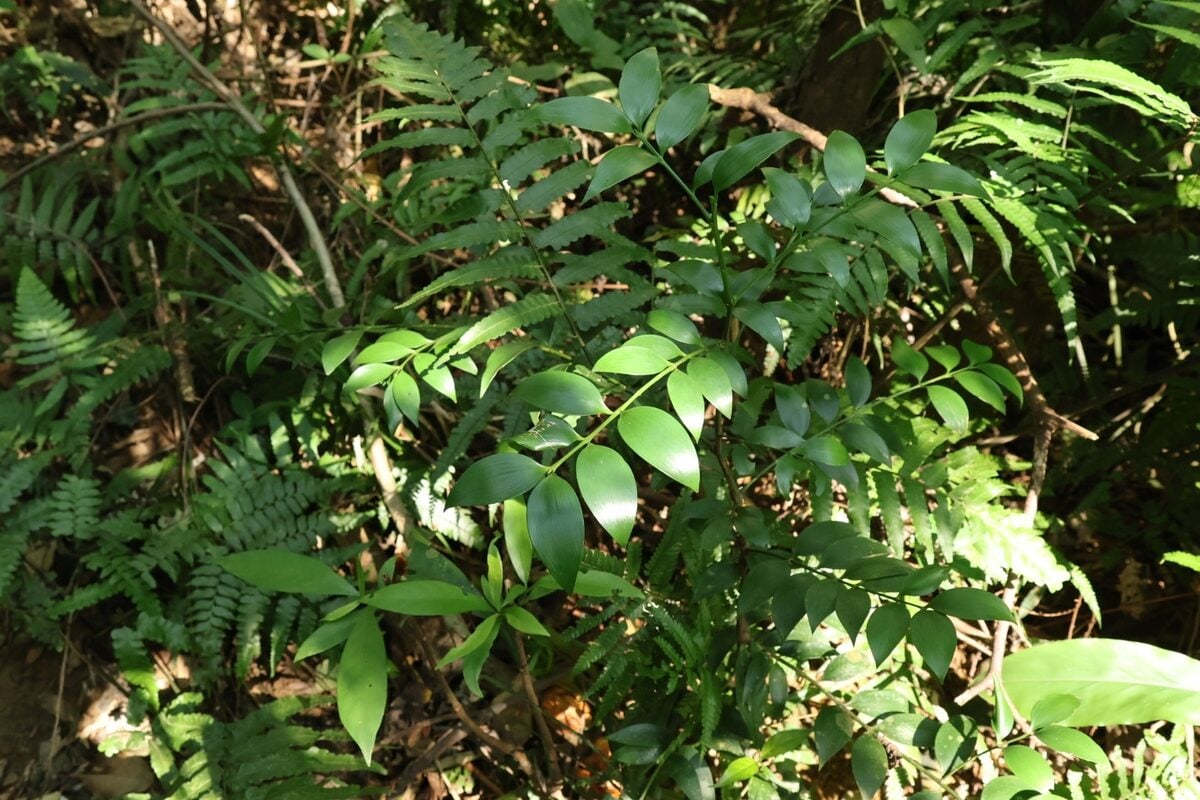
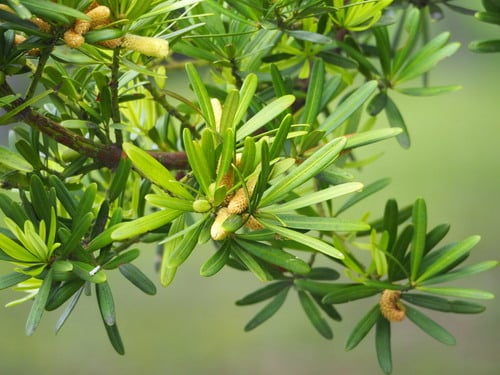
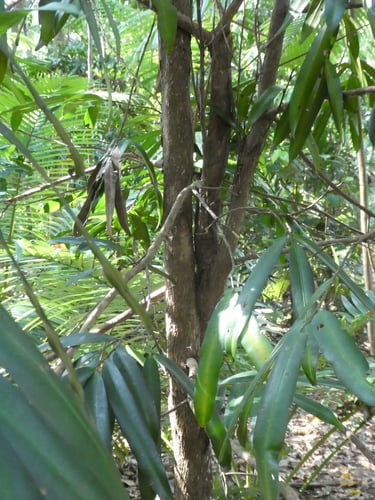
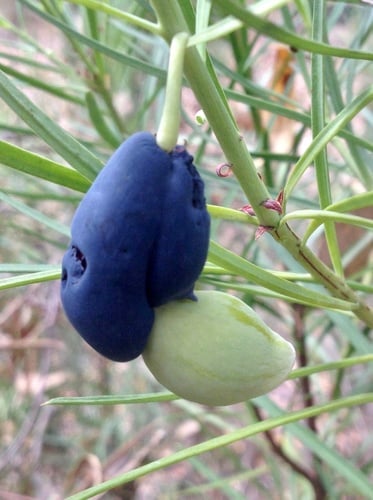
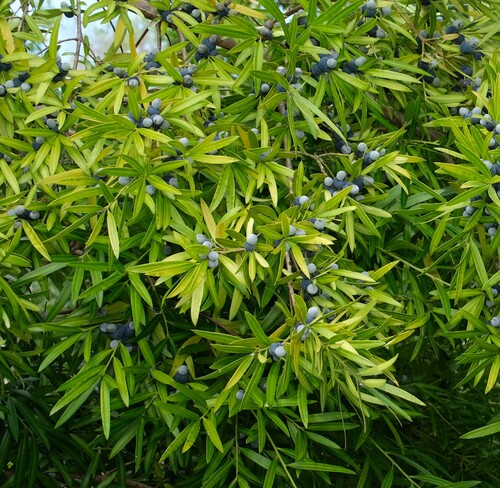
A conifer like tree. It keeps its leaves throughout the year. It grows 30 m high. The crown can be pyramid shaped or spreading. The trunk can be 2 m across. The bark is reddish-brown and becomes thick and stringy. It peels off in long strips. The leaves are small and narrow. They are 1.5-3 cm long and 3 mm wide. They have a sharp tip. The young leaves are bright green but turn blue-green with age. Trees are separately male and female. The male flowers are like cones. They are 1.5-2 cm long and light yellow-green. They have many scales. The female flowers are similar but on short stalks. The male flowers are on last year's growth and the female flowers on recent growth. The fruit are plump, oval and shiny. They become bright red when ripe. They are 6 mm long. The seed extends out the end of the receptacle.
Edible Uses
The fleshy fruit can be eaten raw or cooked. It is sweet and juicy but carries a hint of turpentine in its flavour, particularly when not fully ripe. Each fruit is around 6mm in diameter.
Traditional Uses
The fleshy receptacle is eaten. Caution: Eating lots of fruit can cause constipation.
This uses section is brief — help expand it
Medicinal Uses
None known.
Known Hazards
Superficially similar to Taxus species, but this plant is definitely not poisonous.
Distribution
It is a temperate plant. It will grow in full sun or light shade. They can tolerate wind and coastal conditions. It is cold hardy once established. It can then tolerate temperatures down to -10°C. It can grow on a range of soils. It is often best in an acidic or neutral soil. Hobart Botanical Gardens. Arboretum Tasmania. National Arboretum Canberra.
Where It Grows
Australia, New Zealand*, North America, Tasmania, USA,
Cultivation
Plants are grown from seed. Seed is best sown fresh. Seed that has been stored needs to be soaked in warm water for 24 hours before planting. Trees need to be 10-20 m apart. Cuttings of semi-ripe would can sometimes form roots.
Propagation
Seed can be sown at any time of year in sandy soil in a warm greenhouse, though sowing as soon as the seed is ripe is recommended. Prick seedlings out into individual pots once large enough to handle and grow on in the greenhouse through at least their first winter. Plant out into permanent positions in late spring or early summer, after the last expected frosts. Alternatively, take cuttings of half-ripe terminal shoots, 5–10cm long, in July or August and root in a frame.
Other Uses
The wood is straight-grained, reddish, and exceptionally durable — notably resistant to water — though it can be brittle. It is valued for construction work and cabinet making.
Production
Trees are fairly slow growing. They can live for 1,000 years.
Synonyms
References (6)
- Abdillahi, H. S., 2009, Ethnobotany, phytochemistry and pharmacology of Podocarpus sensu latissimo (s.l.). South African Journal of Botany 76 (2010) 1–24
- Crowe, A., 1997, A Field Guide to the Native Edible Plants of New Zealand. Penguin. p 60
- A. B. Lambert, Descr. Pinus ed. 3, 2:189(app). 1832
- Lyle, S., 2006, Discovering fruit and nuts. Land Links. p 332
- Matthews, J., 1987, New Zealand Native Plants for your Garden. Pacific Publishers, p 98
Show all 6 references Hide references
- Stewart, K., 1984, Collins handguide to the Native Trees of New Zealand. Collins. p 120