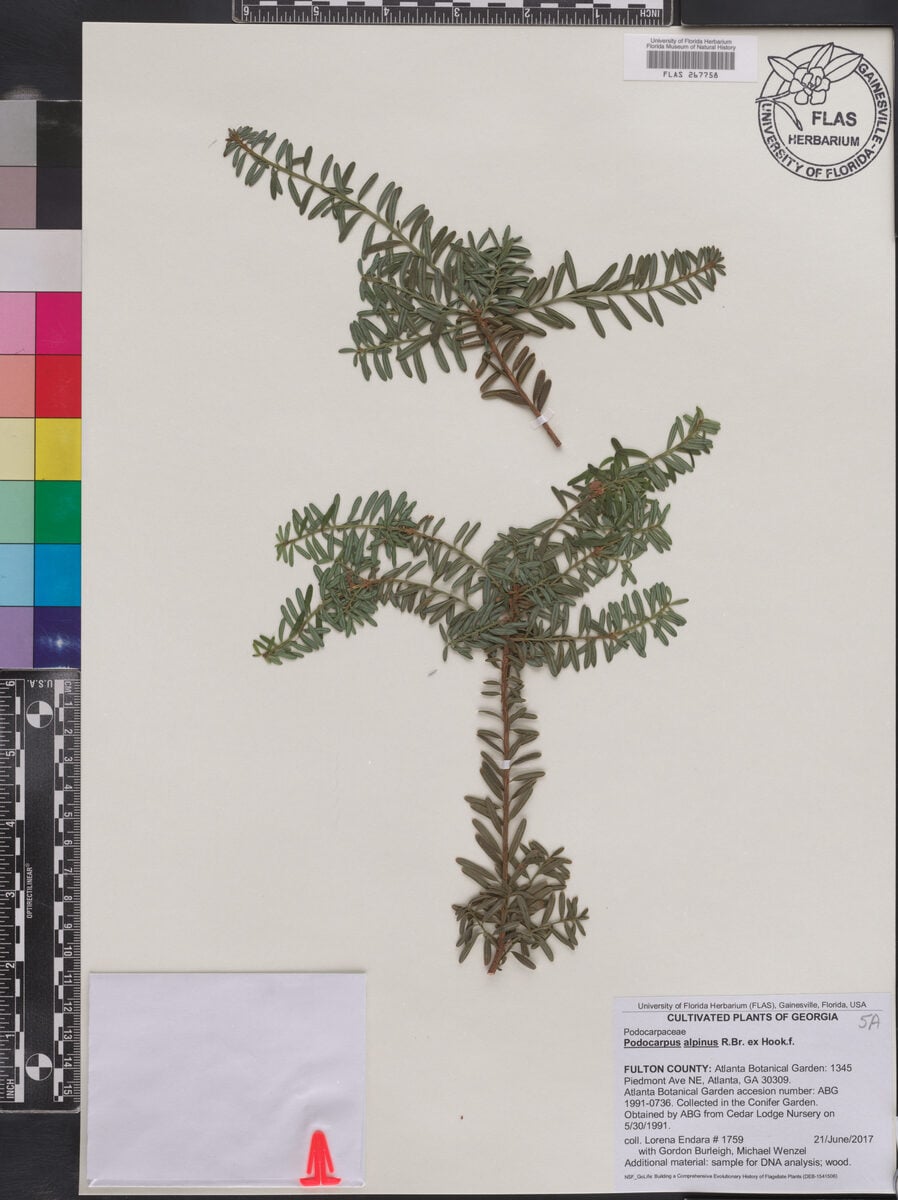
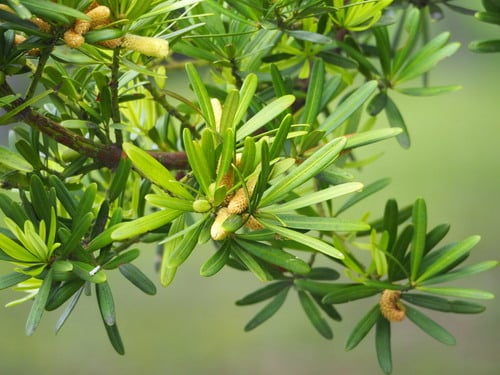
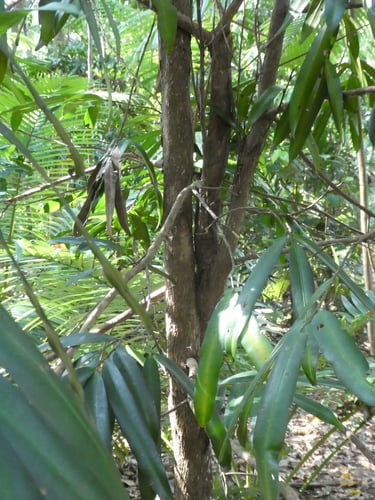
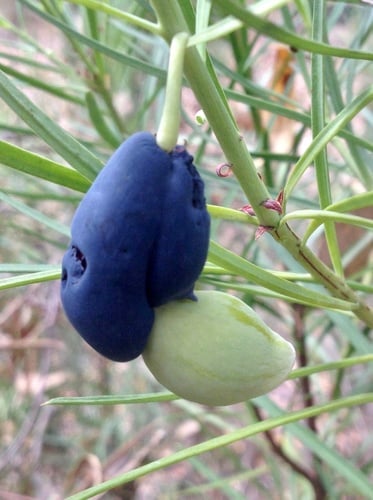
Afrocarpus gracilior
(Pilg.) C. N. Page
African fern pine, East African yellowwood
iNaturalist· cc-by-nc
(c) BJ Stacey, some rights reserved (CC BY-NC)
iNaturalist· cc-by-nc
(c) Samuel Cannon, some rights reserved (CC BY-NC), uploaded by Samuel Cannon
iNaturalist· cc-by-nc
(c) Brotry, some rights reserved (CC BY-NC)
Summary
Source: WikipediaAfrocarpus gracilior (syn. Podocarpus gracilior) is a species of coniferous tree in the family Podocarpaceae known as benet in Marakwet and East African yellowwood, African fern tree, or bastard yellowwood in English It is native to eastern Africa, in Ethiopia, Kenya, Tanzania, and Uganda, in Afromontane habitats. This is a common species found in many types of tropical mountain forest habitat. It is a dominant species in some areas. Nevertheless, it may be in slow decline due to deforestation and logging.
Description
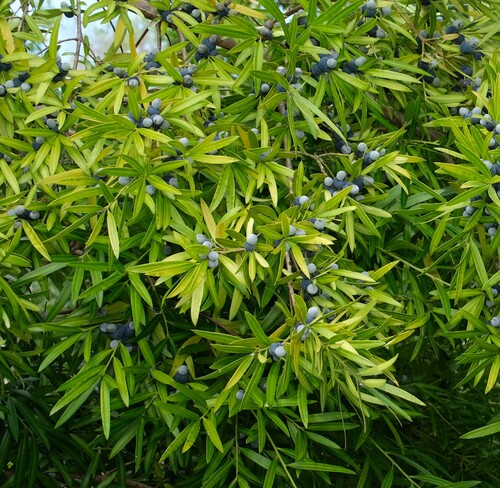
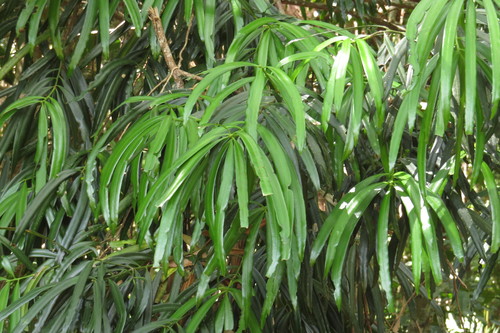
A medium sized tree. It grows 20-40 m tall. The trunk is 50-80 cm across. The leaves are sword shaped and arranged in spirals. They are 2-6 cm long by 3-5 mm wide. Leaves can be larger in young tree. The seed cones have a single seed 2 cm across. This has a thin fleshy coating. The mature seed is purple. The cones can occur singly or in clusters or 2 or 3.
Edible Uses
The ripe fruit is edible, but resinous. Edible oil has been extracted from the seeds in Ethiopia.
Medicinal Uses
The bark and seeds are used in traditional medicine. Bark decoctions or infusions are used as anodyne, also to treat diarrhoea and stomach-ache. A bark decoction is also applied to itching rash. Pulverized seeds are applied to treat tuberculoid meningitis and sunburn. In Ethiopia the seed oil is used in the treatment of gonorrhoea. The sap is used as a remedy for chest complaints.
Distribution
It is a tropical plant. It grows in tropical mountain forest.
Where It Grows
Africa*, America, East Africa, Ethiopia, Kenya, Libya, Mozambique, Tanzania, Uganda,
Cultivation
Within the range of Afrocarpus gracilior, the mean annual temperature is 16.8°c, with an average minimum in the coldest month of 8.7°c, and a mean annual precipitation of 1148mm. The plant can withstand light frosts when dormant, tolerating occasional temperatures falling to between -1°c and +4.4°c. Succeeds in sun or light shade, young plants tolerating fairly deep shade. Prefers a well-drained, deep, humus-rich and light-textured soil. Prefers a pH in the range 5 - 7, tolerating 4.5 - 7.5. Plants cannot tolerate drought. This species has been introduced from Ethiopia as a forestry plantation tree into other countries, including India, where trial plantations at Dehra Dun were begun in the early years of the twentieth century. In northern Ethiopia it is also often planted in church compounds to provide shade and shelter for the congregation. It is a moderately common ornamental in southern California, and perhaps in other warm areas. When transplanting the seedling into the open ground, care must be taken not to damage the taproot, as it will result in a long period, sometimes up to a year, during which the tree will show no growth. A fast growing species, with a mean annual increment of up to 1 metre for the first 15 years; the growth rate is higher under natural conditions in higher rainfall areas and can be very fast under garden conditions. Trees can commence fruiting when they are about 10 years old from seed. It can take about 12 months for the seed to develop and it can then hang on the tree for a considerable time. There is typically heavy seeding at intervals of 2 - 4 years. On good sites trees should be large enough for harvesting for their wood 40 - 50 years after planting. Trees live for a long time - perhaps 600 years. A dioecious species - both male and female forms must be grown if fruit and seed are required.
Propagation
Seed - remains viable for several years in normal storage. The seed has two types of dormancy; a chemical, which is overcome by removing the fleshy layer and a mechanical, imposed by the hard seedcoat. To ensure a high and even germination the seedcoat must be broken and removed. This can be done in a vice but it is very time-consuming. Freshly collected seeds will normally germinate well, up to 60% in nine weeks, even with seedcoat but once the seeds have been dried, germination can take more than six months unless the seedcoat is removed. Some reports say that soaking in saturated salt water just before sowing can improve germination. Others recommend stratification between two layers of compost for 3 - 5 days in order to weaken the seedcoat. The seeds are sown directly in nursery bags or in seedbeds in a mixture of compost and sand (1:1). The seed must be pushed into the mixture and covered with a fine layer of soil. The mixture must never be allowed to dry out. Cuttings taken from end shoots (as opposed to cuttings from lateral branches and shoots) in order to produce plants with upright growth.
Other Uses
The bark has been used for tanning, although it only contains 3 - 6% tannin. The leaves contain podolide, which is a main ingredient for an insecticide. The heartwood is pale yellow to pale yellowish brown, and not distinctly demarcated from the sapwood. The grain is straight, occasionally spirally, texture fine and even. The wood is moderately lightweight; easy to saw and work, both by machine and hand tools, with little dulling effects on cutting edges; it can be planed to a smooth finish; the wood has a tendency to split upon nailing, and pre-boring is recommended; the gluing, painting, varnishing and staining properties are moderately good. The wood is not durable, being susceptible to blue stain, powder-post beetle, pinhole borer, longhorn beetle, termite and marine borer attacks. The wood is highly valued for ship building, but it is also used for poles, panelling, furniture, boxes, veneer and plywood. It is suitable for construction, flooring, joinery, interior trim, mine props, vehicle bodies, railway sleepers, toys, novelties, agricultural implements, musical instruments, food containers, vats, turnery, hardboard and particle board. The wood is a good fuel. The tree is very useful for soil protection against water erosion. It is also planted to provide shade, shelter and as a windbreak.
Synonyms
Also Known As
Cobola, Weeping podocarpus
References (1)
- Kermath, B. M., et al, 2014, Food Plants in the Americas: A survey of the domesticated, cultivated and wild plants used for Human food in North, Central and South America and the Caribbean. On line draft. p 24