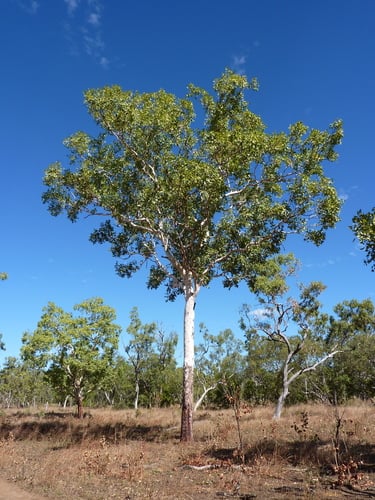
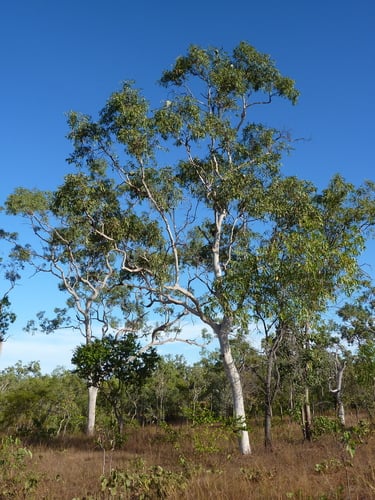
Syzygium clusiifolium
(A. Gray) Muell.Stuttg.
Aifua
iNaturalist· cc-by-nc
(c) Peter Zika, some rights reserved (CC BY-NC), uploaded by Peter Zika
iNaturalist· cc-by-nc
(c) Colin Ogle, some rights reserved (CC BY-NC)
iNaturalist· cc-by-nc
(c) Colin Ogle, some rights reserved (CC BY-NC)
Summary
Source: WikipediaSyzygium clusiifolium is a species of flowering plant in the myrtle family, Myrtaceae. It is a tree native to Niue, the Samoan Islands, Tonga, Vanuatu, and Wallis and Futuna. In Vanuatu it is found on Malakula, Paama, Pentecost, Espiritu Santo, Efate, Aneityum, Aniwa, Tanna, and Hiu. It is a small to medium-sized tree growing up to 20 meters tall. It has red fruits. It grows mostly in littoral coastal forest and lowland rainforests, in primary forest, secondary forest, and disturbed areas, up to 300 meters elevation. In the Samoan Islands it also grows on offshore tuff cone volcanic islets. The fruits are eaten and their seeds dispersed by the Pacific imperial pigeon (Ducula pacifica), and by flying foxes (Pteropus sp.). Fruits are also consumed by introduced rats, which may limit the natural regeneration of the species.
Description
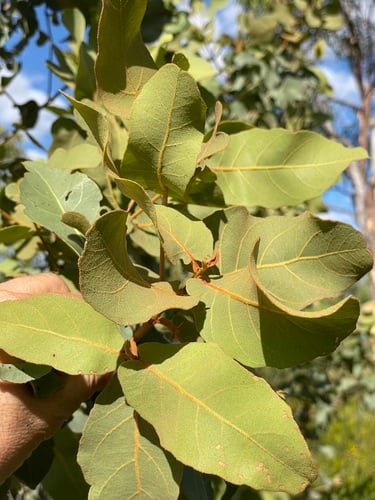
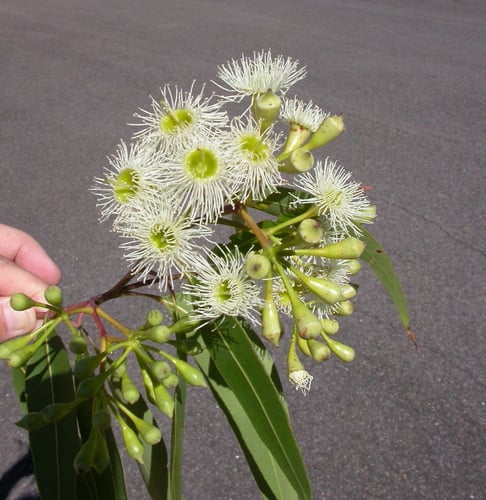
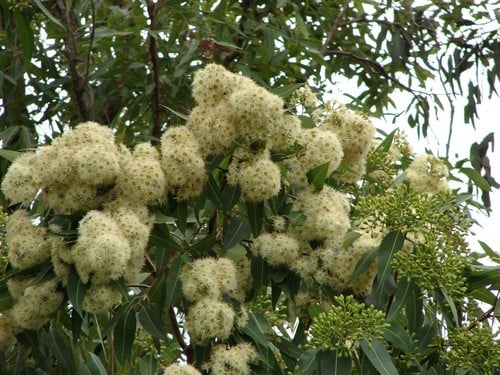
A tree up to 4-8 m high. It can be taller. An attractive shady tree. The bark is grey and scaly. The leaves are oval and grow opposite each other along the stem. The leaves are up to 15 cm long and 8 cm wide. Many narrow veins run across the leaf joining near the edge. The leaf stalk is about 1 cm long. It has a groove along its length. Flowers are small but occur in large open clusters. They are produced on the trunk and larger branches. The fruit is oval and about 1 cm long. It is dark purple. It is edible.
Edible Uses
The fruit is eaten raw, primarily by children.
Traditional Uses
The fruit is eaten raw.
This uses section is brief — help expand it
Distribution
A tropical plant. It occurs in the Pacific islands. It occurs in lowland areas. It grows from sea level to 200 m altitude. It occurs on Rennell Island in the Solomon Islands.
Where It Grows
American Samoa, Fiji, Niue, Pacific, Papua New Guinea, PNG, Samoa, Solomon Islands, Tonga, Vanuatu, Wallis & Futuna,
Production
In Vanuatu plants flower in September to December and fruit in February.
Other Information
The small fruit are eaten mainly by children. It is a cultivated plant.
Synonyms
Also Known As
Asi vai, Asi vao, Fekika vao, Kafika, Naavakhsisiel, Neepau, Nonu, Qao, Sivirimaba, Taangie, Tariu
References (11)
- Cabalion, P. and Morat, P., 1983, Introduction le vegetation, la flore et aux noms vernaculaires de l'ile de Pentcoste (Vanuatu), In: Journal d'agriculture traditionnelle et de botanique appliquee JATBA Vol. 30, 3-4
- French, B.R., 2010, Food Plants of Solomon Islands. A Compendium. Food Plants International Inc. p 391
- Henderson, C.P. and I.R.Hancock, 1988, A Guide to the Useful Plants of the Solomon Islands. Res. Dept. Min of Ag. & Lands. Honiara, Solomon Islands. p 136 (As Eugenia nutans)
- Lebot, V. & Sam, C., Green desert or ‘all you can eat’? How diverse and edible was the flora of Vanuatu before human introductions?. Terra australis 52 p 409 (Also as Syzygium neepau)
- McClatchey, W. C., 2012, Wild food plants of Remote Oceania. Acta Societatis Botanicorum Poloniae. 81(4):371-380
Show all 11 references Hide references
- Thaman, R.R., 1976, The Tongan Agricultural System, University of the South Pacific, Suva, Fiji. p 425
- Tuiwawa, S. H., et al, 2013, The genus Syzygium (Myrtaceae) in Vanuatu. Blumea 58, 2013:53-67
- Walter, A. & Sam C., 2002, Fruits of Oceania. ACIAR Monograph No. 85. Canberra. p 251
- Whistler, W.A., 2004, Rainforest Trees of Samoa. Isle Botanica Honolulu, Hawaii. p 120
- Yuncker, T. G., 1943, The Flora of Niue Island. Bernice P. Bishop Museum Bulletin 178 p 90
- Yuncker, T.G., 1959, Plants of Tonga, Bernice P. Bishop Museum, Hawaii, Bulletin 220. p 202