Austromyrtus tenuifolia
(Sm.) Burret
Narrow leafed myrtle, Narrow-leafed midgenberry
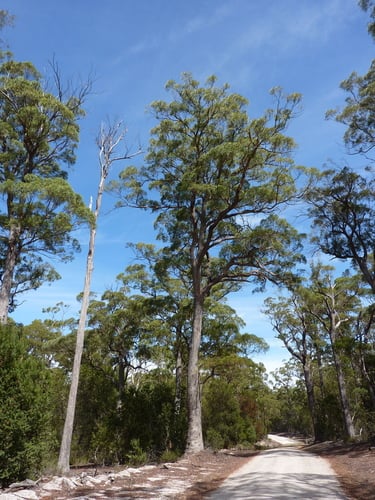
iNaturalist· cc-by-nc
(c) Jenny Donald, some rights reserved (CC BY-NC), uploaded by Jenny Donald
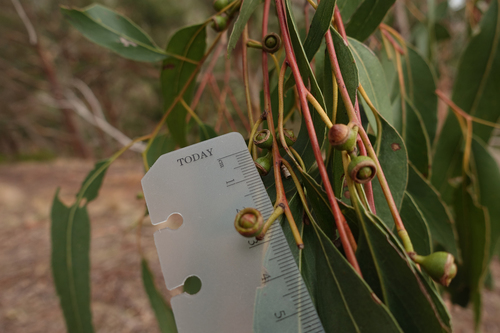
iNaturalist· cc-by-nc
(c) Peter Woodard, some rights reserved (CC BY-NC), uploaded by Peter Woodard
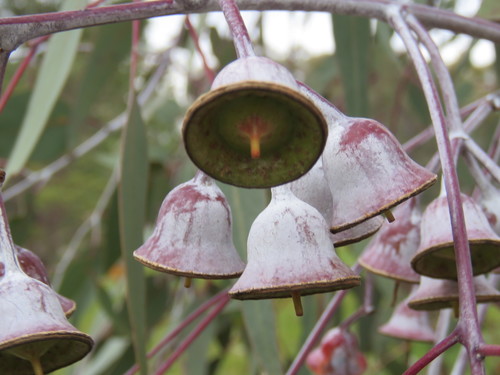
iNaturalist· cc-by
(c) Thomas Mesaglio, some rights reserved (CC BY), uploaded by Thomas Mesaglio
Summary
Source: WikipediaAustromyrtus tenuifolia or the narrow-leaf myrtle is a species of plant belonging to the Myrtaceae family that is native to the Sydney area in eastern Australia. The habitat that it prefers is sheltered, damp situations, often found growing near streams. Austromyrtus tenuifolia has thin leaves; 1.5 to 4 cm long, and 1 to 3 mm wide. Flowers have 5 petals and short stalks and flower in late spring and summer. The berries are edible, dark purple when immature which then turn white with dark spots when mature. The specific epithet tenuifolia is from Latin, meaning "thin leaved". This plant first appeared in scientific literature in 1797 as Myrtus tenuifolia, published in the Transactions of the Linnean Society by the 18th century botanist James Edward Smith.
Description
A small to medium shrub. It grows 1-3 m high and spreads 1-2 m wide. The young shoots have silky hairs. The leaves are thin and narrow. They are 2-4 cm long by 0.4 cm wide. The edges curve backwards. The leaves are hairy underneath. The flowers are white. They are 0.7 cm across. They occur singly in the axils of leaves. The fruit stalk is 0.7 cm long. The fruit is a berry about 1 cm across. The fruit are edible.
Edible Uses
The berries are edible.
Distribution
It can grow in tropical, subtropical and temperate climates. It does best with some shade. It needs moist well drained soils. It can stand light frost. It suits hardiness zones 9-11.
Where It Grows
Australia*, Tasmania,
Cultivation
Plants can be grown from seed or cuttings.
Notes
There are 14 Austromyrtus species. They occur in Australia.
References (10)
- Bodkin, F., 1991, Encyclopedia Botanica. Cornstalk publishing, p 120
- Blomberry, A.M., 1979, Australian Native Plants. Angus and Robertson p 145
- Cherikoff V. & Isaacs, J., The Bush Food Handbook. How to gather, grow, process and cook Australian Wild Foods. Ti Tree Press, Australia p 198
- Elliot, W.R., & Jones, D.L., 1982, Encyclopedia of Australian Plants suitable for cultivation. Vol 2. Lothian. p 263
- Etherington, K., & Imwold, D., (Eds), 2001, Botanica's Trees & Shrubs. The illustrated A-Z of over 8500 trees and shrubs. Random House, Australia. p 108
Show all 10 references Hide references
- Greig, D., 1996, Flowering Natives for Home Gardens. Angus & Robertson. p 59
- Hibbert, M., 2002, The Aussie Plant Finder 2002, Florilegium. p 36
- Molyneux, B & Forrester, S., 1997, The Austraflora A-Z of Australian Plants. Reed. p 47
- Notizbl. Bot. Gart. Berlin-Dahlem 15:501. 1941
- Smith, K & I., 1999, Grow your own bushfoods. New Holland. Australia. p 56