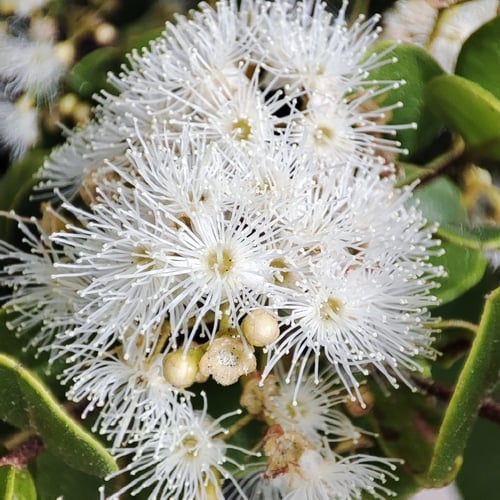
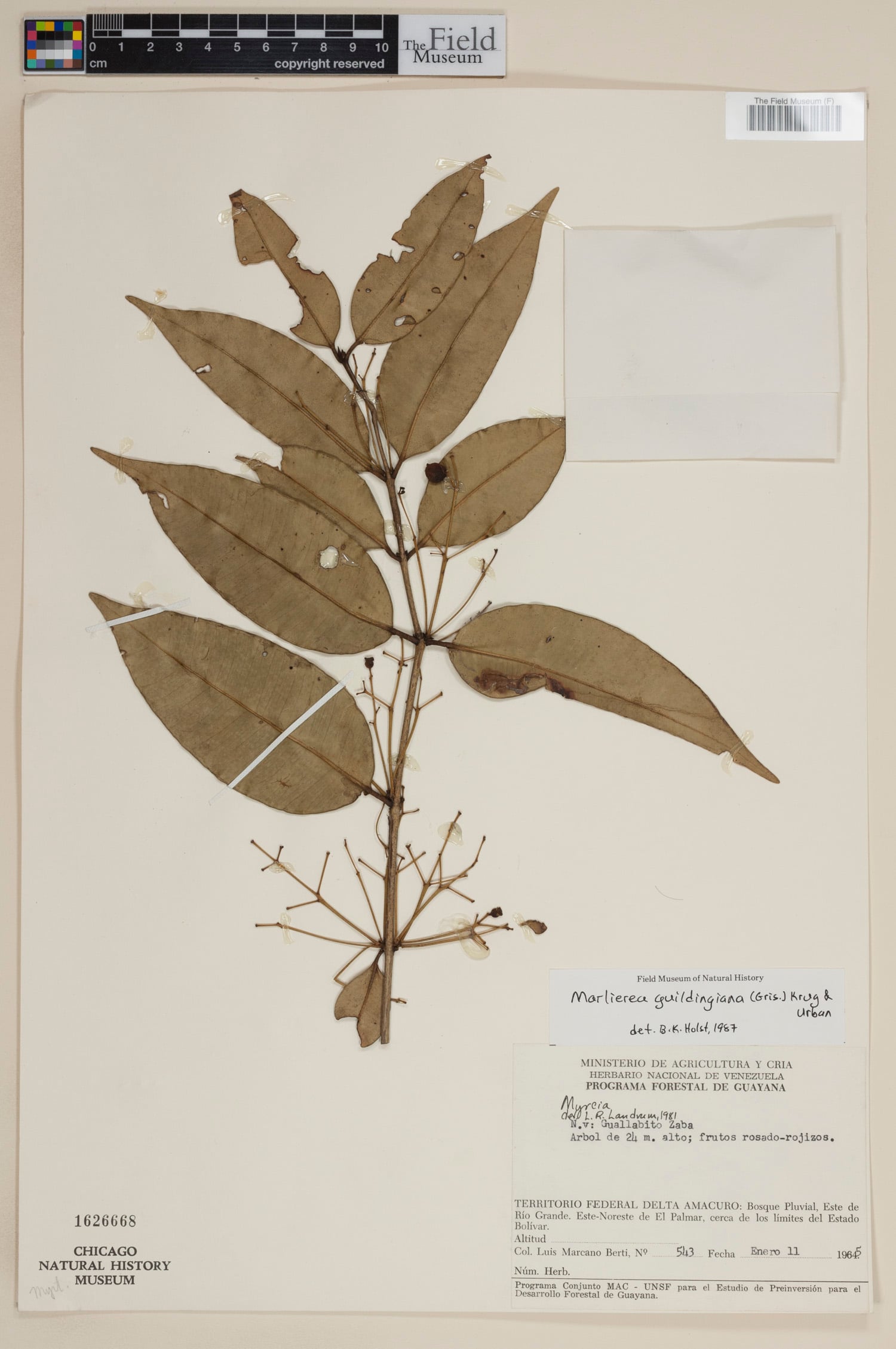
Baeckea frutescens
L.
Childbirth Tea
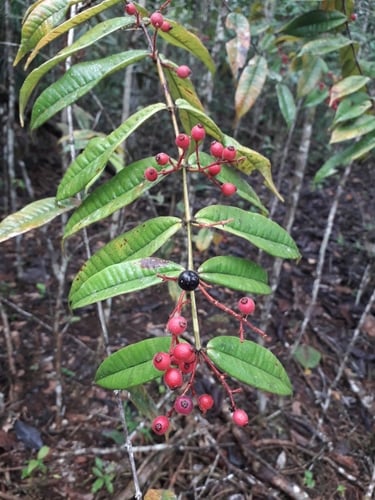
iNaturalist· cc-by-nc
(c) KO Ka Ho, some rights reserved (CC BY-NC), uploaded by KO Ka Ho
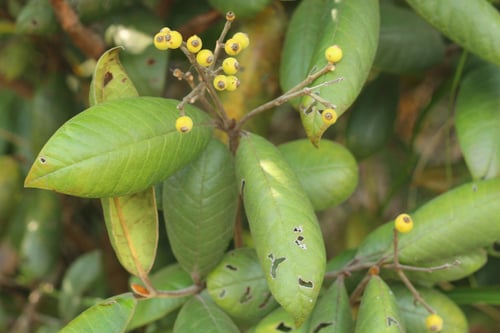
iNaturalist· cc-by-nc
(c) Arief Hamidi, some rights reserved (CC BY-NC), uploaded by Arief Hamidi
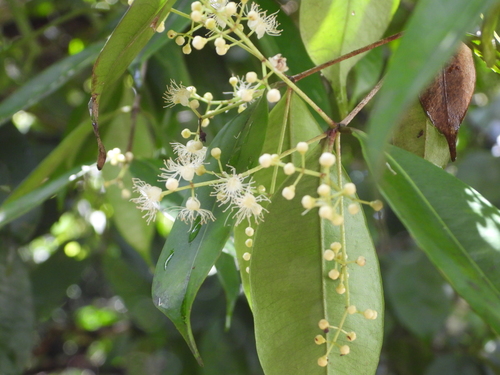
iNaturalist· cc-by-nc
(c) johnallcock, some rights reserved (CC BY-NC), uploaded by johnallcock
Summary
Source: WikipediaBaeckea frutescens is a species of flowering plant in the family Myrtaceae and is native to eastern Southeast Asia, New Guinea and Australia. It is a shrub with arching branches, linear leaves and white flowers with seven to thirteen stamens.
Description
A slender shrub. It grows 1-4 m tall and spreads 1-2.5 m wide. The branches are thin. The tips hang down. The leaves are 1-2 cm long by 0.1-0.3 cm wide. They are pressed against the stem when young but become spreading. The flowers are 0.3-0.5 cm across. They are white and occur singly in the axils of the upper leaves. There are 8 stamens with 2 shorter than the others.
Edible Uses
Both the leaves and flowers are used to make tea and are sold in local markets.
Traditional Uses
Asia, Australia, Cambodia, China, India, Indochina, Indonesia, Laos, Malaysia, Myanmar, Pacific, Papua New Guinea, PNG, Philippines, SE Asia, Thailand, Vietnam,
Medicinal Uses
Baeckea frutescens has a long history of use in traditional medicine in southeast Asia. There have been a number of studies that have demonstrated the presence of medically active compounds in the plant. All aerial parts of the plant are credited with antibacterial, antifebrile and haemostatic properties. The plant is indicated in the treatment of coryza, influenza, headache, measles, colic and jaundice, in the form of a fumigation of the dried plant or the inhalation of vapour from a boiling decoction of the fresh plant. It is also prescribed against epistaxis, impetigo, dyspepsia, dysentery and menstrual disorders. In Hong Kong the aerial parts are used to treat snakebite. The plant is applied topically as an antiseptic in treating furunculosis and impetigo. The leaves are used as an emmenagogue. An essential oil obtained from the plant is used for massage in cases of rheumatism. The essential oil shows considerable variation in composition and relevant percentage of its constituents depending on where it has grown. In a simple in vitro enzyme assay, the essential oil of Baeckea frutescens showed strong inhibitory activity of more than 80% at 0.1 mg/ml against lipoxygenase. The essential oil at a dose of 435 mg/kg exhibited antihepatotoxic activity. The leaves and above ground parts contain series of chromones, chromanones, as well as chromone-C-glycosides. These are structurally strongly related to the flavones. Some of these chromones have show strong cytotoxic activity against leukaemia cells.
Distribution
It is a tropical and subtropical plant. It grows in open heathland. It grows in colonies along the edges of casual streams. It can also be on mountain tops. It needs a sunny position and a well drained soil.
Where It Grows
Poor sandy and ultrabasic soils, in shrubland, often at high altitudes. It is also present in seasonally wet savannah and swamp forest. Thickets, slopes, low hills and open grasslands in southern China.
Cultivation
The leaves are sold in markets.
Propagation
Seed - surface sow onto a moist medium, standing the seed tray in almost half its depth of clean water and maintain a temperature around 16 - 18c. Seeds germinate in 52 - 66 days, but seedlings take about 12 months to develop fully. When seedlings are about 5mm tall, remove the tray from the water, leave for 4 - 5 days and then prick the seedlings out into individual containers. Cuttings of semi-ripe wood with a heel.
Other Uses
The whole plant yields 0.76% essential oil, the main ingredients comprising cineol, pinene, linalol and limonene. The leaves are occasionally put among clothing to keep insects away. The branches are used as brooms. The timber is hard, dark brown and very durable but of small dimensions.
Production
There are 70 Baeckea species. Most are in Australia.
Synonyms
Also Known As
Beringas, Chuchur atap, Churan atap, Cucor atap, Hujong atap, Ijar atap, Jung rabat, Junjung atap, Kayu rachak, Mrichtonsay, Rampa-rampa, Rempah-rempah, Sesapu, Si gamei-gamei, Tagai, Tutur atap, Tuturan atap, Ujung atap, Weeping baeckia
References (11)
- Bircher, A. G. & Bircher, W. H., 2000, Encyclopedia of Fruit Trees and Edible Flowering Plants in Egypt and the Subtropics. AUC Press. p 52
- Bodkin, F., 1991, Encyclopedia Botanica. Cornstalk publishing, p 125
- Burkill, I.H., 1966, A Dictionary of the Economic Products of the Malay Peninsula. Ministry of Agriculture and Cooperatives, Kuala Lumpur, Malaysia. Vol 1 (A-H) p 285
- Jackes, B.R., 2001, Plants of the Tropics. Rainforest to Heath. An Identification Guide. James Cook University. p 69
- Martin, F.W. & Ruberte, R.M., 1979, Edible Leaves of the Tropics. Antillian College Press, Mayaguez, Puerto Rico. p 106
Show all 11 references Hide references
- Melzer, R. & Plumb, J., 2011, Plants of Capricornia. Belgamba, Rockhampton. p 221
- Samy, J., Sugumaran, M., Lee, K. L. W., 2009, Herbs of Malaysia, Marshall Cavendish. p 59
- Slik, F., www.asianplant.net
- Sp. pl. 1:358. 1753
- Turreira Garcia, N., et al, 2017, Ethnobotanical knowledgeof the Kuy and Khmer people in Prey Lang, Cambodia. Cambodian Journal of Natural History 2017 (1): 76-101
- World Checklist of Useful Plant Species 2020. Royal Botanic Gardens, Kew