Schisandra rubriflora
(Franch.) Rehder & E. H. Wilson
iNaturalist· cc-by-nc
(c) larsgundersen, some rights reserved (CC BY-NC)
wikimedia· cc-by-sa
Wikimedia Commons - BeŻet
Summary
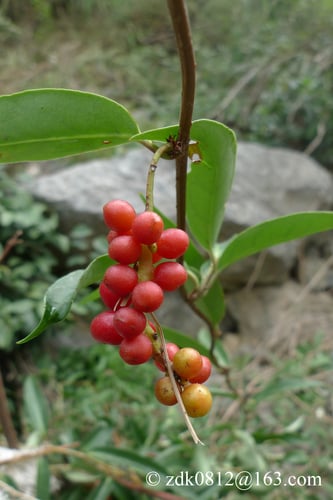
Source: WikipediaSchisandra rubriflora (Chinese: 红花五味子; pinyin: hónghuā wǔwèizǐ; lit. 'red flower five flavor fruit'), the Chinese magnolia vine, is a species of flowering plant in the family Schisandraceae that is native to China (West Sichuan and North Yunnan), India and Myanmar. Growing to 8 m (26 ft) tall, it is a deciduous twining climber with leathery leaves. Waxy red, cup-shaped pendulous blooms in summer are followed by red berries. The Latin specific epithet rubriflora means red-flowered. This plant is grown as an ornamental garden subject. It is fully hardy down to −15 °C (5 °F). It has gained the Royal Horticultural Society's Award of Garden Merit.
Description
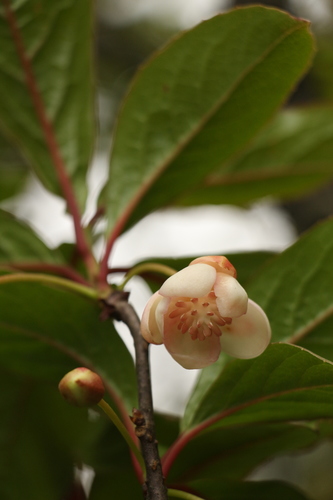
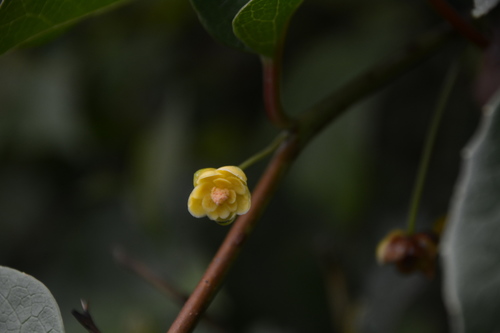
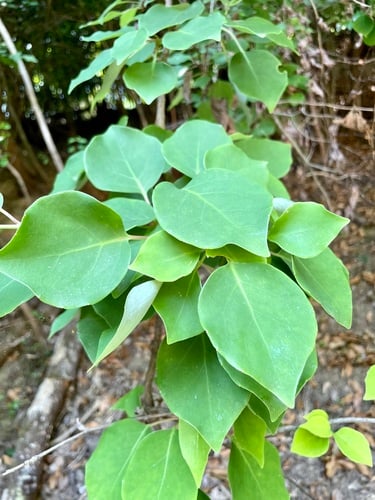
A deciduous climber. It grows 4.5-6 m long. The leaves are dark green and glossy. They are oval or sword shaped and 5 cm across by 15 cm long. Male and female flowers are on separate plants. The flowers are deep red with a slight sweet smell. They are 2.5 cm across. The fruit occurs in long strings. These are 15 cm long. They are like a red currant.
Edible Uses
The fruit can be eaten raw or cooked and is considered delicious. Each fruit is about 6mm in diameter and is carried in grape-like clusters around 12cm long.
Traditional Uses
The fruit are eaten fresh and also used to prepare local wine.
This uses section is brief — help expand it
Medicinal Uses
None known
Distribution
It is a temperate plant. It can tolerate slight frosts. It grows in forests between 2,500-3,600 m above sea level. It suits hardiness zones 8-10. In Sichuan and Yunnan.
Where It Grows
Asia, Australia, China, Himalayas, India, Myanmar, SE Asia, Tibet,
Propagation
Seed is best sown in autumn in a cold frame. Stored seed should be pre-soaked for 12 hours in warm water before sowing in a greenhouse in spring. Germination can be slow and erratic. Prick out seedlings into individual pots when large enough to handle and grow on in light shade in the greenhouse for their first two years before planting out in early summer. Cuttings of half-ripe wood, 5–8cm with a heel, taken in August and rooted in a frame give a good success rate; overwinter in the greenhouse and plant out in late spring. Long shoots can also be layered in autumn.
Other Uses
None known Special Uses
Production
In Yunnan fruit are harvested from August to October.
Notes
There are about 25 Schisandra species.
Also Known As
Wuweizi
References (9)
- Cundall, P., (ed.), 2004, Gardening Australia: flora: the gardener's bible. ABC Books. p 1323
- Joyce, D., 1998, The Garden Plant Selector. Ryland, Peters and Small. p 186
- Ju, Y., et al, 2013, Eating from the wild: diversity of wild edible plants used by Tibetans in Shangri-la region, Yunnan, China, Journal of Ethnobiology and Ethno medicine 9:28
- Phillips, R. & Rix, M., 2002, The Botanical Garden Vol. 1. Trees and Shrubs. MacMillan. p 62
- Plants for a Future database, The Field, Penpol, Lostwithiel, Cornwall, PL22 0NG, UK. http://www.scs.leeds.ac.uk/pfaf/
Show all 9 references Hide references
- C. S. Sargent, Pl. wilson. 1:412. 1913
- Wang, J., et al, 2020, An ethnobotanical survey of wild edible plants used by the Yi people of Liangshan Prefecture, Sichuan Province, China. Journal of Ethnobiology and Ethnomedicine 16:10 p 9
- Zhang, L., et al, 2015, Ethnobotanical survey of medicinal dietary plants used by the Naxi People in Lijiang Area, Northwest Yunnan, China. Journal of Ethnobiology and Ethnomedicine (2015) 11:40
- Zhang, L., et al, 2016, Ethnobotanical study of traditional edible plants used by the Naxi people during droughts. Journal of Ethnobiology and Ethnomedicine. 12:39