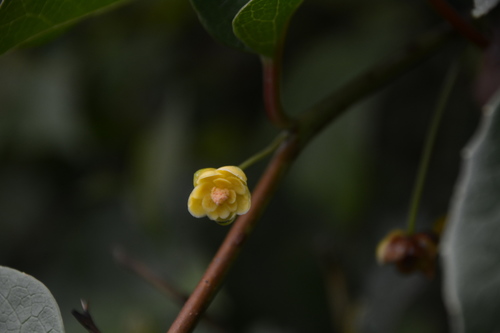
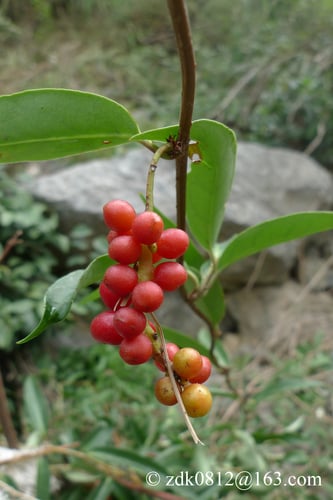
Kadsura scandens
(Blume) Blume
Kadsura vine
iNaturalist· cc-by-nc-sa
(c) Cerlin Ng, some rights reserved (CC BY-NC-SA)
iNaturalist· cc-by
(c) eustreptospondylus, some rights reserved (CC BY)
iNaturalist· cc-by
(c) eustreptospondylus, some rights reserved (CC BY)
Description
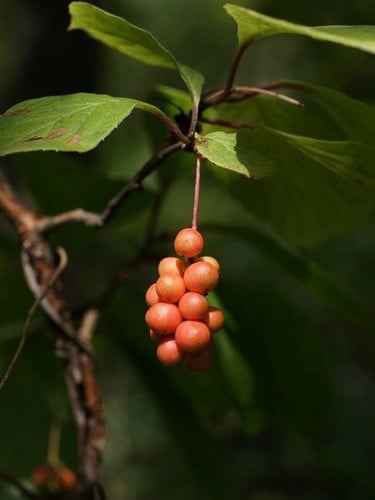
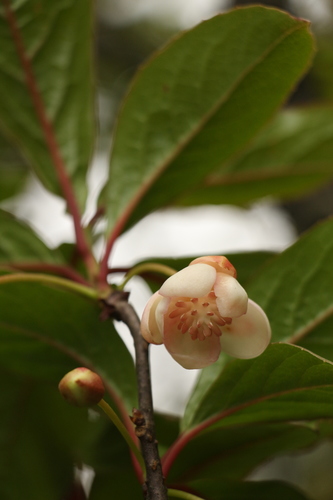
A big woody climber. It grows 25 m long. The leaves are alternate. They are simple and broadly oval. They are 10-15 cm long by 5-9 cm wide. The flowers occur singly and in the axils of leaves. They are occasionally on the stems. The fruit is 5 cm across. They are made up of 40-100 small berries. They are red when ripe. There are 1-2 seeds per berry.
Edible Uses
Fruit - raw. Somewhat astringent. Eaten when fully ripe, it has a sour, somewhat aromatic taste. The red, globose, aggregate fruit is composed of 40 - 100 sessile apocarps, each about 10 - 22mm long, 7 - 14mm wide and containing 1 - 2 seeds.
Traditional Uses
The ripe fruits are eaten. They are sour.
This uses section is brief — help expand it
Medicinal Uses
A decoction of the roots and stem is used as an expectorant. A decoction of the roots is applied as a lotion for rheumatism. The sap of the plant is drunk as a remedy for urinary problems, abdominal pains and diarrhoea. Applied topically, the sap is used to alleviate skin diseases. The fruits are used to alleviate skin problems. The bark is used to combat fever. The stem bark is used to treat menstrual disorders and blood deficiency.
Distribution
It is a tropical plant. It grows in tropical and mountain forests. It grows up to 2,400 m altitude.
Where It Grows
Asia, China, Indochina, Indonesia, Laos, Malaysia, Philippines, SE Asia, Singapore,
Cultivation
It can be grown by seeds. It can also be grown by semi-ripe stem cuttings.
Propagation
Seed - best sown as soon as it is ripe in a shady position in a nursery seedbed.. Prick out the seedlings into individual pots when they are large enough to handle and grow them on until they are large enough to plant out. Cuttings of half-ripe wood, 5 - 8cm with a heel. Good percentage. Layering of long shoots in the autumn.
Production
It flowers and fruits throughout the year.
Other Information
They are sometimes sold in markets.
Synonyms
Also Known As
Akar dama-dama, Belabar, Belebar, Hunyar buut, Hunyur buut, Kadsura, Kerukol akar, Ki lembur, Mendulai, Wera aroi, Wera areuy
References (7)
- Burkill, I.H., 1966, A Dictionary of the Economic Products of the Malay Peninsula. Ministry of Agriculture and Cooperatives, Kuala Lumpur, Malaysia. Vol 2 (I-Z) p 1296 (As Kadsura cauliflora)
- Flora Malesiana Vol 13 p 198 (As Kadsura cauliflora)
- Milow, P., et al, 2013, Malaysian species of plants with edible fruits or seeds and their evaluation. International Journal of Fruit Science. 14:1, 1-27
- Priyadi, H., et al, 2010, Five hundred plant species in Gunung Halimun Salak National Park West Java. A checklist including Sundanese names, distribution and use. CIFOR, FFPRI, SLU p 43
- PROSEA 12(2)
Show all 7 references Hide references
- Sukarya, D. G., (Ed.) 2013, 3,500 Plant Species of the Botanic Gardens of Indonesia. LIPI p 937
- World Checklist of Useful Plant Species 2020. Royal Botanic Gardens, Kew