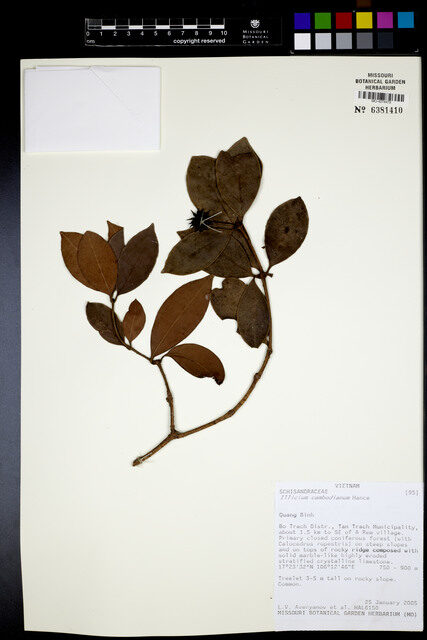
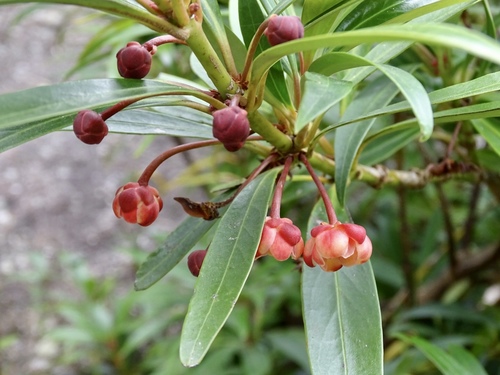
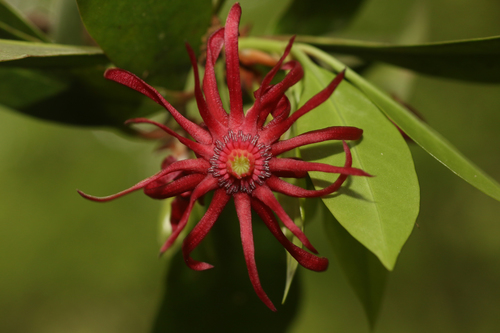
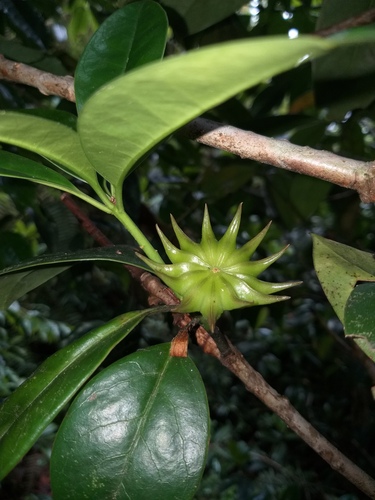
Schisandra grandiflora
(Wall.) Hook. f. & Thomson
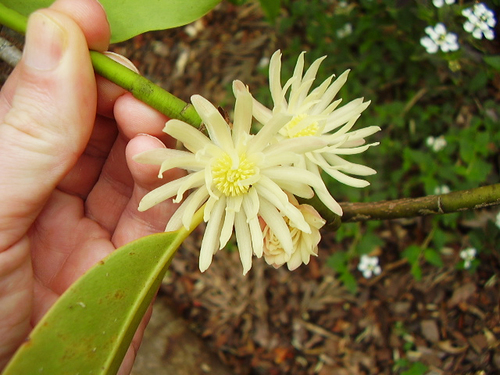
Himalayan beauty
iNaturalist· cc-by
(c) Siddarth Machado, some rights reserved (CC BY), uploaded by Siddarth Machado
iNaturalist· cc-by-nc
(c) Eliska Rejmankova, some rights reserved (CC BY-NC)
Summary
Source: WikipediaSchisandra grandiflora, called the large-flowered magnolia vine, is a species of flowering plant in the genus Schisandra, native to the Himalayas and Tibet. A deciduous, twining climber, it has gained the Royal Horticultural Society's Award of Garden Merit as an ornamental.
Description
A trailing herb or climber. It can climb 6 m high. The leaves have stalks. They are alternate or clustered. The are oval or wider near the base. They are pointed. They have small teeth near the end. It loses its leaves during the year. Plants are separately male and female. The flowers have stalks. They are white and droop. The flowers have a scent. The fruit is round and red. It does not have a stalk. It is fleshy and with 2 seeds.
Edible Uses
The fruit can be eaten raw or cooked. It has a pleasantly acid flavour and makes a good dessert fruit. Each fruit is about 6mm in diameter and is carried in grape-like clusters around 12cm long.
Traditional Uses
The ripe fruit are eaten. They can be eaten raw or cooked.
This uses section is brief — help expand it
Medicinal Uses
None known
Distribution
It is a temperate plant. In Nepal they grow between 1700-3300 m altitude. They grow in mixed forests. They need a well drained soil and partial shade.
Where It Grows
Asia, Bhutan, China, Europe, Himalayas, India, Indochina, Nepal, New Zealand, North America, Northeastern India, SE Asia, Sikkim, Tibet, Vietnam,
Cultivation
Plants are grown by seed or cuttings. Both male and female plants are needed for seed production.
Propagation
Seed is best sown in autumn in a cold frame. Stored seed should be pre-soaked for 12 hours in warm water before sowing in a greenhouse in spring. Germination can be slow and erratic. Prick out seedlings into individual pots when large enough to handle and grow on in light shade in the greenhouse for their first two years before planting out in early summer. Cuttings of half-ripe wood, 5–8cm with a heel, taken in August and rooted in a frame give a good success rate; overwinter in the greenhouse and plant out in late spring. Long shoots can also be layered in autumn.
Other Uses
None known Special Uses
Production
In Sikkim fruit are available June to October.
Other Information
It is popular.
Notes
There are about 25 Schisandra species.
Synonyms
Also Known As
Agali, Ageli, Ballon, Bani, Chimgaddi, Dhayik, Haliyude, Klandru, Kaljendru, Pahenlo singulto, Sigauto, Sillangti, Singara, Singato lahara, Singhatta lahara, Sirkul, Skeng-smra, Takseik-rik, Taksielrik
References (17)
- Ambasta S.P. (Ed.), 2000, The Useful Plants of India. CSIR India. p 556
- Aryal, K. P., et al, 2018, Diversity and use of wild and non-cultivated edible plants in the Western Himalaya. Journal of Ethnobiology and Ethnomedicine (2018) 14:10
- Bajracharya, D., 1980, Nutritive Values of Nepalese Edible Wild Fruits. Z. Lebensm. Unters. Forsch. 171: 363-366 (As Schizandra)
- Dangol, D. R. et al, 2017, Wild Edible Plants in Nepal. Proceedings of 2nd National Workshop on CUAOGR, 2017.
- Ding, X., 2021, Collection calendar: the diversity and local knowledge of wild edible plants used by Chenthang Sherpa people to treat seasonal food shortages in Tibet, China. Journal of Ethnobiology and Ethnomedicine 17:40
Show all 17 references Hide references
- Hedrick, U.P., 1919, (Ed.), Sturtevant's edible plants of the world. p 597
- J. D. Hooker, Fl. Brit. India 1:44. 1872 "Schizandra"
- Manandhar, N.P., 2002, Plants and People of Nepal. Timber Press. Portland, Oregon. p 416
- Marinelli, J. (Ed), 2004, Plant. DK. p 217
- Plants for a Future database, The Field, Penpol, Lostwithiel, Cornwall, PL22 0NG, UK. http://www.scs.leeds.ac.uk/pfaf/
- Savita, et al, 2006, Studies on wild edible plants of ethnic people in east Sikkim. Asian J. of Bio Sci. (2006) Vol. 1 No. 2 : 117-125
- Singh, H.B., Arora R.K.,1978, Wild edible Plants of India. Indian Council of Agricultural Research, New Delhi. p 72
- Sundriyal, M., et al, 1998, Wild edibles and other useful plants from the Sikkim Himalaya, India. Oecologia Montana 7:43-54
- Sundriyal, M., et al, 2004, Dietary Use of Wild Plant Resources in the Sikkim Himalaya, India. Economic Botany 58(4) pp 626-638
- Tsering, J., et al, 2017, Ethnobotanical appraisal on wild edible plants used by the Monpa community of Arunchal Pradesh. Indian Journal of Traditional Knowledge. Vol 16(4), October 2017, pp 626-637
- Upreti, K., et al, 2010, Diversity and Distribution of Wild Edible Fruit Plants of Uttarakhand. Bioversity Potentials of the Himalaya. p 185
- www.efloras.org Flora of China. Volume 7