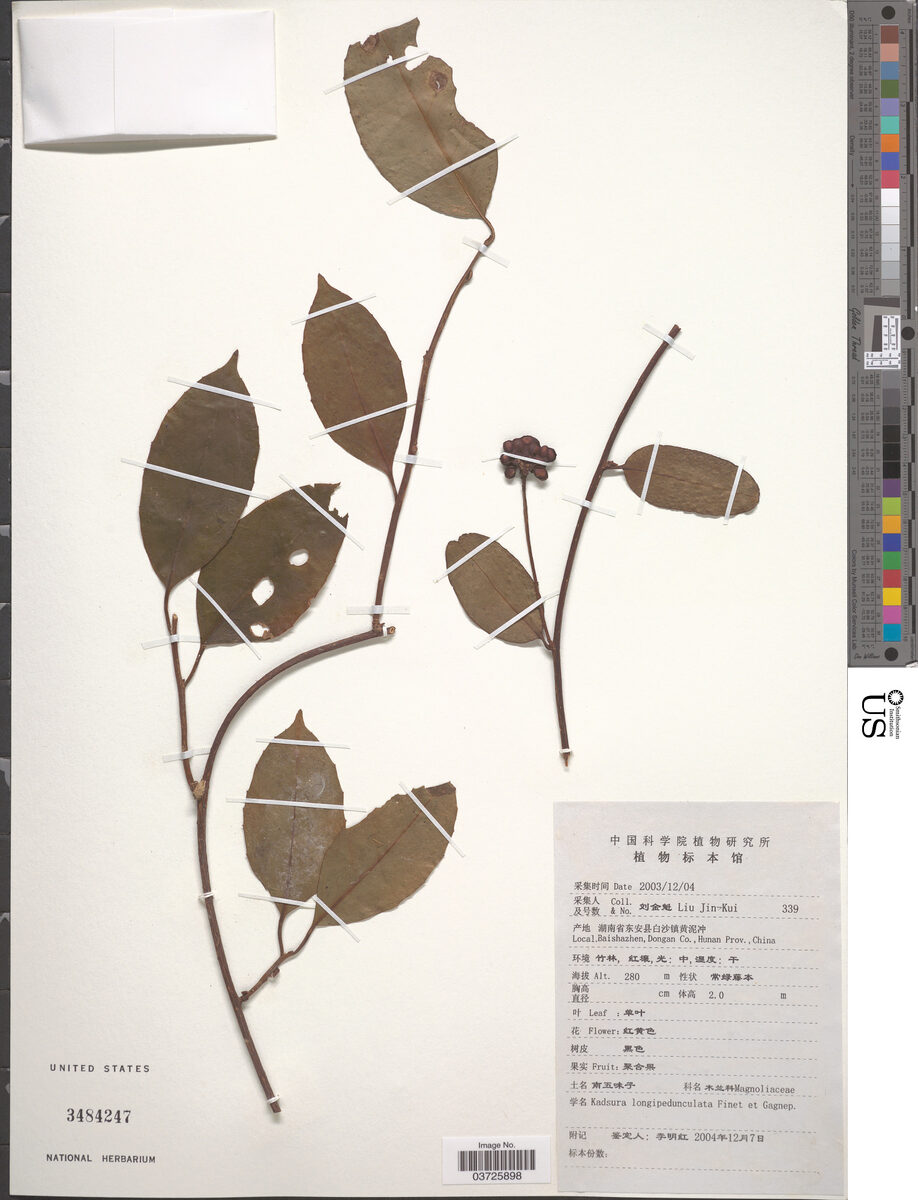
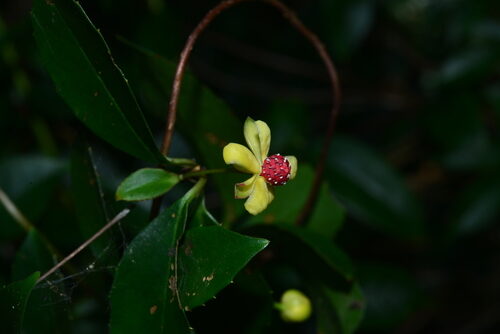
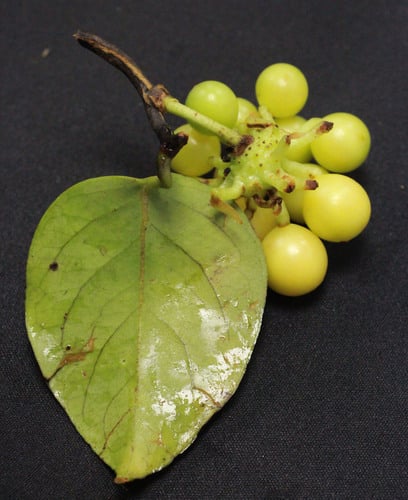
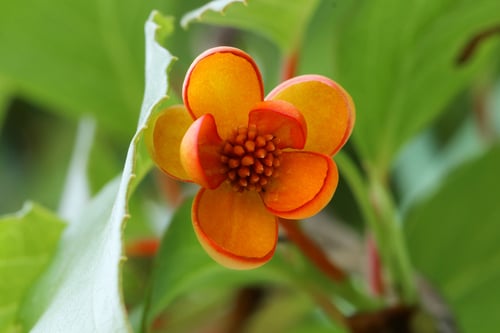
Schisandra henryi
C. B. Clarke
wikimedia· cc0
Wikimedia Commons - National Museum of Natural History
wikimedia· cc0
Wikimedia Commons - National Museum of Natural History
Summary
A deciduous climbing vine reaching 6 m in height. Hardy to UK zone 8 and frost tender. Flowers appear April to May. Dioecious species requiring both male and female plants for seed production. Tolerates light sandy, medium loamy, and heavy clay soils with good drainage. Grows in full shade to semi-shade and prefers moist conditions across a range of soil pH levels from mildly acidic to mildly alkaline.
Description
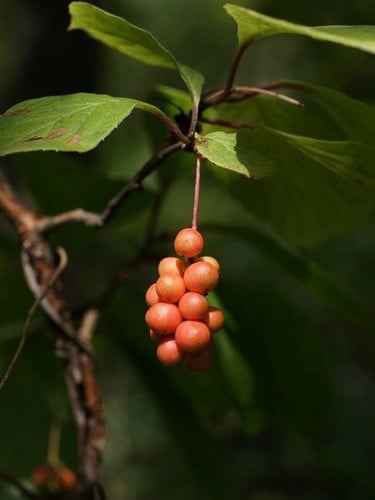
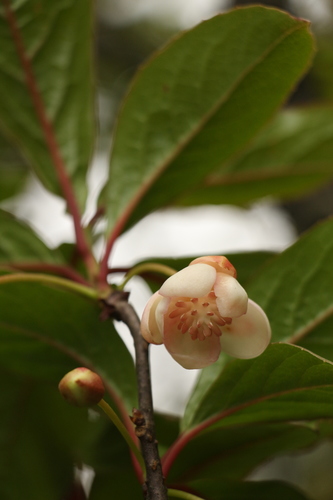
A trailing herb. Young branches have wings. The leaves are 8-12 cm long by 3-9 cm wide. The base is wedge shaped. The fruit is red and 5-10 mm long by 3-8 mm wide.
Edible Uses
The fruit can be eaten raw or cooked.
Traditional Uses
The fruit are eaten raw.
This uses section is brief — help expand it
Medicinal Uses
None known
Distribution
In Yunnan in China it grows below 1500 m above sea level. It grows in subtropical broadleaved evergreen forest.
Where It Grows
Asia, China, Indochina, Myanmar, SE Asia,
Cultivation
Prefers a rich well-drained moisture retentive soil. Prefers a slightly acid soil but tolerates some alkalinity if plenty of organic matter is added to the soil. Requires some protection from the most intense sunlight. Plants succeed in quite deep shade and are suitable for north-facing walls. Plants are intolerant of drought. Plants are not very cold-hardy in Britain, tolerating temperatures down to about -7°c. They succeed outdoors in the milder areas of the country, especially if given the protection of woodland or a wall. The young growth in spring can be damaged by late frosts. A very ornamental plant, it climbs by twining around supports. Dioecious. Male and female plants must be grown if seed is required.
Propagation
Seed is best sown in autumn in a cold frame. Stored seed should be pre-soaked for 12 hours in warm water before sowing in a greenhouse in spring. Germination can be slow and erratic. Prick out seedlings into individual pots when large enough to handle and grow on in light shade in the greenhouse for their first two years before planting out in early summer. Cuttings of half-ripe wood, 5–8cm with a heel, taken in August and rooted in a frame give a good success rate; overwinter in the greenhouse and plant out in late spring. Long shoots can also be layered in autumn.
Other Uses
None known Special Uses
Production
In China plants flower in April to August and fruit July to October.
Notes
There are about 25 Schisandra species.
Also Known As
Aqyuqqilni, Azhulalarou, Belibelangli
References (6)
- Altschul, S.V.R., 1973, Drugs and Foods from Little-known Plants. Notes in Harvard University Herbaria. Harvard Univ. Press. Massachusetts. no. 1015
- Hani Medicine of Xishuangbanna, 1999, p 123
- Jin, Chen et al, 1999, Ethnobotanical studies on Wild Edible Fruits in Southern Yunnan: Folk Names: Nutritional Value and Uses. Economic Botany 53(1) pp 2-14
- JSTOR Global Plants edible
- Plants for a Future database, The Field, Penpol, Lostwithiel, Cornwall, PL22 0NG, UK. http://www.scs.leeds.ac.uk/pfaf/
Show all 6 references Hide references
- www.efloras.org Flora of China. Volume 7