Searsia dentata
(Thunb.) F. A. Barkley
Nana-berry
iNaturalist· cc-by
(c) Sunčana Bradley, some rights reserved (CC BY), uploaded by Sunčana Bradley
iNaturalist· cc-by-nc
(c) Felix Riegel, some rights reserved (CC BY-NC), uploaded by Felix Riegel
iNaturalist· cc-by-sa
(c) grabbarg, some rights reserved (CC BY-SA), uploaded by grabbarg
Summary
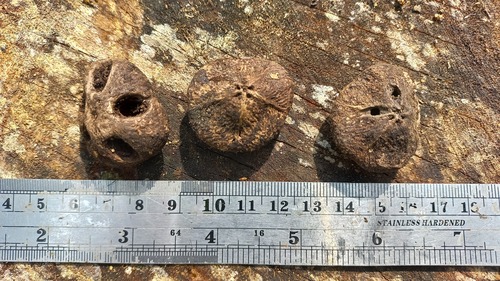
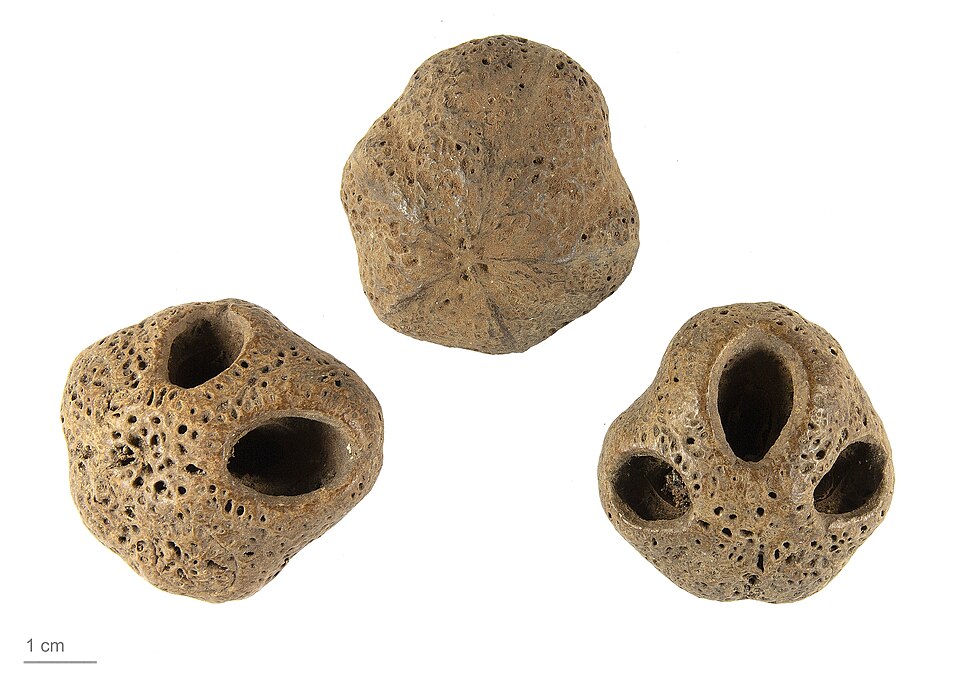
Source: WikipediaSearsia dentata, the nana-berry (English), or nanabessie (Afrikaans), is a medium-sized, deciduous tree, reaching a height of about 5 metres and a spread of 4 metres, and with a tendency to scramble through and over neighbouring trees. It occurs naturally in almost the whole of South Africa except the Western and Northern Cape Provinces. Its habitat varies from sea level to the highlands of the Drakensberg. It is frost-hardy and should be planted in full sun. The strongly aromatic leaves are usually conspicuously toothed (hence the name dentata), though sometimes they may be only slightly toothed. The tree produces small, creamy-white flowers in masses, developing into small, flattened drupes (5-6mm) which turn red or orange when ripe and brown when dry. The ripe fruits are eaten by birds, while the foliage is food for the larvae of the pepper tree moth Bombycomorpha bifascia.
Description
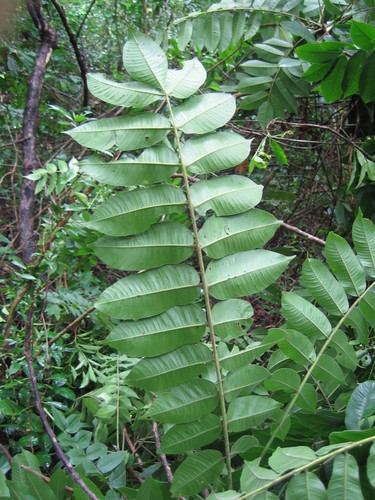
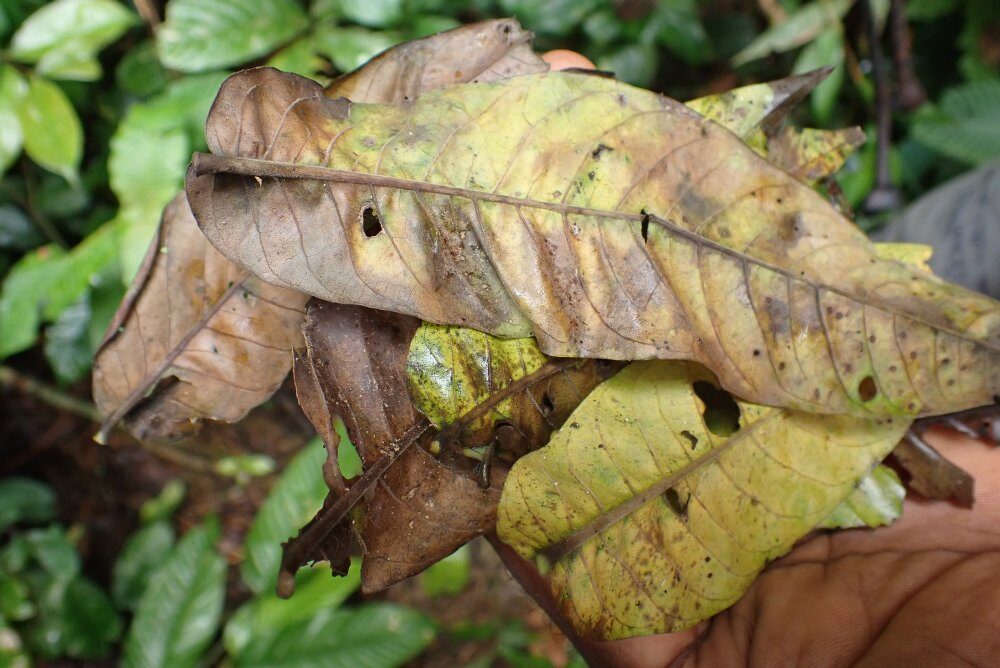
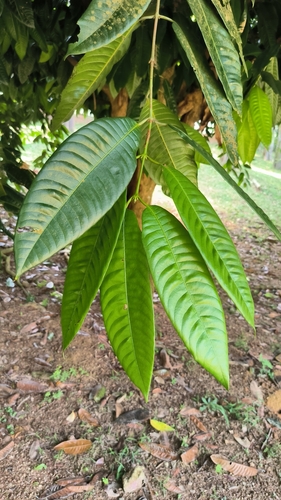
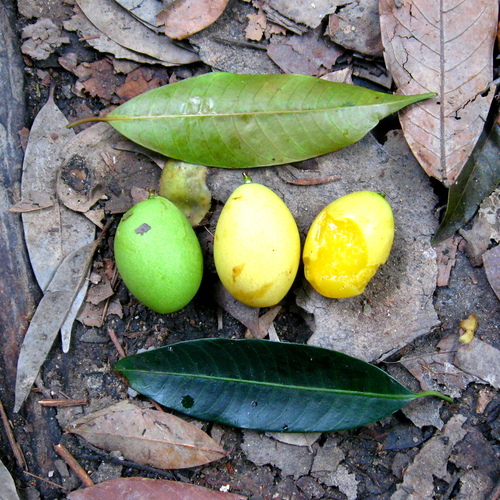
A shrub or small tree. It grows to 6 m high. The branches are grey. The foliage is soft. The twigs are red or yellow. The leaves have 3 leaflets. The leaves on on long leaf stalks. The leaves are thin and dark green on top and lighter underneath. The central leaflet is 2.5-5 cm long or it can be 8 cm long. It is oval and narrows to the base. The upper parts of the leaf has bold teeth along the edge. The flowers are small and yellow. They have a sweet smell. The flower clusters are in the axils of leaves or at the ends of branches. The fruit is small and round. It turns red or orange. The fruit are edible.
Edible Uses
The fruit are eaten raw and traditionally used to curdle milk, though they are normally only eaten in large quantities during times of famine.
Traditional Uses
The fruit are eaten raw. They are used to curdle milk.
This uses section is brief — help expand it
Known Hazards
Member of Anacardiaceae family; caution advised as some species in this family can cause allergic reactions.
Distribution
A tropical plant. It grows from medium to high altitudes. It can grow in arid places.
Where It Grows
Africa, East Africa, Eswatini, Lesotho, Mozambique, South Africa, Southern Africa, Swaziland, Zimbabwe,
Cultivation
Plants can be grown from seeds or cuttings.
Production
It is moderately fast growing.
Other Information
They are normally only eaten in large quantities in times of famine.
Notes
There are about 200 Rhus species.
Synonyms
Also Known As
Iambashira, Inhlangushane, Inhlolokotshane, Inklolo, Intlokoshiyane, Intokoloshane, Lebelebele, Mabelebele, Motshakutshaku, Mubikasadza, Mufungamfura, Muthakuthaku, Nanabessie, Ngaranga, Umkungu, Walesodi
References (18)
- Fox, F. W. & Young, M. E. N., 1982, Food from the Veld. Delta Books. p 75 (As Rhus dentata)
- Guillarmod, J., 1966, (As Rhus dentata)
- Jardin, C., 1970, List of Foods Used In Africa, FAO Nutrition Information Document Series No 2.p 158 (As Rhus dentata)
- Joffe, P., 2007, Creative Gardening with Indigenous Plants. A South African Guide. Briza. p 62 (As Rhus dentata)
- Long, C., 2005, Swaziland's Flora - siSwati names and Uses http://www.sntc.org.sz/flora/ (As Rhus dentata)
Show all 18 references Hide references
- Moffett, R. O., 2007, Name changes in the Old World Rhus and recognition of Searsia (Anacardiaceae). Bothalia 37,2: 165-175 (2007)
- Palgrave, K.C., 1996, Trees of Southern Africa. Struik Publishers. p 475 (As Rhus dentata)
- Palmer, E and Pitman, N., 1972, Trees of Southern Africa. Vol. 2. A.A. Balkema, Cape Town p 1239 (As Rhus dentata)
- Peters, C. R., O'Brien, E. M., and Drummond, R.B., 1992, Edible Wild plants of Sub-saharan Africa. Kew. p 50 (As Rhus dentata)
- Prodr. pl. cap. 52. 1794 (As Rhus dentata)
- Royal Botanic Gardens, Kew (1999). Survey of Economic Plants for Arid and Semi-Arid Lands (SEPASAL) database. Published on the Internet; http://www.rbgkew.org.uk/ceb/sepasal/internet [Accessed 28th March 2011] (As Rhus dentata)
- Ruiters-Welcome, A. K., 2019, Food plants of southern Africa. Ph.D. thesis. Univ. of Johannesburg p 15
- Schmidt, E., Lotter, M., & McCleland, W., 2007, Trees and shrubs of Mpumalanga and Kruger National Park. Jacana Media p 312 (As Rhus dentata)
- Shava, S., 2000, The Use of Indigenous Plants as Food by a Rural Community in the Eastern Cape: an Educational Exploration. Masters Thesis Rhodes University. p 66 (As Rhus dentata)
- Swaziland's Flora Database http://www.sntc.org.sz/flora (As Rhus dentata)
- Welcome, A. K. & Van Wyk, B.-E., 2019, An inventory and analysis of the food plants of southern Africa. South African Journal of Botany 122 (2019) 136–179
- World Checklist of Useful Plant Species 2020. Royal Botanic Gardens, Kew
- www.zimbabweflora.co.zw 2011 (As Rhus dentata)