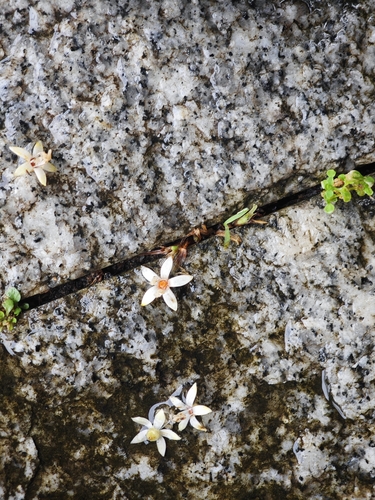
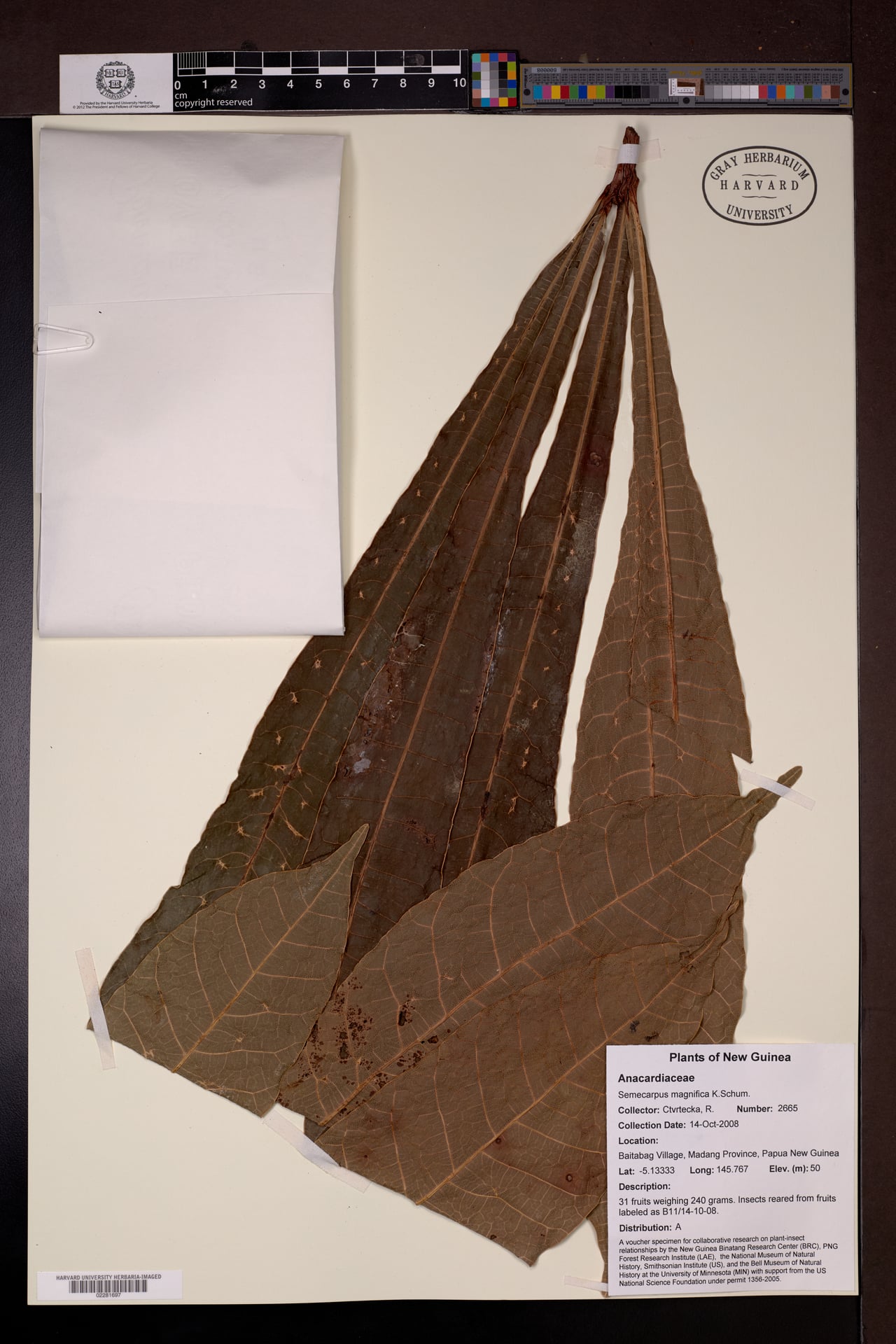
Antrocaryon amazonicum
(Ducke) B. L. Burrt & A. W. Hill
Amazonas antrocaryon
iNaturalist· cc-by-nc
(c) Fred Cristian Ramírez Guerra, some rights reserved (CC BY-NC), uploaded by Fred Cristian Ramírez Guerra
wikimedia· cc0
Wikimedia Commons (via Wikimedia Commons)
Summary
Source: WikipediaAntrocaryon amazonicum is a species of tree in the cashew family, Anacardiaceae. It is native to Brazil.
Description
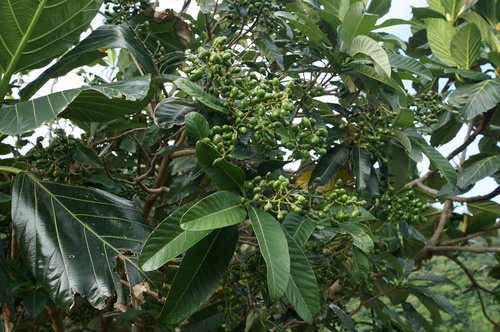
A tree. It loses many leaves during the year. It grows 30 m tall and has an open crown. The trunk is 60-90 cm across and has buttresses. Trees are separately male and female. The fruit is 2 cm long by 3 cm wide. The fruit is yellow.
Edible Uses
The fruit are eaten fresh and used in cool drinks and ice cream, though they must be consumed immediately upon ripening as they cannot be stored; fruit are sold in local markets.
Traditional Uses
The fruit are eaten and used in cool drinks and also for making ice cream. Fruit need to be eaten as soon as it ripens as it cannot be stored.
This uses section is brief — help expand it
Distribution
A tropical plant. It grows in lowland rainforest below 500 m above sea level. It is best in a sunny position. It can tolerate occasional flooding. It grows in flood plains in the Amazon.
Where It Grows
Amazon, Brazil*, Colombia, Peru, South America,
Cultivation
Plants can be grown from fresh seeds. Seeds should be cleaned and planted fresh. Seeds germinate in 80-100 days.
Propagation
Seed - best sown as soon as it is ripe - remove the seed pulp prior to sowing. Place the seed in individual containers in a lightly shaded position. Germination rates are usually low, with the seed sprouting within 80 - 100 days.
Other Uses
The wood is coarse-textured, light in weight, easily sawn, not very durable. It is of little use.
Other Information
The fruit is popular. Fruit are sold in local markets. Trees are cultivated.
Notes
An unresolved name in The Plant List. There are 5 Antrocaryon species.
Synonyms
Also Known As
Angongui, Cedro-branco, Jacaiaca, Jugo, Poupartier d'Amazonie
References (13)
- Bioversity New World Fruits Database (As Poupartia amazonica)
- Burtt, 1937, Annals of Boptany n.s. Oxford 1:251
- Cavalcante, P.B. 1991. Frutas comestíveis da Amazônia. Edições CEJUP. (As Poupartia amazonica)
- Ferns, Useful Tropical Plants.
- Fouqué, A. 1972. Espèces fruitières d'Amérique tropicale. Institut français de recherches fruitierès outre-mer (ifac) (As Poupartia amazonica)
Show all 13 references Hide references
- Grandtner, M. M. & Chevrette, J., 2013, Dictionary of Trees, Volume 2: South America: Nomenclature, Taxonomy and Ecology. Academic Press p 41
- Kermath, B. M., et al, 2014, Food Plants in the Americas: A survey of the domesticated, cultivated and wild plants used for Human food in North, Central and South America and the Caribbean. On line draft. p 682 (As Poupartia amazonica)
- Kew Plants of the World onLine
- Lorenzi, H., 2009, Brazilian Trees. A Guide to the Identification and Cultivation of Brazilian Native Trees. Instituto Plantarum de Estuados da Flora Ltda. Vol. 3 p 22 (As Poupartia amazonica)
- Martin, F. W., et al, 1987, Perennial Edible Fruits of the Tropics. USDA Handbook 642 p 79 (As Poupartia amazonica)
- Paz, F. S., et al, 2021, Edible Fruit Plant Species in the Amazon Forest Rely Mostly on Bees and Beetles as Pollinators. Journal of Economic Entomology, XX(XX), 2021, 1–13 (As Poupartia amazonica)
- Roa, J. A. G. & Boada, D. S. G., 2018, Fundación para el Fortalecimiento de la Fruticultura y Plantas Alimenticias no Convencionales en Colombia.
- Smith, N., Mori, S.A., et al, 2004, Flowering Plants of the Neotropics. Princeton. p 16