Antrocaryon klaineanum
Pierre
White mahogany
wikimedia· cc-by-sa
Wikimedia Commons - Roger Culos
iNaturalist· cc-by-nc
(c) Peter Vos, some rights reserved (CC BY-NC), uploaded by Peter Vos
iNaturalist· cc-by-nc
(c) Troos van der Merwe, some rights reserved (CC BY-NC), uploaded by Troos van der Merwe
Description
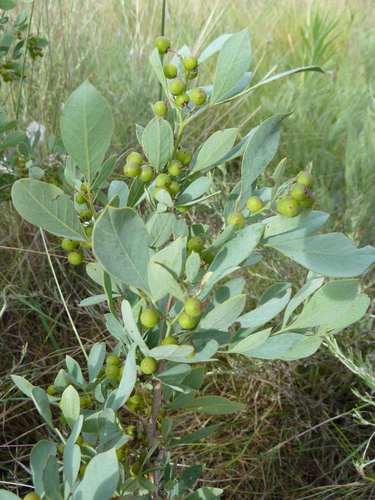
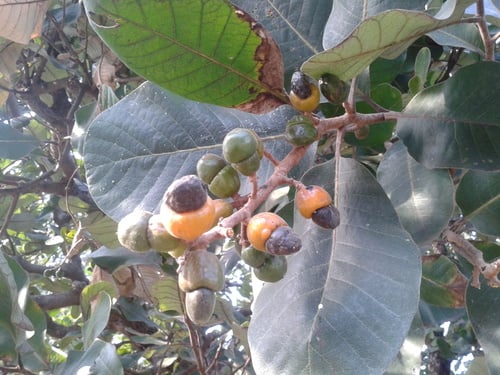
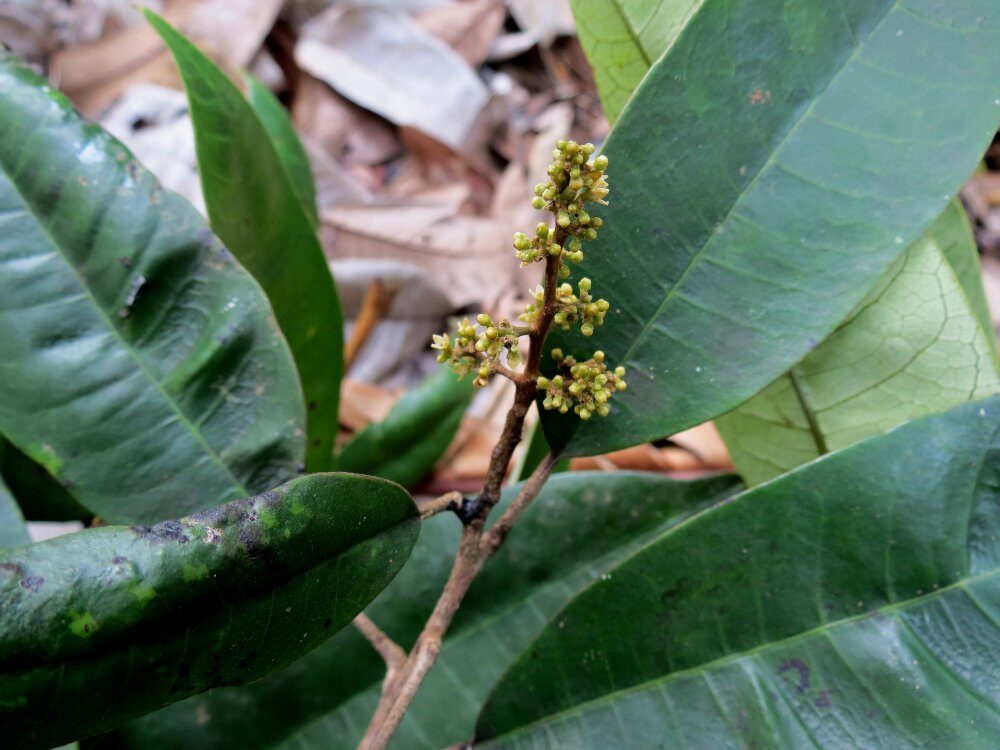
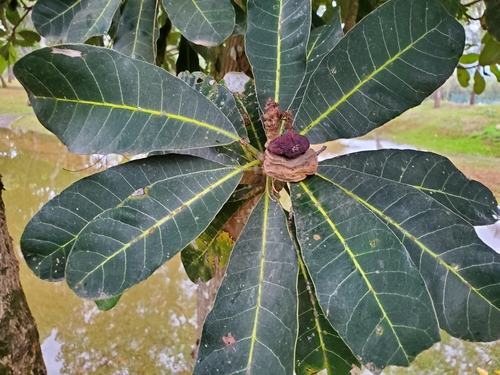
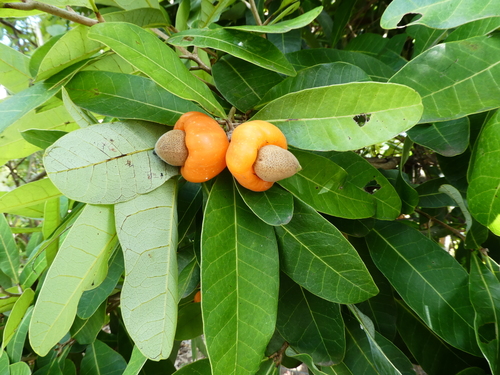
A tree. It grows 30 m high. The trunk is straight. The fruit are small and fleshy with a stone inside. The fruit are greenish-yellow. The nut contains 5 seeds. The nut shell is thick.
Edible Uses
Fruit - raw. An acid flavour. The fruit is a drupe resembling a small apple. The nut contains five seeds which are oily and edible, but the nut-shell is thick and the difficulty of getting to the seeds is an obstacle to their use.
Traditional Uses
The acid fruit are eaten. The seeds are oily and edible.
This uses section is brief — help expand it
Medicinal Uses
The powdered bark is used in the treatment of liver complaints.
Distribution
A tropical plant. It grows in dense humid forest in West Africa.
Where It Grows
Africa, Cameroon, Central Africa, Central African Republic, CAR, Congo DR, Congo R, Equatorial Guinea, Gabon, Nigeria, West Africa,
Cultivation
A plant of the moist, lowland tropics.
Other Uses
The bark contains a small quantity of glutinous oleo-resin. The heartwood is pinkish white to light brown; it is not distinctly demarcated rom the sapwood. The texture is medium; the grain straight or interlocked, sometimes wavy. It is similar to mahogany in appearance, but paler. The wood is light in weight, soft, not durable, being susceptible to fungi, dry wood borers and termites. The wood seasons quickly with only a slight risk of check or distortion; once dry it is moderately stable to stable in service. The wood works well with ordinary tools, though sometimes there is grain tearing, and filling is necessary in order to obtain a good finish; nailing and screwing are good; gluing is correct. The wood has many uses, including house frames, light carpentry, interior joinery, boxes and crates, furniture, veneer and blockboard.
Notes
There are 5 Antrocaryon species.
Synonyms
Also Known As
Besongome, Mgbe, Mukongongu, Mungongu-bugu, Mungongu-syega, Ngongo-djoke, Ogogondo, Okongongo, Okorobomo, Onkonko, Onxabili, Onzakong, Osongongo
References (16)
- Billong Fils, P. E., et al, 2020, Ethnobotanical survey of wild edible plants used by Baka people in southeastern Cameroon. Journal or Ethnobiology and Ethnomedicine. 16:64 p 7
- Bircher, A. G. & Bircher, W. H., 2000, Encyclopedia of Fruit Trees and Edible Flowering Plants in Egypt and the Subtropics. AUC Press. p 35
- Burkill, H. M., 1985, The useful plants of west tropical Africa, Vol. 1. Kew.
- Busson, 1965,
- Dalziel, J. M., 1937, The Useful plants of west tropical Africa. Crown Agents for the Colonies London.
Show all 16 references Hide references
- Global Plants JSTOR
- Harris, D. J., 2002, The vascular plants of the Dzanga-Sangha Reserve, Central African Republic. National Botanic Garden of Belgium, 2002. – 274 pages p 39
- Jardin, C., 1970, List of Foods Used In Africa, FAO Nutrition Information Document Series No 2.p 121
- Latham, P. & Mbuta, A. K., 2014, Useful Plants of Bas-Congo Province, Democratic Republic of Congo. Volume 1. p 57
- Latham, P. & Mbuta, A. K., 2017, Plants of Kongo Central Province, Democratic Republic of Congo. Volume 1. 3rd ed p 61
- Nkeoua, G. & Boundzanga, G. C., 1999, Donnees sur les produits forestieres non ligneux en Republique du Congo. FAO. p 20
- Peters, C. R., O'Brien, E. M., and Drummond, R.B., 1992, Edible Wild plants of Sub-saharan Africa. Kew. p 48
- Raponda-Walker, A & Sillans, R., 1961, Les Plantes Utiles du Gabon. Editions Paul Lechevalier, Paris. p 57 (Drawing)
- Vivien, J. & Faure, J.J., 1985, Abres des forets dense d'Afrique Centrale. Agence de Cooperation Culturelle et Technique. Paris. p 4
- Vivien, J., & Faure, J.J., 1996, Fruitiers Sauvages d'Afrique. Especes du Cameroun. CTA p 21
- World Checklist of Useful Plant Species 2020. Royal Botanic Gardens, Kew