Antrocaryon nannanii
De Wild.
Bokongo
gbif· cc-by-nc-nd
Diosdado Nguema, West & Central Africa programme
gbif· cc-by-nc-nd
Diosdado Nguema, West & Central Africa programme
gbif· cc-by-nc-nd
Diosdado Nguema, West & Central Africa programme
Description
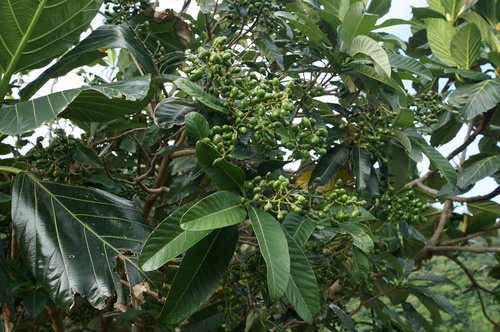
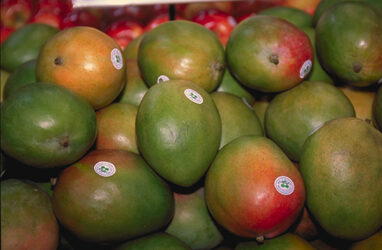
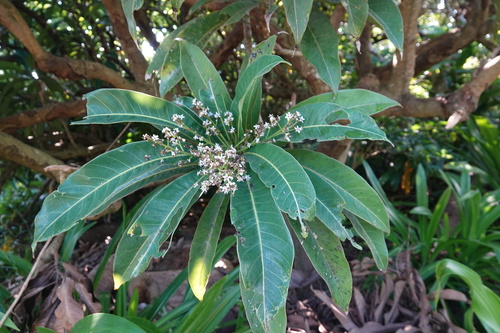
A large tree. It grows 20-40 m tall. The trunk is straight and can be 30-120 cm across. The leaves are crowded at the ends of branches. The fruit are green and 5 cm long. They have a hard coat.
Edible Uses
The seeds are eaten raw or roasted and are also used for flavouring and oil production. The sour flesh of the fruit is eaten raw.
Traditional Uses
The seeds are eaten raw or roasted. The nuts are also used for flavouring and for oil. The flesh of the fruit is eaten raw. It is sour.
This uses section is brief — help expand it
Medicinal Uses
The nuts are used for flavouring and oil.
Distribution
A tropical plant. It grows in sandy forests. It grows in humid forests.
Where It Grows
Africa, Angola, Cameroon, Central Africa, Congo DR, Côte d'Ivoire, Equatorial Guinea, Gabon, Ghana, Guinea, Guinée, Ivory Coast, West Africa,
Cultivation
Plants grow from seeds. It can possibly be grown from cuttings.
Other Uses
The bark is a source of tannins. The seeds are the source of a non-drying oil called Congo oil. Said to be similar to olive oil (Olea europaea), it slowly becomes rancid. The heartwood is pinkish white to light brown; it is not distinctly demarcated rom the sapwood. The texture is medium; the grain straight or interlocked, sometimes wavy. The wood is light in weight, soft, not durable, being susceptible to fungi, dry wood borers and termites. The wood seasons quickly with only a slight risk of check or distortion; once dry it is moderately stable to stable in service. The wood works well with ordinary tools, though sometimes there is grain tearing, and filling is necessary in order to obtain a good finish; nailing and screwing are good; gluing is correct. The wood has many uses, including house frames, light carpentry, interior joinery, boxes and crates, furniture, veneer and blockboard.
Production
In Congo fruit are available August to November.
Notes
There are 5 Antrocaryon species.
Synonyms
Also Known As
Agabum, Akoua, Angonga, Anguekong, Aprokuma, Bitri, Bokongolo, Bomenya, Esenge, Esengeli, Gonyo, Jongo, Kango, Kongo, Kula panda, Manga ya sende, Mongongo, Mugongo, N'gongo, Okongo, Onzabili, Utiongo
References (10)
- Bircher, A. G. & Bircher, W. H., 2000, Encyclopedia of Fruit Trees and Edible Flowering Plants in Egypt and the Subtropics. AUC Press. p 35
- Ferns, Useful Tropical Plants
- Jardin, C., 1970, List of Foods Used In Africa, FAO Nutrition Information Document Series No 2.p 32, 121
- Latham, P. & Mbuta, A. K., 2014, Useful Plants of Bas-Congo Province, Democratic Republic of Congo. Volume 1. p 57
- Latham, P. & Mbuta, A. K., 2017, Plants of Kongo Central Province, Democratic Republic of Congo. Volume 1. 3rd ed p 62
Show all 10 references Hide references
- Liengola, I. B., 2001, A contribution to the study of native edible plants by the Turumbu and Lokele of the Tshopo District, Province Orientale, D. R. Congo. Syst. Geogr. Pl. 71:687-698
- Mosango M., Szafranski F., 1985, Plantes sauvages à fruits comestibles dans les environs de Kisangani (Zaïre). In: Journal d'agriculture traditionnelle et de botanique appliquée, 32e année, pp. 177-190
- Terashima, H., & Ichikawa, M., 2003, A comparative ethnobotany of the Mbuti and Efe hunter-gatherers in the Ituri Forest, Democratic Republic of Congo. African Study Monographs, 24 (1, 2): 1-168, March 2003
- Termote, C., et al, 2011, Eating from the wild: Turumbu, Mbole and Bali traditional knowledge of non-cultivated edible plants, District Tshopo, DRCongo, Gen Resourc Crop Evol. 58:585-618
- Termote, C., 2012, Wild edible plant use in Tshopo District, Democratic Republic of Congo. Universiteit Gent. p 69