Bouea oppositifolia
(Roxb.) Meisn.
Plum mango
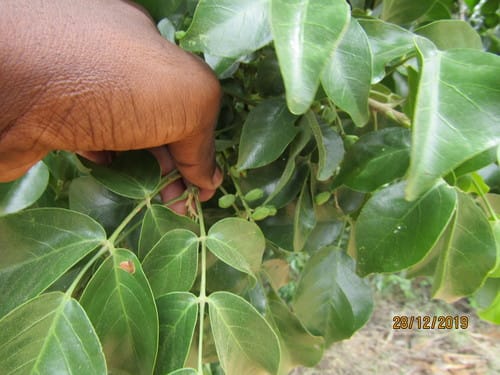
iNaturalist· cc-by-nc-sa
(c) Min Sheng Khoo, some rights reserved (CC BY-NC-SA)
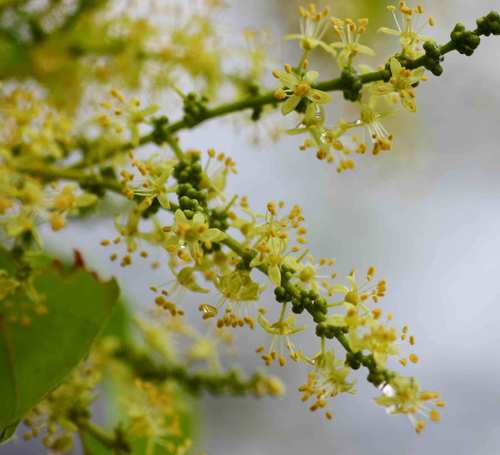
iNaturalist· cc-by-nc
(c) Yusran E. Ritonga, some rights reserved (CC BY-NC)
Summary
Source: WikipediaBouea oppositifolia, also known as plum mango, kundang, kundangan or remenia, is a species of flowering plant, a fruit tree in the mango family, that is native to Indochina and Southeast Asia. The tree and its fruit are commonly confused with the closely related Bouea macrophylla. B. macrophylla has lanceolate leaves and round yellow fruit, while B. oppositifolia has oblong leaves and oval red/yellow fruit.
Description
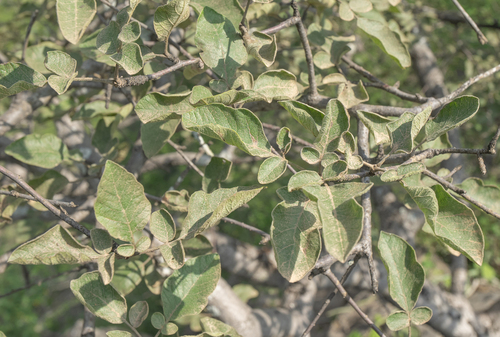
A small tree. It grows 8-10 m tall. It can grow 20-40 m high and have a trunk 30 cm across. The bark is dark grey and can have shallow cracks. The leaves are opposite. They are simple, sword shaped and rough. The flowers are in a loose flower arrangement. The flowers have 3-5 petals. The fruit has one seed inside a violet stone. The flowers and fruit are at the ends of twigs. The ripe fruit are orange yellow. It is like a small mango. They are 2.5 cm long. The flesh is yellow.
Edible Uses
Young fruit can be eaten raw, sweetened, or used in cooking; some are pickled. Ripe fruit are sweet and eaten fresh, while half-ripe fruit are made into preserves. The leaves are also edible.
Traditional Uses
The young fruit can be eaten raw or sweetened. These are also used in cooking. Some are pickled. Ripe fruit are sweet. Half ripe fruit are made into preserves.
Distribution
A tropical plant. It grows in lowland tropical rainforests up to 600 m above sea level. It grows in monsoonal climates. In Yunnan.
Where It Grows
Asia, Andaman Islands, Bangladesh, Brunei, Cambodia, China, India, Indochina, Indonesia, Laos, Malaysia, Myanmar, Pacific, Philippines, SE Asia, Thailand, Vietnam,
Cultivation
Plants are grown from seeds.
Other Uses
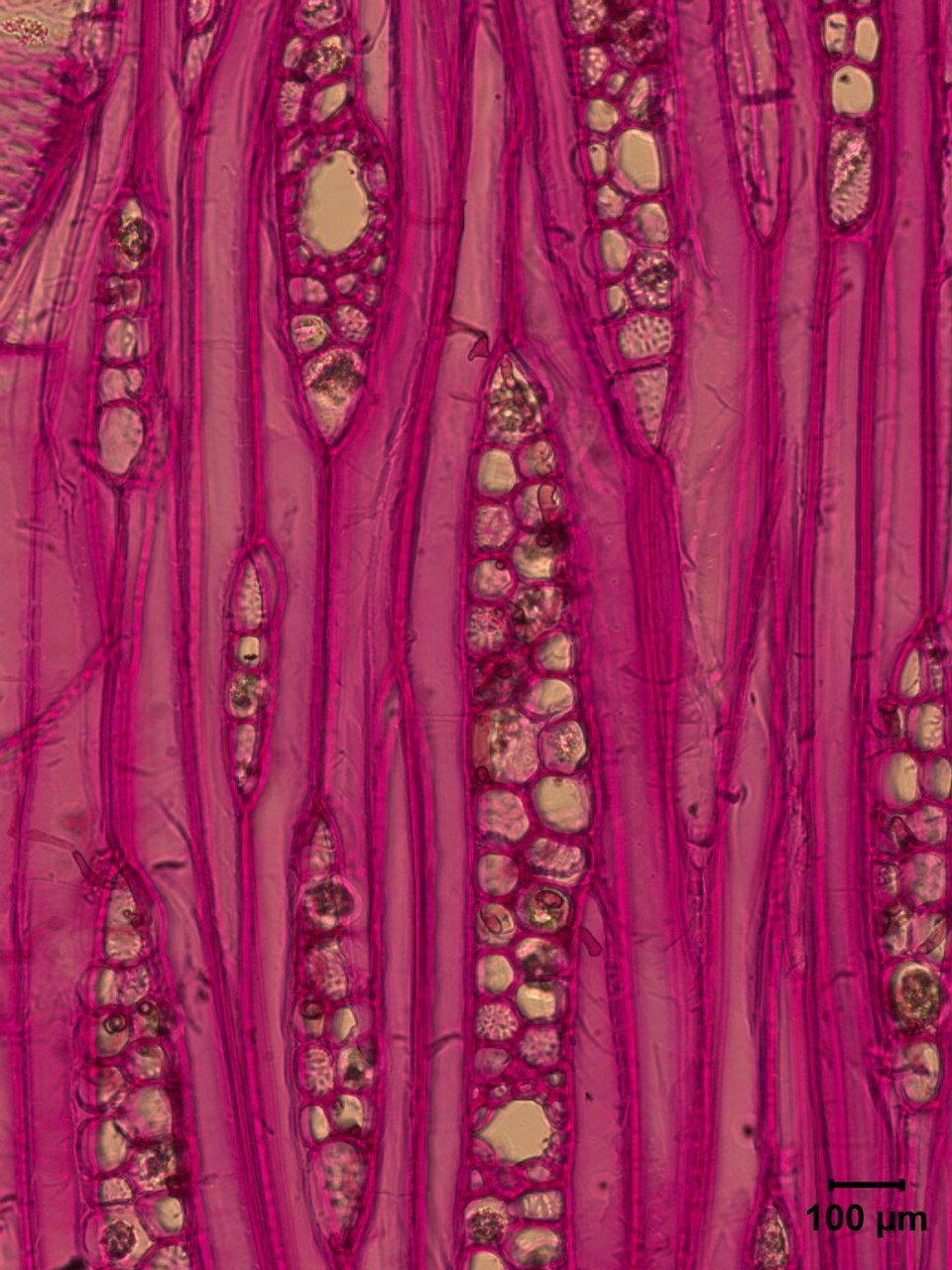
The heartwood is dark brown with black streaks; it is sharply demacated from the light brown sapwood, which has a reddish tinge. Figures are formed by dark-coloured wood parenchyma on flat-sawn surfaces; dark-coloured corewood may be present; vessel lines are distinct: the texture is coarse and even; the grain is straight and/or interlocked. The wood is moderately hard to hard. It is suitable for medium construction under cover, whilst other uses include veneer and plywood, planking, general cabinet works and furniture.
Production
Fruiting is seasonal.
Other Information
It is a cultivated fruit.
Synonyms
Also Known As
Asam djanar, Bandjar, Baran, Barine, Bhallam, Jangali aam, Kedjauw lepang, Khong, Mailam, Ma phang, Ma pring, Mak prang, Marian tree, Marrion plum tree, Mayan, Ma yong, Mayong chit, Miriam, Pani-pani, Pohon raman, Ramania pipit, Remia, Rengas, Rumenia, Rumia or Genia, Sa-taa, Taw-mayan, Umpas, Uriaam, Uriam
References (34)
- Ambasta, S.P. (Ed.), 2000, The Useful Plants of India. CSIR India. p 79
- Arora, R. K., 2014, Diversity in Underutilized Plant Species - An Asia-Pacific Perspective. Bioversity International. p 60
- BARC, 2016, State of Biodiversity for Food and Agriculture in Bangladesh. Bangladesh Agricultural Research Council.
- Bircher, A. G. & Bircher, W. H., 2000, Encyclopedia of Fruit Trees and Edible Flowering Plants in Egypt and the Subtropics. AUC Press. p 62
- Burkill, I.H., 1966, A Dictionary of the Economic Products of the Malay Peninsula. Ministry of Agriculture and Cooperatives, Kuala Lumpur, Malaysia. Vol 1 (A-H) p 358 (As Bouea burmanica)
Show all 34 references Hide references
- Chayamarit, K., 1994, Preliminary Checklist of the Family Anacardiaceae in Thailand. Thai For. Bull. 22:1-25
- Coronel, R.E., 1982, Fruit Collections in the Philippines. IBPGR Newsletter p 9 (As Bouea burmanica)
- Ding Hou, 1978, Anacardiaceae, in Flora Malesiana Ser 1 Vol 8(3) p 468
- Dobriyal, M. J. R. & Dobriyal, R., 2014, Non Wood Forest Produce an Option for Ethnic Food and Nutritional Security in India. Int. J. of Usuf. Mngt. 15(1):17-37
- Hanum, F. I., 1999, Plant Diversity and Conservation Value of Ayer Hitam Forest, Selangor, Peninsula Malaysia. Pertanika J. Trop. Agric. Sci. 22(2):73-83
- Hedrick, U.P., 1919, (Ed.), Sturtevant's edible plants of the world. p 111 (As Bouea burmanica)
- Jacquat, C., 1990, Plants from the Markets of Thailand. D.K. Book House p 80
- Kebler, P. J. A., & Kidiyasa, 1994, Trees of the Balikpapan-Samarinda area of East Kalimantan, Indonesia. The Tropenbos Foundation, Wageningen, The Netherlands. p 37
- Macmillan, H.F. (Revised Barlow, H.S., et al) 1991, Tropical Planting and Gardening. Sixth edition. Malayan Nature Society. Kuala Lumpur. p 296
- Martin, F.W. & Ruberte, R.M., 1979, Edible Leaves of the Tropics. Antillian College Press, Mayaguez, Puerto Rico. p 174
- Martin, F. W., et al, 1987, Perennial Edible Fruits of the Tropics. USDA Handbook 642 p 13
- Martin, M.A., 1971, Introduction L'Ethnobotanique du Cambodge. Centre National de la Recherche Scientifique. Paris. (As Bouea burmanica)
- Milow, P., et al, 2013, Malaysian species of plants with edible fruits or seeds and their evaluation. International Journal of Fruit Science. 14:1, 1-27
- Morton, J. F., 1987, Fruits of Warm Climates. Wipf & Stock Publishers p 238
- Nakahara, K. et al, 2002, Antimutagenicity of Some Edible Thai Plants, and a Biocative Carbazole Alkaloid, Mahanine, Isolated from Micromelum minutum. Journal of Agricultural and Food Chemistry. 50: 4796-4892
- Norfaizal, , M., et al, 2014, Flora Diversity of Sungai Teris, Karu Wildlife reserve, Pahang, Malaysia. Journal of Wildlife and Parks (2014) 28 : 81-91
- Pasha, M. K. & Uddin, S. B., 2019, Minor Edible Fruits of Bangladesh. Bangladesh J. Plant Taxon. 26(2): 299–313
- Phon, P., 2000, Plants used in Cambodia. © Pauline Dy Phon, Phnom Penh, Cambodia. p 99
- Pl. vasc. gen. comm. 55. 1837
- PROSEA (Plant Resources of South East Asia) handbook, Volume 2, 1991, Edible fruits and nut. p 105
- Saw, L.G., LaFrankie, J. V. Kochummen, K. M., Yap S. K., 1991, Fruit Trees in a Malaysian Rain Forest. Economic Botany, Vol. 45, No. 1, pp. 120-136
- Slik, F., www.asianplant.net
- Soepadmo, E. and Wong, K. M. and Saw, L. G., 1996, Tree Flora of Sabah and Sarawak. Forestry Malaysia. Volume Two. p 7
- Sukarya, D. G., (Ed.) 2013, 3,500 Plant Species of the Botanic Gardens of Indonesia. LIPI p 160
- USDA, ARS, National Genetic Resources Program. Germplasm Resources Information Network - (GRIN). [Online Database] National Germplasm Resources Laboratory, Beltsville, Maryland. Available: www.ars-grin.gov/cgi-bin/npgs/html/econ.pl (10 April 2000)
- Wiersema, J. H. & Leon, B., 2013, World Economic Plants. A Standard Reference CRC Press. 2nd Ed. p 109
- Wong, K. C., Collection and Evaluation of Under-Utilized Tropical and Subtropical Fruit Tree Genetic Resources in Malaysia. JIRCAS International Symposium Series No. 3: 27-38 (As Bouea microphylla)
- World Checklist of Useful Plant Species 2020. Royal Botanic Gardens, Kew
- Zawiah, N. & Othaman, H., 2012, 99 Spesies Buah di FRIM. Institut Penyelidikan Perhutanan Malaysia. p 72