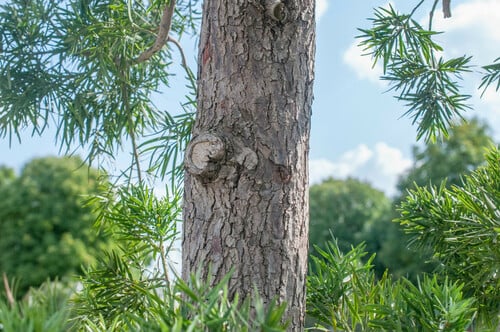
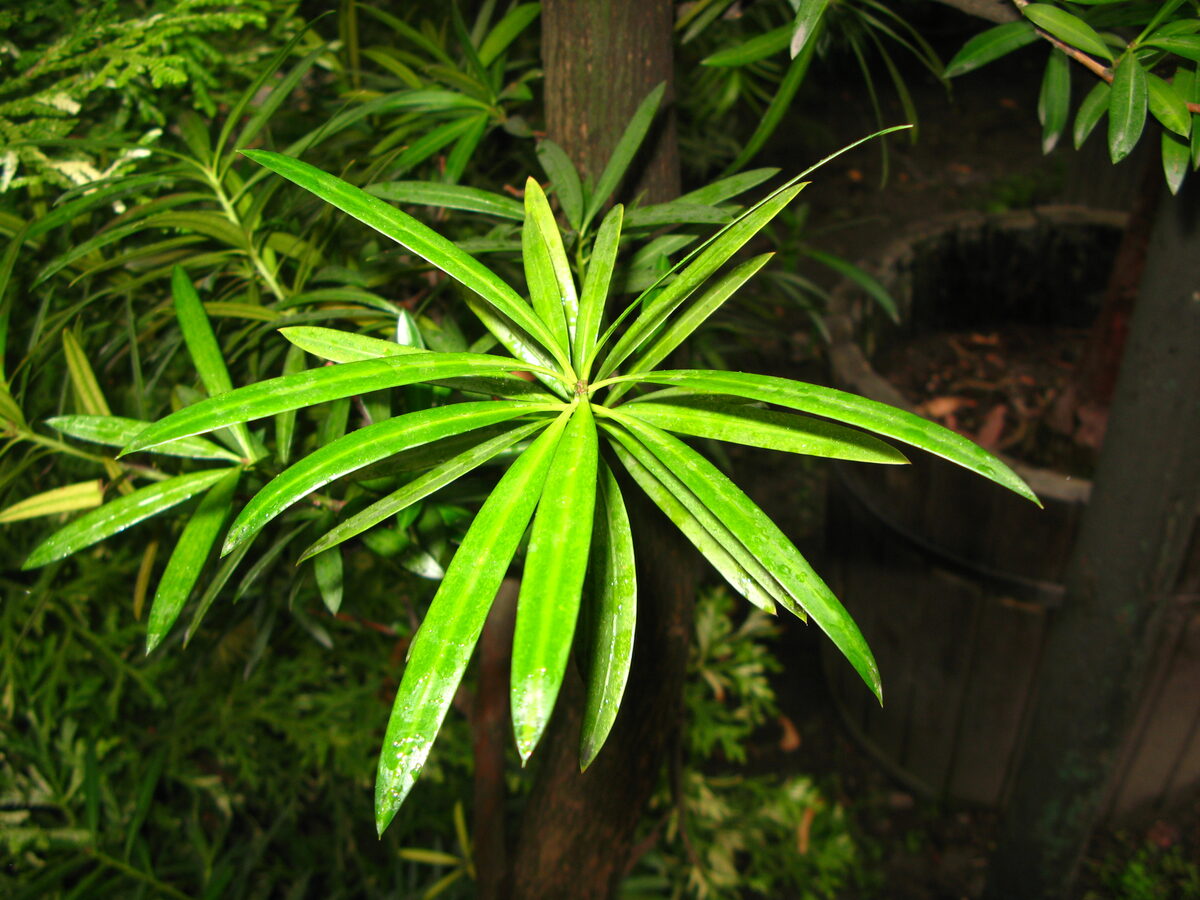
Podocarpus parlatorei
Pilg.
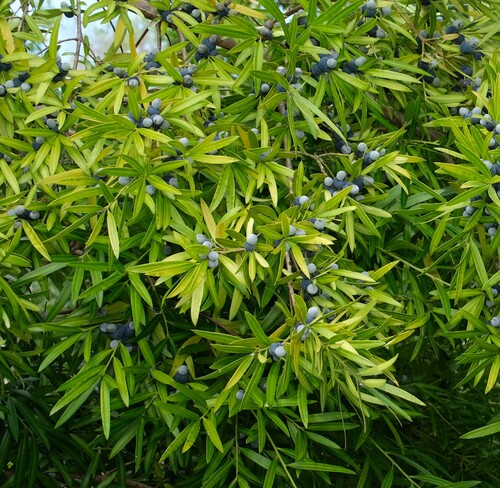
Pino de monte
iNaturalist· cc-by
(c) Marcos Gramaglia, some rights reserved (CC BY)
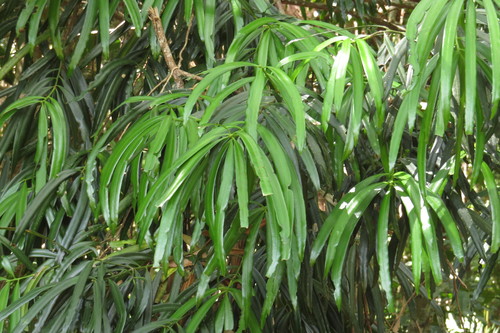
iNaturalist· cc-by
(c) Marcos Gramaglia, some rights reserved (CC BY)
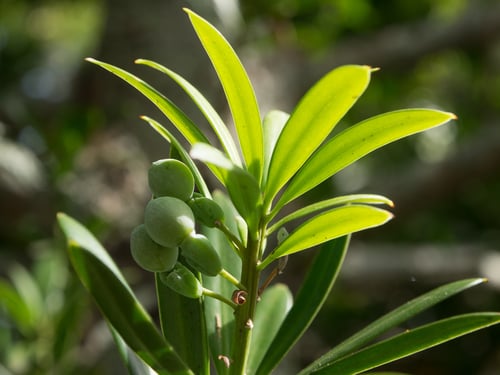
iNaturalist· cc-by-nc
(c) Gabriel Reinoso Franchino, some rights reserved (CC BY-NC)
Summary
Source: WikipediaPodocarpus parlatorei is a species of tree in the family Podocarpaceae and native to Argentina and Bolivia, where it grows on steep hillsides on the eastern flanks of the Andes. It has been harvested commercially in the past but is now protected under CITES. The International Union for Conservation of Nature has assessed its status as being "near threatened".
Description
A tropical tree in the Podocarpaceae family, native to tropical regions.
This description is brief — help expand it
Edible Uses
The fruit is edible.
Distribution
It is a tropical plant.
Where It Grows
Argentina, Bolivia, South America,
Cultivation
A slow-growing species, with 3 - 5mm increases in bole diameter per year. A dioecious species; both male and female forms need to be grown if fruit and seed are required.
Propagation
The seed can be sown at any time of the year in a sandy soil, though it is probably best sown as soon as it is ripe. When they are large enough to handle, prick the seedlings out into individual pots and grow them on until large enough to plant out. Cuttings of half-ripe terminal shoots, 5 - 10cm long, in a frame.
Other Uses
The heartwood is slightly pink to reddish; the sapwood is yellowish-white. The grain is straight; the lustre medium; there is no distinctive taste or aroma. The wood is light in weight; soft; durable, especially if kept dry. It is easy to work and finishes well. The wood is a major source of material for making pencils and is also used commercially for purposes such as construction, furniture, flooring, decorative veneer; locally, it is used for posts, utensils, house construction etc. The wood is used for fuel. We do not have a specific description for the wood, but the following is a general desciption of Podocarpus wood in the Americas:- The heartwood is pale yellow to yellowish brown; it is not distinct from the sapwood. The texture is fine and uniform without conspicuous zones of latewood; somewhat lustrous; the grain is usually straight but may be slightly interlocked; odour or taste are absent or not distinctive in seasoned wood. The heartwood from trees grown in Belize is reported to be moderately durable with ground contact under tropical exposure. Durability of other species from elsewhere are reported as low. The wood air-seasons rapidly with little or no warping or checking. Movement in service is rated as small. It works easily with hand and power tools; nails easily; and takes stain, varnish, and paint satisfactorily. The wood is used for joinery, millwork, furniture components, boxes and crates, general construction, veneer and plywood, pulp and paper, pattern making. The plant is used as a living fence around houses, pastures etc. A cold-tolerant pioneer species that is capable of regenerating following large-scale disturbances; for example, it is the most abundant species in post-grazing secondary forests in its native range. Ecological studies on forest dynamics has shown that the tree rarely regenerates within the closed canopy of mature forests but instead abundant regeneration occurs in open areas after large-scale disturbances. Recruitment is intense at forest edges but absent in grassland areas due to a lack of major dispersal agents. As a pioneer and long-lived tree, it is an important forest component in facilitating the establishment of many other shade-tolerant species.
Synonyms
Also Known As
Pino, Pino blancao, Pino del cerro, Pino de salta, Pino montano, Pino morocho, Pino tucumano
References (2)
- Carretero, A. L., 2005, Useful Plants and traditional knowledge in the Tucumano-Boliviano Forest. M. Sc. Thesis Institute of Biological Science University of Aarhus, Denmark p 55
- Grandtner, M. M. & Chevrette, J., 2013, Dictionary of Trees, Volume 2: South America: Nomenclature, Taxonomy and Ecology. Academic Press p 516