Pistacia lentiscus
L.
Mastic Tree, Mastic shrub
iNaturalist· cc-by-sa
(c) anonymous, some rights reserved (CC BY-SA)
iNaturalist· cc-by-nc
(c) Beat Akeret, some rights reserved (CC BY-NC), uploaded by Beat Akeret
iNaturalist· cc-by-nc-sa
(c) biodivinf, some rights reserved (CC BY-NC-SA)
Summary
Source: WikipediaPistacia lentiscus (also lentisk or mastic) is a dioecious evergreen shrub or small tree of the genus Pistacia native to the Mediterranean Basin. It grows up to 4 m (13 ft) tall and is cultivated for its aromatic resin, mainly on the Greek island of Chios, around the Turkish town of Çeşme and northern parts of Iraq.
Description
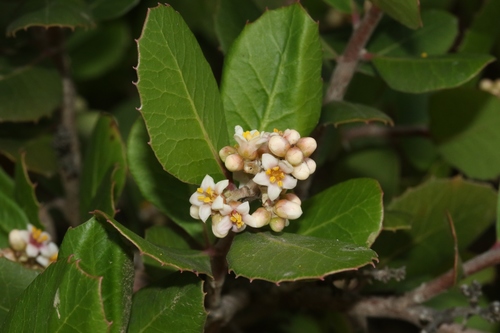
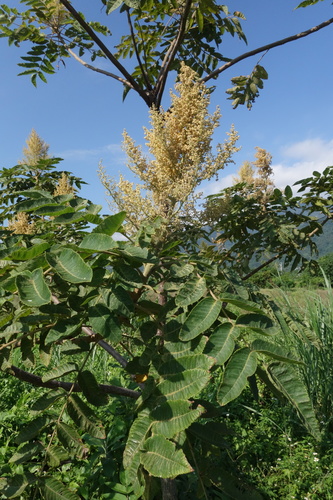
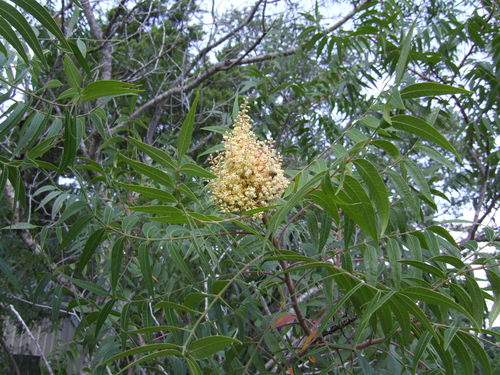
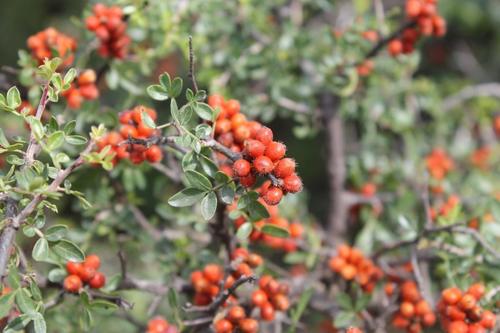
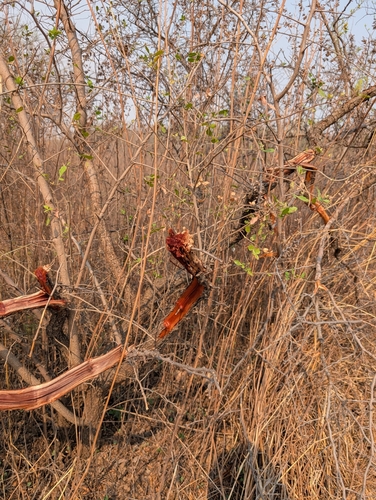
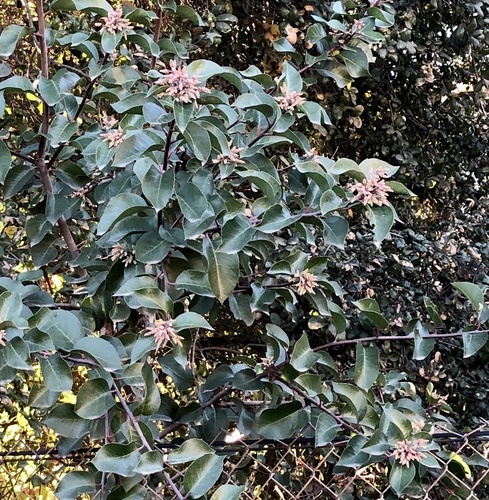
A small evergreen shrub. It grows to about 1-3 m high and can spread to 3 m wide. It can be 7 m high. The leaves are 10 cm long and there are wings on the leaf stalk. The leaves are compound with several pairs (2-7) of leathery leaflets. There is no leaflet at the end. The flowers are at the tips of shoots. The male flowers are in dense panicles 3 cm long with red stamens. The female flowers are greenish and in 6 cm long loose panicles. The fruit are round and red. The fruit are 5 mm across and become black when they are ripe.
Edible Uses
The tree produces a sweet, liquorice-flavoured resin called mastic, obtained by making incisions into the bark — but not into the wood itself. It has an agreeable odour and a mild, resinous taste; when chewed it softens and becomes easy to masticate. It is used to strengthen the gums and sweeten the breath, and also as a flavouring in puddings, sweets (including Turkish delight), and cakes. It forms the basis of a Greek confectionery called masticha and a liqueur called mastiche. An edible oil is also obtained from the seed.
Traditional Uses
The nut inside the fruit is edible. They are eaten raw or roasted. The sap is used to flavour an alcoholic beverage. Caution: Alcohol is a cause of cancer. It is also used in puddings, cookies, cakes and candies. The gum is used for texture and binding but gives some flavour. It is chewed as a breath freshener. It is sweet and has a liquorice flavour. The seeds yield an edible oil. The young leaves and leaf buds are eaten. They can be eaten raw as a snack or in yoghurt salad.
Medicinal Uses
Mastic was once widely used in herbal medicine. Though little used in modern herbalism, it could be employed as an expectorant for bronchial complaints and coughs, and as a treatment for diarrhoea. The resin is analgesic, antitussive, carminative, diuretic, expectorant, odontalgic, sedative and stimulant. Mixed with other substances, it serves as a temporary filling for carious teeth. Internally it is used to treat diarrhoea in children; externally it is applied to boils, ulcers, ringworm and muscular stiffness.
Known Hazards
Small risk of diarrhoea in children. Avoid oral intake of essential oil.
Distribution
It is a Mediterranean climate plant. It will grow on most soils. It likes a protected sunny position. It cannot grow in shade. It is drought and frost tender. It suits hardiness zones 8-11.
Where It Grows
Africa, Algeria, Australia, Balkans, Bosnia, Britain, Canary Islands, Cyprus, Europe, France, Greece, India, Iran, Iraq, Israel, Italy, Lebanon, Libya, Mediterranean, Middle East, Morocco, North Africa, North America, Palestine, Portugal, Slovenia, Spain, Turkey, Türkiye, USA,
Cultivation
Succeeds in any ordinary garden soil, preferring a hot dry position in full sun. Prefers a well-drained to dry sandy or stony alkaline soil. This species is not very hardy in Britain. It normally requires the protection of a south-facing wall but can succeed in a hot dry position in the milder areas of the country. The mastic tree is cultivated in southern Europe for its resin. It is a very variable plant, a form with broad leaves yielding the best resin. It is likely to need long hot and dry summers in order to yield its resin, and so is unlikely to produce it very freely in Britain. Any pruning that needs to be done is best carried out in the spring. Dioecious, male and female plants must be grown if seed is required.
Propagation
Pre-soak the seed for 16 hours in alkalized water, or for 3–4 days in warm water, and sow in late winter in a cold frame or greenhouse. Two months of cold stratification may speed up germination, so sowing in early winter may be preferable. Germination is variable and can be slow. Prick out seedlings into individual pots when large enough to handle and grow on for at least their first winter under glass. Plant out into permanent positions in early summer, with some protection from winter cold advisable for the first year or two. Cuttings of half-ripe wood from juvenile trees can be taken in July and rooted in a frame. Layering is also possible.
Other Uses
Mastic resin is harvested by making incisions in the bark (not the trunk) from midsummer through autumn. It can be dried and powdered, or distilled for oil and essence. Uses include high-grade varnishes, fixatives in perfumes and toothpastes, glue (particularly for false beards), embalming, temporary tooth fillings, and sealing the edges of microscope mounts. It is also chewed to preserve the teeth and gums. Oil from the seed is used for lighting and soap making. The leaves contain up to 19% tannin and are often used as an adulterant of sumac, Rhus coriaria.
Production
It is slow growing. Mastic production can commence at 5-6 years and yield 1 kg per tree by 15 years old. They take 40-50 years to become well established. Production declines after 70 years. Trees can live for 200 years. When the bark is cut it yields a clear resinous substance which coagulates to give gum mastic. The "tears" of gum are 3-5 mm long.
Other Information
It is important on the Greek island of Chios. It is cultivated.
Synonyms
Also Known As
Aza, Lentisco, Lentisk, Masticha, Mastika, Matissa, Sarees, Shaashoub, Sinya, Sodopernata rujevina, Trslja
References (42)
- Ali-Shtayeh, M. S., et al, 2008, Traditional knowledge of wild edible plants used in Palestine (Northern West Bank): A comparative study. J Ethnobiol Ethnomed. 2008; 4: 13.
- Ambasta, S.P. (Ed.), 2000, The Useful Plants of India. CSIR India. p 463
- Blamey, M and Grey-Wilson, C., 2005, Wild flowers of the Mediterranean. A & C Black London. p 127
- Blanco-Salas, J., et al, 2019, Wild Plants Potentially Used in Human Food in the Protected Area “Sierra Grande de Hornachos” of Extremadura (Spain). Sustainability 2019, 11, 456
- Bodkin, F., 1991, Encyclopedia Botanica. Cornstalk publishing, p 805
Show all 42 references Hide references
- Bremness, L., 1994, Herbs. Collins Eyewitness Handbooks. Harper Collins. p 74
- Brickell, C. (Ed.), 1999, The Royal Horticultural Society A-Z Encyclopedia of Garden Plants. Convent Garden Books. p 805
- Burkill, I.H., 1966, A Dictionary of the Economic Products of the Malay Peninsula. Ministry of Agriculture and Cooperatives, Kuala Lumpur, Malaysia. Vol 2 (I-Z) p 1786
- Ciftcioglu, C. G., 2015, Sustainable wild-collection of medicinal and edible plants in Lefke region of North Cyprus. Agroforest Syst. Springer
- Cundall, P., (ed.), 2004, Gardening Australia: flora: the gardener's bible. ABC Books. p 1053
- Della, A., et al, 2006, An ethnobotanical survey of wild edible plants of Paphos and Larnaca countryside of Cyprus. J. Ethnobiol. Ethnomed. 2:34
- Dogan, Y., et al, 2004, The Use of Wild Edible Plants in Western and Central Anatolia (Turkey). Economic Botany 58(4) pp. 684-690
- Ertug, F., 2004, Wild Edible Plants of the Bodrum Area. (Mugla, Turkey). Turk. J. Bot. 28 (2004): 161-174
- Ertug, F, Yenen Bitkiler. Resimli Türkiye Florası -I- Flora of Turkey - Ethnobotany supplement
- Facciola, S., 1998, Cornucopia 2: a Source Book of Edible Plants. Kampong Publications, p 172
- Flowerdew, B., 2000, Complete Fruit Book. Kyle Cathie Ltd., London. p 202
- Hadjichambis, A. C., et al, 2007, Wild and semi-domesticated food plant consumption in seven circum-Mediterranean areas. International Journal of Food Sciences and Nutrition. 2007, 1-32.
- Hedrick, U.P., 1919, (Ed.), Sturtevant's edible plants of the world. p 501
- Hemphill, I, 2002, Spice Notes. Macmillan. p 239
- Heywood, V.H., Brummitt, R.K., Culham, A., and Seberg, O. 2007, Flowering Plant Families of the World. Royal Botanical Gardens, Kew. p 30
- http://cypruswildflowers.com
- http://www.botanic-gardens-ljubljana.com/en/plants
- Kermath, B. M., et al, 2014, Food Plants in the Americas: A survey of the domesticated, cultivated and wild plants used for Human food in North, Central and South America and the Caribbean. On line draft. p 667
- Kiple, K.F. & Ornelas, K.C., (eds), 2000, The Cambridge World History of Food. CUP p 433, 1811
- Landau, S., et al, 2014, Traditional Uses of Pistacia lentiscus in Veterinary and Human Medicine, in Z. Yaniv, N. Dudai (eds.), Medicinal and Aromatic Plants of the Middle-East, Springer
- Lyle, S., 2006, Discovering fruit and nuts. Land Links. p 330
- Mahklouf, M. H., 2019, Ethnobotanical Study of Edible Wild Plants in Libya. European Journal of Ecology. 5(2): 30-40
- Martin, F.W. & Ruberte, R.M., 1979, Edible Leaves of the Tropics. Antillian College Press, Mayaguez, Puerto Rico. p 99
- Menninger, E.A., 1977, Edible Nuts of the World. Horticultural Books. Florida p 53
- Morley, B. & Everard, B., 1970, Wild Flowers of the World. Ebury press. Plate 30
- Mulherin, J., 1994, Spices and natural flavourings. Tiger Books, London. p 16
- Peters, C. R., O'Brien, E. M., and Drummond, R.B., 1992, Edible Wild plants of Sub-saharan Africa. Kew. p 50
- PROSEA handbook Volume 13 Spices. p 279
- Redzic, S. J., 2006, Wild Edible Plants and their Traditional Use in the Human Nutrition in Bosnia-Herzegovina. Ecology of Food and Nutrition, 45:189-232
- Sfikas, G., 1984, Trees and shrubs of Greece. Efstathiadis Group. Athens. p 120
- Sp. pl. 2:1026. 1753
- Tardio, J., et al, 2006, Ethnobotanical review of wild edible plants in Spain. Botanical J. Linnean Soc. 152 (2006), 27-71
- Tardio, J., et al, Ethnobotanical review of wild edible plants in Spain. Botanical J. Linnean Soc. 152 (2006), 27-71
- Wiersema, J. H. & Leon, B., 2013, World Economic Plants. A Standard Reference CRC Press. 2nd Ed. p 536
- Wild Edible Plants in Lebanon. Promoting dietary diversity in poor communities in Lebanon. http://www.wildedibleplants.org/
- World Checklist of Useful Plant Species 2020. Royal Botanic Gardens, Kew
- Zeven, A. C. & de West, J. M. J., 1982, Dictionary of cultivated plants and their regions of diversity. Wageningen. p 117