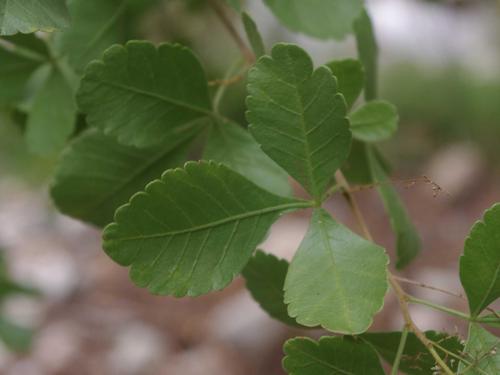
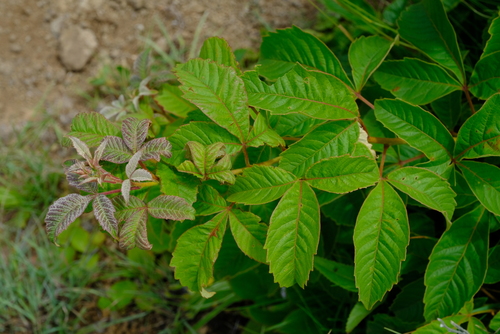
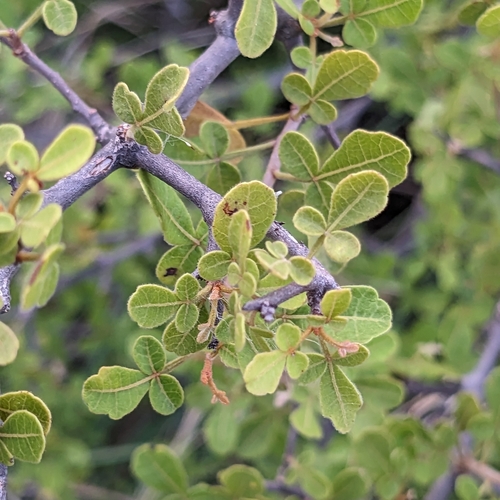
Rhus integrifolia
(Nutt.) Benth. & Hook.
Lemonade berry, Sourberry
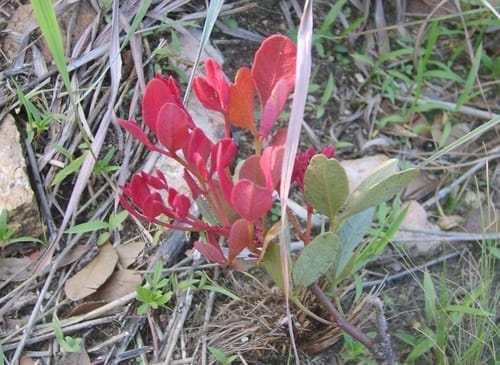
iNaturalist· cc-by-nc
(c) James Bailey, some rights reserved (CC BY-NC), uploaded by James Bailey
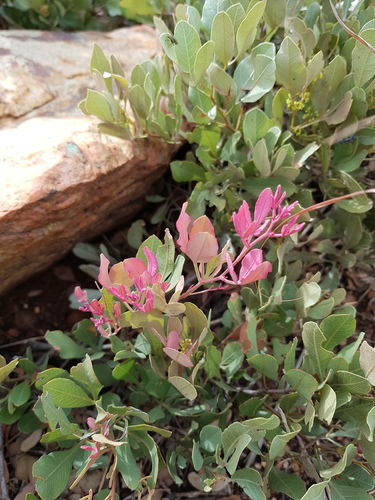
iNaturalist· cc-by-nc
(c) aarenas, some rights reserved (CC BY-NC), uploaded by aarenas
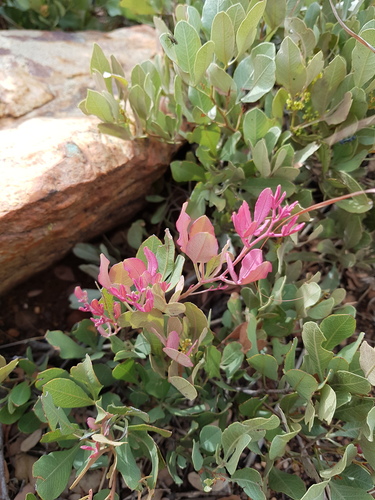
iNaturalist· cc-by-nc
(c) aarenas, some rights reserved (CC BY-NC), uploaded by aarenas
Summary
Source: WikipediaRhus integrifolia, also known as lemonade sumac, lemonade berry, or lemonadeberry, is a shrub to small tree in the sumac genus Rhus. It is native to the Transverse and Peninsular Ranges and the South Coast regions of Southern California. This extends from Santa Barbara County and the Channel Islands to San Diego County and extending into north-central Pacific coastal Baja California and its offshore islands such as Cedros Island. It is 1–8 metres (3.3–26.2 ft) in height, with a sprawling form, and is a member of the chaparral plant community often found in canyons and on north-facing slopes below elevations of 900 metres (3,000 ft). Rhus integrifolia often hybridizes with Rhus ovata.
Description
Evergreen shrub reaching 2m tall, medium growth rate. Hardy to UK zone 9, frost tender. Year-round foliage. Flowers May. Dioecious; requires both male and female plants for seed. Pollinated by bees. Grows in light sandy, medium loamy, and heavy clay soils; prefers well-drained, nutritionally poor soil acceptable. Mildly acid to basic soil suitable. Requires full sun. Tolerates strong winds but not maritime exposure. Adapts to dry or moist soil.
Edible Uses
The fruit can be eaten raw or cooked. It is coated with a pleasant acid-tasting exudation that can be sucked. Small — up to 10mm in diameter — with little flesh, the fruit grows in fairly large panicles making it easy to harvest. Soaked for 10–30 minutes in hot or cold water, it makes a very refreshing lemonade-like drink. The mixture should not be boiled, as this releases tannic acids and makes the drink astringent. The leaves have been chewed to relieve thirst. Roasted fruit can be used as a coffee substitute.
Traditional Uses
The fruit are used to make a lemonade type drink.
This uses section is brief — help expand it
Medicinal Uses
None known.
Distribution
It is a Mediterranean climate plant.
Where It Grows
Mexico, North America, USA,
Propagation
Seed is best sown in a cold frame as soon as it is ripe. Pre-soak for 24 hours in hot water (starting at 80–90°C and allowed to cool) to leach out germination inhibitors; the soak water has a delicious lemon flavour and can be drunk. Stored seed also requires hot water treatment and can be sown in early spring in a cold frame. Prick seedlings into individual pots when large enough to handle; growing plants on in pots for a few years before planting out may be advisable. Half-ripe cuttings of 10cm with a heel can be taken in July/August in a frame. Root cuttings 4cm long taken in December should be potted vertically in a greenhouse — good success rate. Suckers can be taken in late autumn to winter.
Other Uses
The leaves are rich in tannin and can be collected in autumn for use as a brown dye or mordant. An oil extracted from the seeds attains a tallow-like consistency on standing and is used to make candles, which burn brilliantly but emit a pungent smoke. The wood is hard and heavy, and is valued and widely used as fuel.
Other Information
It is cultivated.
Also Known As
Hiedra, Lemonade sumac, Lentisco
References (7)
- Bioversity New World Fruits Database
- Brevard Country Edible Acres
- Fouqué, A. 1972. Espèces fruitières d'Amérique tropicale. Institut français de recherches fruitierès outre-mer (ifac)
- Kermath, B. M., et al, 2014, Food Plants in the Americas: A survey of the domesticated, cultivated and wild plants used for Human food in North, Central and South America and the Caribbean. On line draft. p 744
- Segura, S. et al, 2018, The edible fruit species in Mexico. Genet Resour Crop Evol (2018) 65:1767–1793
Show all 7 references Hide references
- Wiersema, J. H. & Leon, B., 2013, World Economic Plants. A Standard Reference CRC Press. 2nd Ed. p 590
- World Checklist of Useful Plant Species 2020. Royal Botanic Gardens, Kew