Rhus javanica
Linn.
Nepalese sumac
iNaturalist· cc-by
(c) agujaceratops, some rights reserved (CC BY)
iNaturalist· cc-by
(c) agujaceratops, some rights reserved (CC BY)
iNaturalist· cc0
no rights reserved
Description
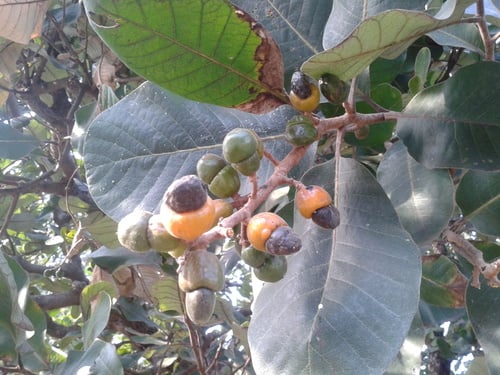
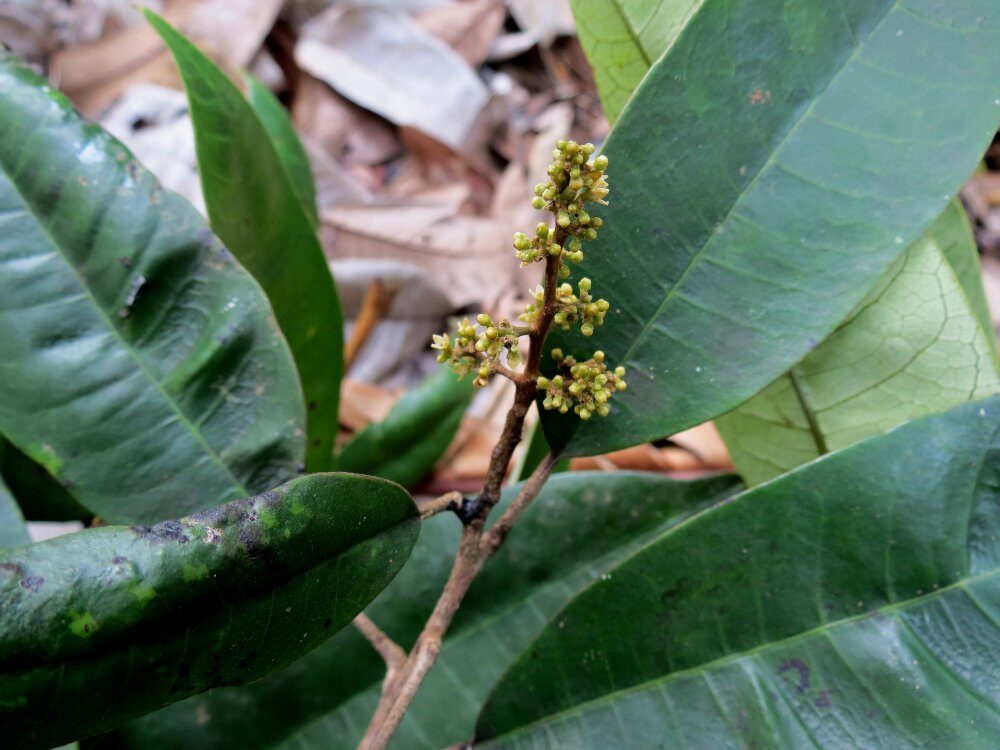
A tree. It loses its leaves during the year. It grows to about 8 m high. The leaves have stalks. They are divided into leaflets which are arranged opposite each other along the stalk with one at the end. These leaflets do not have stalks. They are 5-16 cm long by 3-8 cm wide. They are oblong and taper to the tip. They have coarse teeth. They are softly hairy above and smooth underneath. The flowers are small and yellow. The occur in large clusters at the ends of branches. The fruit is fleshy with a stone or covering over the seed. It is round but flattened. It is red when ripe.
Edible Uses
The ripe fruit are eaten raw or pickled, and a salt extracted from the fruit is used to flavour foods and coagulate tofu. The shoots are boiled with dried fish and eaten in curry.
Traditional Uses
The ripe fruit are eaten raw or pickled. A salt from the fruit is used to flavour foods and to coagulate tofu. The shoots are boiled with dried fish and eaten in curry.
Medicinal Uses
Not mentioned in data.
Distribution
It is a subtropical plant. In Nepal plants grow between 1000-2600 m altitude.
Where It Grows
Asia, Bhutan, China, Himalayas, India, Indochina, Japan, Korea, Myanmar, Nepal, Northeastern India, Pakistan, SE Asia, Sri Lanka, Taiwan,
Cultivation
Plants are grown from seed.
Notes
There are about 200 Rhus species.
Synonyms
Also Known As
Amilo, Bhaki amilo, Bhakildo, Bhakimilo, Ching-ma, Deshmeel, Dhamil, Isewa, Khawmhma, Mai-kokkyin, Mu-yen, Nurude, Omoshii, Rushi, Sa-ma, Tatri, Thaksin, Thesebo, Tibru, Tsakshing, Yaseba
References (21)
- Aryal, K. P. et al, 2009, Uncultivated Plants and Livehood Support - A case study from the Chepang people of Nepal. Ethnobotany Research and Applications. 7:409-422
- Ethnobotany of Karbis. Chapter 4 in p 100, 105 (As Rhus semialata)
- Facciola, S., 1998, Cornucopia 2: a Source Book of Edible Plants. Kampong Publications, p 10
- Flora of Pakistan.
- Gautam, R. S., et al, 2020, Wild Edible Fruits of Nepal. Int. J. Appl. Sci. Biotechnol. Vol 8(3): 289-304
Show all 21 references Hide references
- Haj, F., et al, 2012, Species Diversity and Ethno Botanical Classes of the Flora of Allai Valley District Battagram Pakistan. International Journal of Plant Research 2012, 2(4): 111-123
- Hwang, H., et al, 2013, A Study on the Flora of 15 Islands in the Western Sea of Jeollanamdo Province, Korea. Journal of Asia-Pacific Biodiversity Vol. 6, No. 2 281-310
- Hwang, HS, et al, 2014, Distribution characteristics of plant in the Ungseokbong Mountain, Gyeongsangnam-do, Korea. Journal of Asia-Pacific Biodiversity. 7(2014) e164-e178
- Karki, S., et al, 2017, Minor Fruits in Nepal: Utilization and Conservation Efforts. Proceedings of 2nd National Workshop on CUAPGR, 2017.
- Kunwar, R.M., et al, 2012, Underutilized Plant Species in Far West Nepal. J. Mt. Sci. (2012) 9:589-600
- Kuo, W. H. J., (Ed.) Taiwan's Ethnobotanical Database (1900-2000), http://tk.agron.ntu.edu.tw/ethnobot/DB1.htm (As var. roxburghiana)
- Lalfakzuala, R., 2007, Ethnobotanical usages of plants in western Mizoram. Indian Journal of Traditional Knowledge. Vol 6(3) pp 480-493
- Lokho, K. & Narasimhan, D., 2013, Ethnobotany of Mao-Naga Tribe of Manipur, India. Pleione 7(2): 314-324
- Manandhar, N.P., 2002, Plants and People of Nepal. Timber Press. Portland, Oregon. p 397
- Sawian, J. T., et al, 2007, Wild edible plants of Meghalaya, North-east India. Natural Product Radiance Vol. 6(5): p 421
- Singh, H.B., Arora R.K.,1978, Wild edible Plants of India. Indian Council of Agricultural Research, New Delhi. p 70
- Sp. pl. 1:265. 1753
- Upreti, K., et al, 2010, Diversity and Distribution of Wild Edible Fruit Plants of Uttarakhand. Bioversity Potentials of the Himalaya. p 183
- Uprety, Y., et al, 2011, Plant biodiversity and ethnobotany inside the projected impact area of the Upper Seti Hydropower Project, Western Nepal. Environ. Dev. Sustain. (2011) 13:463-492
- Uprety, Y., et al, 2012, Diversity of use and local knowledge of wild edible plant resources in Nepal. Journal of Ethnobotany and Ethnomedicine 8:16
- Uprety, Y., et al, 2016, Traditional use and management of NTFPs in Kangchenjunga Landscape: implications for conservation and livelihoods. Journal of Ethnobiology and Ethnomedicine (2016) 12:19