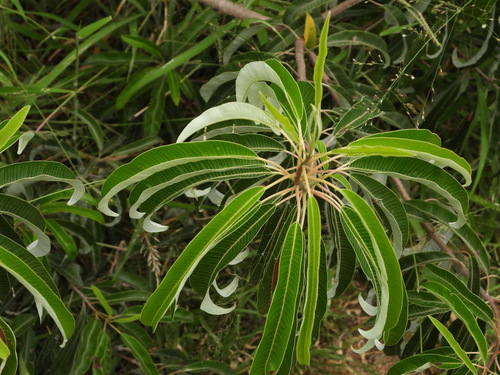
Rhus microphylla
Engelm.
Desert sumach, Littleleaf sumach
iNaturalist· cc-by-nc
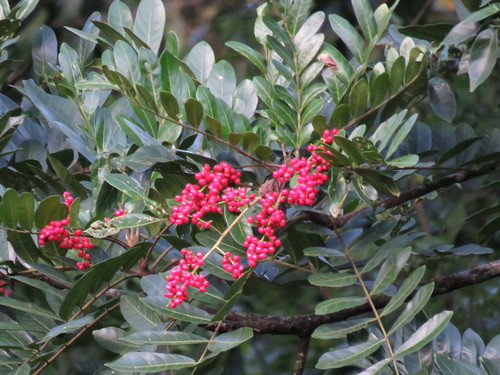
(c) Pedro Nájera Quezada, some rights reserved (CC BY-NC), uploaded by Pedro Nájera Quezada
iNaturalist· cc-by-nc
(c) Carlos G Velazco-Macias, some rights reserved (CC BY-NC), uploaded by Carlos G Velazco-Macias
iNaturalist· cc-by-nc
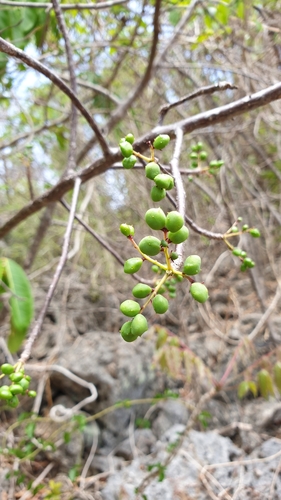
(c) Cullen Hanks, some rights reserved (CC BY-NC), uploaded by Cullen Hanks
Summary
Source: WikipediaRhus microphylla, the littleleaf sumac, desert sumac, correosa, or agritos, is a species of sumac in the family Anacardiaceae, native to North America, in the southwestern United States and northern and central Mexico, from central and western Texas, southern New Mexico, central and northern regions of the Mexican Altiplano-(Mexican Plateau), and extreme southeastern Arizona of the Madrean Sky Islands.
Description
A shrub. It grows 1.8-3 m high and spreads 1.5-1.8 m wide. It loses its leaves during the year. The leaves are compound. They have up to 9 leaflets. The flowers are small and white. The fruit are small and orange-red.
Edible Uses
The fruit can be eaten raw or cooked and has a sour flavour. Dried fruits can be ground up, mixed with water, and made into a jam. The fruit is small — about 5mm in diameter — with very little flesh, but is easily harvested. Soaked for 10–30 minutes in hot or cold water, it makes a very refreshing lemonade-like drink.
Traditional Uses
The dried fruit are ground and the pulp mixed with water and sugar to make jam. They are also used for a drink.
This uses section is brief — help expand it
Medicinal Uses
None known.
Known Hazards
There are some suggestions that the sap of this species can cause a skin rash in susceptible people, but this has not been substantiated. See also notes in 'Cultivation Details'.
Distribution
It is a warm temperate to tropical plant. It suits hardiness zones 8-11.
Where It Grows
Australia, Central America, Mexico, North America, USA,
Cultivation
Succeeds in a well-drained fertile soil in full sun. This species is not very hardy in Britain, it may not succeed outdoors even in the mildest areas of the country. The young growth in spring can be damaged by late frosts. Plants have brittle branches and these can be broken off in strong winds. Plants are also susceptible to coral spot fungus. Plants in this genus are notably resistant to honey fungus. Many of the species in this genus are highly toxic and can also cause severe irritation to the skin of some people, whilst other species such as this one are not poisonous. It is relatively simple to distinguish which is which, the poisonous species have axillary panicles and smooth fruits whilst non-poisonous species have compound terminal panicles and fruits covered with acid crimson hairs. The toxic species are sometimes separated into their own genus, Toxicodendron, by some botanists. Dioecious. Male and female plants must be grown if seed is required.
Propagation
Seed is best sown in a cold frame as soon as it is ripe. Pre-soak for 24 hours in hot water (starting at 80–90°C and allowed to cool) to leach out germination inhibitors; the soak water has a delicious lemon flavour and can be drunk. Stored seed also requires hot water treatment and can be sown in early spring in a cold frame. Prick seedlings into individual pots when large enough to handle and grow on under glass for their first winter. Plant out in late spring or early summer after the last expected frosts. Half-ripe cuttings of 10cm with a heel can be taken in July/August in a frame. Root cuttings 4cm long taken in December should be potted vertically in a greenhouse — good success rate. Suckers can be taken in late autumn to winter.
Other Uses
An oil extracted from the seeds attains a tallow-like consistency on standing and is used to make candles, which burn brilliantly but emit a pungent smoke. The leaves are rich in tannin and can be collected in autumn for use as a brown dye or mordant.
Notes
There are about 200 Rhus species.
Also Known As
Correosa, Corriosa, Scrub sumac
References (9)
- Altschul, S.V.R., 1973, Drugs and Foods from Little-known Plants. Notes in Harvard University Herbaria. Harvard Univ. Press. Massachusetts. no. 2525
- Beckstrom-Sternberg, Stephen M., and James A. Duke. "The Foodplant Database." http://probe.nalusda.gov:8300/cgi-bin/browse/foodplantdb.(ACEDB version 4.0 - data version July 1994)
- Cundall, P., (ed.), 2004, Gardening Australia: flora: the gardener's bible. ABC Books. p 1204
- Desert Survivors Online Plant Database
- A. Gray, Smithsonian Contr. Knowl. 3(5):31. (PlantaeWrightianae). 1852
Show all 9 references Hide references
- Kermath, B. M., et al, 2014, Food Plants in the Americas: A survey of the domesticated, cultivated and wild plants used for Human food in North, Central and South America and the Caribbean. On line draft. p 744
- Moerman, D. F., 2010, Native American Ethnobotany. Timber Press. p 473
- Plants for a Future database, The Field, Penpol, Lostwithiel, Cornwall, PL22 0NG, UK. http://www.scs.leeds.ac.uk/pfaf/
- Segura, S. et al, 2018, The edible fruit species in Mexico. Genet Resour Crop Evol (2018) 65:1767–1793