Anacardium occidentale
L.
Cashew
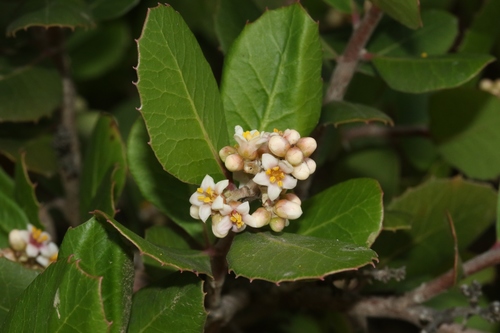
iNaturalist· cc-by-nc
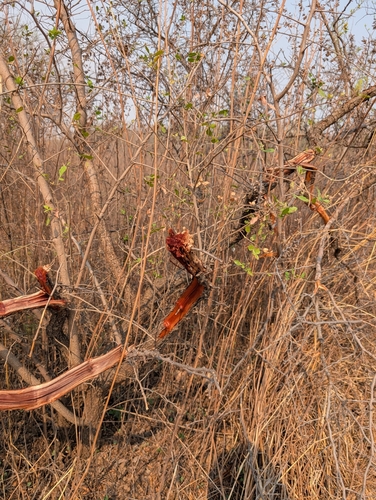
(c) Sylvia van Leeuwen, some rights reserved (CC BY-NC), uploaded by Sylvia van Leeuwen
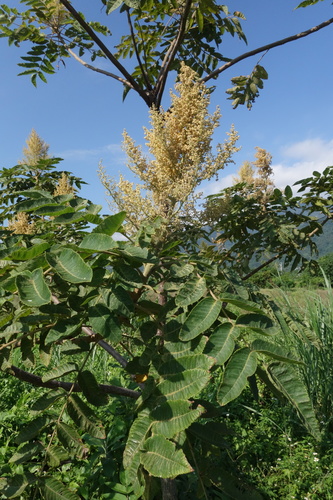
iNaturalist· cc-by-nc
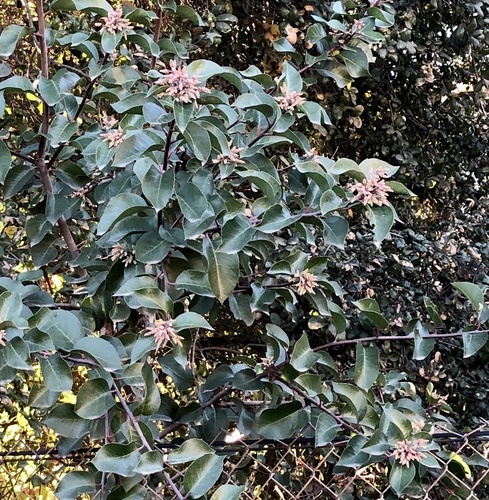
(c) James Steamer, some rights reserved (CC BY-NC), uploaded by James Steamer
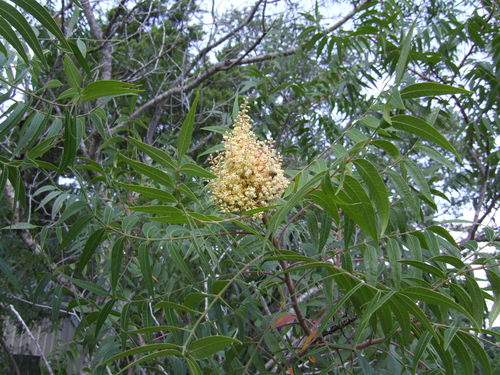
iNaturalist· cc-by-nc
(c) Roqui Bello, some rights reserved (CC BY-NC), uploaded by Roqui Bello
Summary
Evergreen tree reaching 12 m by 20 m at slow growth rate. Frost tender, hardy to UK zone 10. Flowers pollinated by flies, bees, ants, and wind; self-fertile. Grows in light sandy, medium loamy, and heavy clay well-drained soils tolerating poor fertility. Adapts to mildly acidic through basic soil pH. Requires full sun, prefers moist soil but tolerates drought. Withstands strong winds but not maritime exposure.
Description
A spreading evergreen tree up to 7-14 m tall. It has spreading branches. The canopy can spread 12 m. The roots grow deeply and spread widely. The bark is rough. The trunk is 15-20 cm across. The leaves are alternate. The leaves are pale green and large. They are 10-15 cm long by 6-8 cm wide. They have fine veins. They are narrow at the base. The leaf stalk is 1-2 cm long. The leaves are shiny. The flowers are produced on the ends of the branches. They are red in colour. About 14 % of the flowers are both male and female and the remainder are male. Many of the flowers which contain female flower parts do not form fruit. The nut is borne below the "apple" which is really a fleshy stalk. The nut is kidney shaped. It is about 3 cm long.
Edible Uses
The cashew apple (fruit) can be eaten raw or cooked. It is juicy and refreshing but somewhat acidic, often astringent enough to leave a furry sensation in the mouth, and slightly fibrous. Light cooking removes much of the astringency. The fruit can also be dried or sliced alongside other fruits, juiced into a refreshing drink, or fermented into spirits. Red fruits are generally considered superior to yellow. The apple measures about 3 cm long. The seed (cashew nut) must be cooked before being removed from its shell. It has a pleasant, mildly sweet, bland flavour and is eaten on its own, salted, used in confections, or as the basis of savoury protein-rich meat-alternative dishes. An edible oil can be extracted from the seed, though its high commercial value means this is rarely done. Young leaves and shoots can be eaten raw in salads or cooked as a vegetable; they are used in Southeast Asia, picked during the rainy season and eaten fresh alongside hot, spicy dishes, though their astringency is too pronounced for most palates. Home processing of cashew nuts requires care due to caustic latex in the shell. Bury unshelled nuts in sand in a lidded, oven-safe pot dedicated solely to this purpose (latex residue will contaminate it for other uses). Roast at around 250°C for 10 minutes with windows open and good ventilation — the shells crack and caustic latex oozes out, potentially producing a caustic smoke that should not be inhaled. Remove the pot outdoors before opening the lid. Wear disposable gloves when handling the nuts, as oil residue may remain; wash thoroughly in water and detergent. Once the shell is safely opened, remove the kernel and peel off the thin brown papery skin. Any kernel that has come into contact with latex during processing is not edible and must be discarded. Unprocessed nuts can be stored for up to two years until enough have accumulated to make processing practical.
Traditional Uses
The fleshy "apple" is edible but acid until very ripe. It is used for jams and drinks. It is also candied, made into chutney and pickles. The nut is eaten after good roasting. They are also pounded and used as meal. The young shoots and leaves are edible. They are picked during the rainy season and eaten fresh with hot and spicy dishes. CAUTION The oil of the nut can blister the skin till roasted. The apple is used to make spirits.
Medicinal Uses
The leaves are febrifuge and are used in West Africa to treat malaria, and in India and Africa to treat toothache and gum problems. Leaves can be harvested at any time and dried for later use. The bark is astringent, rubefacient, and vesicant; research has also shown it to be hypoglycaemic, with the ability to reduce blood sugar levels. In Ayurvedic medicine the bark is used to detoxify snake bites and can be used fresh or dried as needed. Infusions of leaf and bark treat toothache and sore gums, while bark and leaf extracts and fruit juice are taken internally for diarrhoea. The fruit itself is antiscorbutic, astringent, and diuretic. Cashew syrup is used as a remedy for coughs and colds. Cashew apple juice is said to be effective against syphilis and is also used for cholera and kidney complaints. The fresh acrid juice inside the shell is vesicant and has been applied externally to remove warts and to treat ringworm, leprosy, corns, and cracked skin on the soles of the feet. It is toxic to various disease-causing organisms including Staphylococcus bacteria. The sap or bark extract is considered contraceptive. The gum is bactericidal, fungicidal, and lethal to worms and protozoa; it is applied externally for leprosy, corns, and fungal conditions. An infusion of the root acts as a strong purgative.
Known Hazards
The shell contains a caustic latex that can cause severe skin irritation and produces toxic fumes when heated. Nuts must be processed carefully before the kernel is safe to handle or eat; any kernel that has contacted latex during roasting must be discarded.
Distribution
It is a tropical plant. It suits the lowland tropics but will grow up to about 1200 m altitude. It only bears well in dry areas because of blight of the flowers. It needs warm frost free locations. It grows with temperatures between 22-26°C. A rainfall of 1750 mm per year is considered suitable but good yields have been obtained with rainfall of 750 mm. Wider spacing is needed in drier areas. It can grow on poor soils. It needs good drainage. It is drought resistant. It grows in the Sahel. In South India it grows up to 1000 m altitude. It can grow in arid places. It suits hardiness zones 11-12. In Yunnan.
Where It Grows
Africa, Amazon, Andaman Is, Angola, Aruba, Asia, Australia, Bahamas, Bangladesh, Belize, Benin, Bolivia, Brazil*, Burkina Faso, Cambodia, Cameroon, Cape Verde, Caribbean, Central Africa, Central African Republic, CAR, Central America, China, Colombia, Comoros, Congo DR, Congo R, Cook Islands, Costa Rica, Côte d'Ivoire, Cuba, Dominica, Dominican Republic, East Africa, East Timor, Ecuador, El Salvador, Europe, Fiji, France, French Guiana, French Polynesia, Gabon, Gambia, Ghana, Grenada, Guadeloupe, Guam, Guatemala, Guianas, Guinea, Guinée, Guinea-Bissau, Guyana, Haiti, Honduras, India, Indochina, Indonesia, Ivory Coast, Jamaica, Kenya, Laos, Lesser Antilles, Madagascar, Malawi, Malaysia, Marianas, Marquesas, Mexico, Mozambique, Myanmar, Nicaragua, Nigeria, North America, Northeastern India, Pacific, Panama, Papua New Guinea, PNG, Peru, Philippines, Puerto Rico, Sahel, Samoa, Sao Tome and Principe, SE Asia, Senegal, Seychelles, Sierra Leone, Singapore, Solomon Islands, Somalia, South Africa, Southern Africa, South America, Sri Lanka, St Lucia, Sudan, Suriname, Tahiti, Taiwan, Tanzania, Thailand, Timor-Leste, Tonga, Torres Strait, Trinidad-Tobago, Uganda, Vanuatu, Venezuela, Vietnam, West Africa, West Indies, West Timor, Yap, Zambia, Zimbabwe,
Cultivation
It is usually grown from seeds. Seeds germinate poorly and slowly. Only nuts which sink in water (or a solution of 150 g of sugar in a litre of water) should be planted. Seeds are sun dried for 2-3 days to improve germination. Seeds can be sown in a nursery then transplanted or more commonly are sown directly. Trees are spaced 7-10 m apart. The crop is cross pollinated mostly by insects. It can be propagated by air layering. For good production complete fertiliser or appropriate organic material should be applied. Pruning to shape the tree is often undertaken in the first 2 or 3 years. Cashews are often planted scattered in gardens or amongst other trees. Clearing under the tree prevents fire and makes finding nuts easier. Allowing nuts to fall before harvesting ensures only ripe nuts are collected. Resin in the cashew nut shell can damage hands and discolour the nuts. Roasting the nuts before removing the kernel avoids this.
Propagation
Seed is traditionally sown in situ, with germination typically occurring within 8–10 days. Seed stored for 4 months in open conditions has shown 100% germination; this drops to 50% after 10 months and zero after 14 months. Plants develop a long taproot and do not always transplant reliably. Propagation is also possible from cuttings of ripe wood taken at the end of the growing season, or by layering.
Other Uses
Because cashew grows well on poor sandy soils and in coastal conditions, it has been planted for erosion control. It has been intercropped with cowpea, groundnuts, and horsegram in India, and in Andhra Pradesh and Orissa, combinations with casuarina and coconut are common. Plants are often used as a support structure for cultivated vanilla. The fruit shell contains 45–47% oil with high heat resistance, making it useful as a lubricant and in varnishes, inks, termite-proofing treatments, and insulating coatings. The bark yields an acrid, thick brown resin that turns black on exposure to air, used as indelible ink for marking linen and cotton, as a varnish, a preservative for fishnets, and a flux for soldering metals. The stem produces an amber-coloured gum that is partly water-soluble, swelling into a jelly-like mass in water; it is used as an adhesive in woodwork panels, plywood, and bookbinding partly due to its insecticidal properties, and also in inks, dyes, and varnishes. The bark sap contains 3–5% tannin used in the tanning industry, and one of its components has insect-repellent properties. The toxic shell oil has high polymerizing and friction-reducing properties and serves as a waterproofing agent and preservative for fishing nets and woodwork against termites. Mixed with paraffin it improves control of mosquito larvae. It has been used in plastics manufacture and in speciality paints for ship keels, cement surfaces, and corrosion-prone environments. Distilled and polymerized, it is used in insulating varnishes, typewriter rolls, oil- and acid-proof cements and tiles, brake-lining friction materials, space-rocket lubricants, and inks. The reddish-brown wood is light and fairly hard but susceptible to termite attack; it is used for construction and general carpentry where dimensions permit, and wood pulp is used to make corrugated and hardboard boxes. The wood also makes good charcoal and fuel, and shell residue is commonly burned as fuel in cashew-nut-shell liquid extraction plants.
Production
Trees commence bearing after 3 years. Fruit production is seasonal. The fruiting season is normally October to January. Mature nuts are produced in 2-3 months. Yields of 80-200 kg per hectare of nuts are normal. Trees produce maximum after 10 years and trees last for about 100 years.
Other Information
A major world nut. At present mainly on research stations in Papua New Guinea. It is very important in India and common in Africa. The shell contains anacordolic which affects the salivary glands and can paralyse the jaw.
Notes
There are 8-11 Anacardium species. They grow in tropical America. It has antioxidant, anti-diabetic and anti-ulcer properties.
Nutrition
| Part | Moisture | kJ | kcal | Protein | Vit A | Vit C | Iron | Zinc |
|---|---|---|---|---|---|---|---|---|
| Nuts | 4 | 2478 | 593 | 17.5 | — | — | 2.8 | 4.8 |
| Leaves | 69.9 | 418 | 100 | 5.2 | — | — | — | — |
| Fruit | 84.7 | 213 | 51 | 0.8 | 0.12 | 265 | 1 | 0.2 |
Synonyms
Also Known As
Abiba, Acado, Acajaiba, Acajou, Acaju, Acajuiba, Akadiya, Andima, Andi paruppu, Apu initia, Bajan, Balogo, Balubad, Bibbo, Buadju, Bu bisa, Bukagu, Bunga kesasar, Bu talakasa, Cadju, Cadjudje, Cadjuo, Cajou, Caju-manso, Caju-manteiga, Caju, Cajueiro, Casoy, Casuy, Cay dieu, Damrass, Dao lon hot, Darkase, Diboto, Gaju, Gajus, Geru bija, Hijli badam, Hijlibadam, Hizlee badam, Ialaguei, Ialike, Jambu erang, Jambu mede, Jambu mete, Jambu monyet, Janggus, Jidi-mamidi, Kacang mete, Kajoo, Kaju, Kaju badam, Kajus, Kajutaka, Kallarma, Kasau, Kashumavu, Kasjoe, Kasoy, Kassu, Kasuh, Kasuowo, Katae-ka, Katcha, Kollampazham, Kottaimundiri, Kuruti, Kusso, Mabotu, Mahabibo, Mak-mong-sang-yip, Mamuang himmaphaan, Mamuang letlor, Mamuang-Maruhao, Maranon, Mbibu, Merehe, Mindiri, Mkanju, Mkorosho, Mrano, Msololikoko, Mukejo, Muntha-mamidi, Munthiriparuppu, Mutua, Nkasu, Nkazuwa, Nkoloso, Nkorosho, Palamundiri, Parangi mavu, Pohon jambu monyet, Pucuk gajus, Saram, Simbangala. Supardi, Svaay chantii, Tabiba, Thiho thayet si, Udaracassa, Ya-koi, Yao dou, Yaruang, Yazawa
References (173)
- AAK, 1980, Bertanam Pohon Buah-buahan. Penerbitan Yayasan Kanisius, Jogyakarta. p 23
- Abbiw, D.K., 1990, Useful Plants of Ghana. West African uses of wild and cultivated plants. Intermediate Technology Publications and the Royal Botanic Gardens, Kew. p 41
- Alexander, D.M., Scholefield, P.B., Frodsham, A., 1982, Some tree fruits for tropical Australia. CSIRO, Australia. p 13
- Ambasta S.P. (Ed.), 2000, The Useful Plants of India. CSIR India. p 37
- Anderson, E. F., 1993, Plants and people of the Golden Triangle. Dioscorides Press. p 202
Show all 173 references Hide references
- Ashton, M. S., et al 1997, A Field Guide to the Common Trees and Shrubs of Sri Lanka. WHT Publications Ltd. p 93
- Baidu-Forson, J.J., et al ,2014,. Assessment of agrobiodiversity resources in the Borotse flood plain, Zambia. CGIAR Research Program on Aquatic Agricultural Systems. Penang, Malaysia. Working Paper: AAS-2014-12.
- Barrau, J., 1976, Subsistence Agriculture in Polynesia and Micronesia. Bernice P. Bishop Museu, Bulletin 223 Honolulu Hawaii. Kraus reprint. p 56
- Barwick, M., 2004, Tropical and Subtropical Trees. A Worldwide Encyclopedic Guide. Thames and Hudson p 24
- Bianchini, F., Corbetta, F., and Pistoia, M., 1975, Fruits of the Earth. Cassell. p 198
- Bircher, A. G. & Bircher, W. H., 2000, Encyclopedia of Fruit Trees and Edible Flowering Plants in Egypt and the Subtropics. AUC Press. p 26
- Blench, R., 2004, Fruits and Arboriculture in the Indo-Pacific Region. Indo-Pacific Prehistory Association Bulletin 24. (Taipei Papers Volume 2) p 34
- Bodkin, F., 1991, Encyclopedia Botanica. Cornstalk publishing, p 78
- Bojang, L. 1999, Non-wood Forest Products in the Gambia. EC-FAO Partnership Progrmme (1998-2000) p 8
- Bole, P.V., & Yaghani, Y., 1985, Field Guide to the Common Trees of India. OUP p 25
- Borrell, O.W., 1989, An Annotated Checklist of the Flora of Kairiru Island, New Guinea. Marcellin College, Victoria Australia. p 48, 174
- Bourke, R. M., Altitudinal limits of 230 economic crop species in Papua New Guinea. Terra australis 32.
- Bremness, L., 1994, Herbs. Collins Eyewitness Handbooks. Harper Collins. p 36
- Brown, D., 2002, The Royal Horticultural Society encyclopedia of Herbs and their uses. DK Books. p 118
- Bruschi, P., et al, 2014, Traditional use of plants in a rural community of Mozambique and possible links with Miombo degradation and harvesting sustainability. Journal of Ethnobiology and Ethnomedicine. 2014, 10:59
- Burkill, H. M., 1985, The useful plants of west tropical Africa, Vol. 1. Kew.
- Burkill, I.H., 1966, A Dictionary of the Economic Products of the Malay Peninsula. Ministry of Agriculture and Cooperatives, Kuala Lumpur, Malaysia. Vol 1 (A-H) p 144
- Catarino, L., et al, 2016, Ecological data in support of an analysis of Guinea-Bissau's medicinal flora. Data in Brief 7 (2016):1078-1097
- Chandrashekara, U. M., 2009, Tree species yielding edible fruit in the coffee-based homegardens of Kerala, India: their diversity, uses and management. Food Sec. 1:361-370
- Chatterjee, A. S., 1997, Fruit Trees in Cambodian Home Gardens. Trainers' training manual. Home garden series No.3 p 41
- Cheifetz, A., (ed), 1999, 500 popular vegetables, herbs, fruits and nuts for Australian Gardeners. Random House p 167
- Chin, H.F., & Yong, H.S., 1996, Malaysian Fruits in Colour. Tropical press, Kuala Lumpur p 90
- Cobley, L.S. (rev. Steele, W.M.) 2nd Ed., 1976, An Introduction to the Botany of Tropical Crops. Longmans. p 192
- Coe, F. G. & Anderson, G. J., 1997, Ethnobotany of the Miskitu of Eastern Nicaragua. Journal of Ethnobiology 17(2): 171-214
- Coe, F. G. and Anderson, G. J., 1999, Ethnobotany of the Sumu (Ulwa) of Southeastern Nicaragua and Comparisons with Miskitu Plant Lore. Economic Botany Vol. 53. No. 4. pp. 363-386
- Condit, R., et al, 2011, Trees of Panama and Costa Rica. PrincetonField Guides. p 32
- Coronel, R.E., 1982, Fruit Collections in the Philippines. IBPGR Newsletter p 6
- Cundall, P., (ed.), 2004, Gardening Australia: flora: the gardener's bible. ABC Books. p 148
- Dale, I. R. and Greenway, P. J., 1961, Kenya Trees and Shrubs. Nairobi. p 21
- D'Ambrosio, U., & Puri, R. K., 2016, Foodways in transition: food plants, diet and local perceptions of change in a Costa Rican Ngäbe community. Journal of Ethnobiology and Ethnomedicine (2016) 12:3 p 22
- Darley, J.J., 1993, Know and Enjoy Tropical Fruit. P & S Publishers. p 76
- Dharani, N., 2002, Field Guide to common Trees & Shrubs of East Africa. Struik. p 49
- Djihounouck, Y., et al, 2018, Diversité Et Importance Socio-Economique Des Espèces Fruitières Sauvages Comestibles En Zone Kasa (Sud-Ouest Du Sénégal). European Scientific Journal December 2018 edition Vol.14, No.36 ISSN: 1857 – 7881
- Djihounouck, Y., et al, 2021, Ethnobotanical Uses of Non-cultivated Edible Fruit Species in the Department of Oussouye (South Senegal). Journal of Food Research; Vol. 10, No. 4 p 20
- Dobriyal, M. J. R. & Dobriyal, R., 2014, Non Wood Forest Produce an Option for Ethnic Food and Nutritional Security in India. Int. J. of Usuf. Mngt. 15(1):17-37
- Duarte, M. C., et al, 2022, Diversity of Useful Plants in Cabo Verde Islands: A Biogeographic and Conservation Perspective. Plants 2022, 11, 1313 p 8
- Engel, D.H., & Phummai, S., 2000, A Field Guide to Tropical Plants of Asia. Timber Press. p 68
- Etherington, K., & Imwold, D., (Eds), 2001, Botanica's Trees & Shrubs. The illustrated A-Z of over 8500 trees and shrubs. Random House, Australia. p 93
- Facciola, S., 1998, Cornucopia 2: a Source Book of Edible Plants. Kampong Publications, p 9
- Fagg, C. W. et al, 2015, Useful Brazilian plants listed in the manuscripts and publications of the Scottish medic and naturalist George Gardner (1812–1849). Journal of Ethnopharmacology 161 (2015) 18–29
- FAO, 1988, Traditional Food Plants, FAO Food and Nutrition Paper 42. FAO Rome p 79
- FAO, 1995, Edible Nuts. Non Wood Forest Products 5.
- FAO, 2012, Forest Genetic Resources Situation in Mexico. Final Report of Project TCP/ 3301 p 286
- Fell, D.G. & Stanton, D.J., 2015: The vegetation and flora of Mabuyag, Torres Strait, Queensland. Memoirs of the Queensland Museum – Culture 8(1):1-33. Brisbane. ISSN 1440-4788.
- Forest Inventory and Planning Institute, 1996, Vietnam Forest Trees. Agriculture Publishing House p 33
- Flowerdew, B., 2000, Complete Fruit Book. Kyle Cathie Ltd., London. p 204
- Food Composition Tables for use in East Asia FAO http://www.fao.org/infoods/directory No. 443 (leaves)
- Forest Genetic Resources Situation in Mexico, FAO 2012 Annex 15 p 286
- Fowler, D. G., 2007, Zambian Plants: Their Vernacular Names and Uses. Kew. p 75
- Fox, F. W. & Young, M. E. N., Food from the Veld. Delta Books. p 71
- French, B., 1986, Food Plants of Papua New Guinea, Asia Pacific Science Foundation p 182
- French, B.R., 2010, Food Plants of Solomon Islands. A Compendium. Food Plants International Inc. p 295
- Garner, R.J., and Chaudhri, S.A., (Ed.) 1976, The Propagation of Tropical fruit Trees. FAO/CAB. p 184
- Global Plants JSTOR
- Grivetti, L. E., 1980, Agricultural development: present and potential role of edible wild plants. Part 2: Sub-Saharan Africa, Report to the Department of State Agency for International Development. p 27
- Grandtner, M. M., 2008, World Dictionary of Trees. Wood and Forest Science Department. Laval University, Quebec, Qc Canada. (Internet database http://www.WDT.QC.ca)
- Grandtner, M. M. & Chevrette, J., 2013, Dictionary of Trees, Volume 2: South America: Nomenclature, Taxonomy and Ecology. Academic Press p 29
- Habitat Management Profile – Saibai Island. Appendix C. Preliminary List of Useful Plants for Saibai Island. p 118
- Hall, N. et al, 1972, The Use of Trees and Shrubs in the Dry Country of Australia, AGPS, Canberra. p 207
- Hearne, D.A., & Rance, S.J., 1975, Trees for Darwin and Northern Australia. AGPS, Canberra p 20, Pl 4
- Hedrick, U.P., 1919, (Ed.), Sturtevant's edible plants of the world. p 52
- Henty, E.E., 1980, Harmful Plants in Papua New Guinea. Botany Bulletin No 12. Division Botany, Lae, Papua New Guinea. p 12 Pl. 5
- Hermandez Bermejo, J.E., and Leon, J. (Eds.), 1994, Neglected Crops. 1492 from a different perspective. FAO Plant Production and Protection Series No 26. FAO, Rome. p 13
- http://palaeoworks.anu.edu.au/Nuno_PhD/04.pdf re Timor
- Hu, Shiu-ying, 2005, Food Plants of China. The Chinese University Press. p 514
- Hunter, D., et al, 2019, The potential of neglected and underutilized species for improving diets and nutrition. Planta (2019) 250:709-729
- Jacquat, C., 1990, Plants from the Markets of Thailand. D.K. Book House p 80
- Janick, J. & Paul, R. E. (Eds.), 2008, The Encyclopedia of Fruit & Nuts. CABI p 8
- Japanese International Research Centre for Agricultural Science www.jircas.affrc.go.jp/project/value_addition/Vegetables
- Jardin, C., 1970, List of Foods Used In Africa, FAO Nutrition Information Document Series No 2.p 30. 119
- Jiwajinda, S., et al, 2002, Suppressive Effects of Edible Thai Plants on Superoxide and Nitric Oxide Generation. Asian Pacific Journal of Cancer Prevention, Vol 3, 2002
- John, L., & Stevenson, V., 1979, The Complete Book of Fruit. Angus & Robertson p 100
- Kahlon, L. K. & Singh, R., 2019, Traditional knowledge & Dynamics of edible plants of primitive tribal group ‘Paudi Bhuyan’ with changing demography migration patterns in Northern Odisha. Indian Journal of Traditional Knowledge Vol 18(1), pp 7-15
- Katende, A.B., Birnie, A & Tengnas B., 1995, Useful Trees and Shrubs for Uganda. Identification, Propagation and Management for Agricultural and Pastoral Communities. Technical handbook No 10. Regional Soil Conservation Unit, Nairobi, Kenya. p 96
- Keay, R.W.J., 1989, Trees of Nigeria. Clarendon Press, Oxford. p 367
- Kew Plants of the World Online
- Kiple, K.F. & Ornelas, K.C., (eds), 2000, The Cambridge World History of Food. CUP p 1747
- Kohila, A. & Kensa, V. M., 2019, Survey of Wild Edible Plants of Dhanakarkulam Panchayath, Tirunelveli District, Tamil Nadu, India. Kong. Res. J. 6(2): 20-27, 2019
- Latham, P., 2004, Useful Plants of Bas-Congo province. Latham & DFID p 27
- Latham, P. & Mbuta, A. K., 2014, Useful Plants of Bas-Congo Province, Democratic Republic of Congo. Volume 1. p 44
- Latham, P. & Mbuta, A. K., 2017, Plants of Kongo Central Province, Democratic Republic of Congo. Volume 1. 3rd ed p 48
- Lautenschläger, T., et al, 2018, First large-scale ethnobotanical survey in the province of Uíge, northern Angola. Journal of Ethnobiology and Ethnomedicine (2018) 14:51
- Lazarides, M. & Hince, B., 1993, Handbook of Economic Plants of Australia, CSIRO. p 19
- Leal, M. L. et al, 2018, Knowledge, use, and disuse of unconventional food plants. Journal of Ethnobiology and Ethnomedicine (2018) 14:6
- Lembaga Biologi Nasional, 1977, Buah-Buahan, Balai Pustaka, Jakarta. p 46
- Lembogi Biologi Nasional, 1980, Sayur-sayuran. Balai Pustaka, Jakarta. p 32
- Lorenzi, H., 2002, Brazilian Trees. A Guide to the Identification and Cultivation of Brazilian Native Trees. Vol. 01 Nova Odessa, SP, Instituto Plantarum p 17
- Lorenzi, H., Bacher, L., Lacerda, M. & Sartori, S., 2006, Brazilian Fruits & Cultivated Exotics. Sao Paulo, Instituto Plantarum de Estuados da Flora Ltda. p 36
- Lyle, S., 2006, Discovering fruit and nuts. Land Links. p 60
- Macmillan, H.F. (Revised Barlow, H.S., et al) 1991, Tropical Planting and Gardening. Sixth edition. Malayan Nature Society. Kuala Lumpur. p 290
- Mahony, D., 1991, Trees of Somalia. A Field Guide for Development Workers. Oxfam Research Paper 3. p 9
- Martin, F.W. & Ruberte, R.M., 1979, Edible Leaves of the Tropics. Antillian College Press, Mayaguez, Puerto Rico. p 52, 174
- Massal, E. and Barrau, J., 1973, Food Plants of the South Sea Islands. SPC Technical Paper No 94. Nounea, New Caledonia. p 32
- Maydell, H. von, 1990 Trees and shrubs of the Sahel: their characteristics and uses. Margraf. p
- Mbuya, L.P., Msanga, H.P., Ruffo, C.K., Birnie, A & Tengnas, B., 1994, Useful Trees and Shrubs for Tanzania. Regional Soil Conservation Unit. Technical Handbook No 6. p 98
- Menninger, E.A., 1977, Edible Nuts of the World. Horticultural Books. Florida p 48
- Morton, J. F., 1987, Fruits of Warm Climates. Wipf & Stock Publishers p 238
- Mua Bioversity Profile, 2013, Profile for Management of the Habitats and Related Ecological and Cultural Resources of Mua Island. Torres Strait Regional Authority Land & Sea Management Unit. p 142
- Mulherin, J., 1994, Spices and natural flavourings. Tiger Books, London. p 112
- Murakami, A. et al, 2014, Screening for the In Vitro Anti-tumor-promoting Activities of Edible Plants from Malaysia. Bioscience, Biotechnology, and Biochemistry, 64:1, 9-16.
- Mutie, F. M., et al, 2023, Important Medicinal and Food Taxa (Orders and Families) in Kenya, Based on Three Quantitative Approaches. Plants 2023, 12, 1145
- Nakahara, K. et al, 2002, Antimutagenicity of Some Edible Thai Plants, and a Biocative Carbazole Alkaloid, Mahanine, Isolated from Micromelum minutum. Journal of Agricultural and Food Chemistry. 50: 4796-4892
- Nascimento, V. T. D., et al, 2013, Knowledge and Use of Wild Food Plants in Areas of Dry Seasonal Forests in Brazil. Ecology of Food and Nutrition, 52:317–343
- Nathan, A., & Wong Y Chee, 1987, A Guide to Fruits and Seeds, Singapore Science Centre. p 90
- Nicholson, D. H., et al, 1991, Fora of Dominica, Part 2: Dicotyledoneae. Smithsonian Institution Press. Washington DC. p 21
- Norrington, L., & Campbell, C., 2001, Tropical Food Gardens. Bloomings Books. p 97
- NYBG herbarium "edible"
- Ochse, J.J. et al, 1931, Vegetables of the Dutch East Indies. Asher reprint. p 33
- Oliviera V. B., et al, 2012, Native foods from Brazilian biodiversity as a source of bioactive compounds. Food Research International 48 (2012) 170-179
- Owen, S., 1993, Indonesian Food and Cookery, INDIRA reprints. p 59
- Paniagua Zambrana, N. Y., et al, 2017, Traditional knowledge hiding in plain sight - twenty-first century ethnobotany of the Chacobo in Beni, Bolivia. Journal of Ethnobiology and Ethnomedicine (2017) 13:57
- Parham, B. E. V., 1972, Plants of Samoa. New Zealand Department of Scientific and Industrial Research. Information Series. No. 85 p 16
- Pasha, M. K. & Uddin, S. B., 2019, Minor Edible Fruits of Bangladesh. Bangladesh J. Plant Taxon. 26(2): 299–313
- Paz, F. S., et al, 2021, Edible Fruit Plant Species in the Amazon Forest Rely Mostly on Bees and Beetles as Pollinators. Journal of Economic Entomology, XX(XX), 2021, 1–13
- Phon, P., 2000, Plants used in Cambodia. © Pauline Dy Phon, Phnom Penh, Cambodia. p 34
- Plants of Haiti Smithsonian Institute http://botany.si.edu
- Plowes, N. J. & Taylor, F. W., 1997, The Processing of Indigenous Fruits and other Wildfoods of Southern Africa. in Smartt, L. & Haq. (Eds) Domestication, Production and Utilization of New Crops. ICUC p 185
- Priyadi, H., et al, Five hundred plant species in Gunung Halimun Salak National Park West Java. A checklist including Sundanese names, distribution and use. CIFOR, FFPRI, SLU p 60
- PROSEA (Plant Resources of South East Asia) handbook, Volume 2, 1991, Edible fruits and nut. p 60
- Purseglove, J.W., 1968, Tropical Crops Dicotyledons, Longmans. p 19
- Rajapaksha, U., 1998, Traditional Food Plants in Sri Lanka. HARTI, Sri Lanka. p 43
- Roa, J. A. G. & Boada, D. S. G., 2018, Fundación para el Fortalecimiento de la Fruticultura y Plantas Alimenticias no Convencionales en Colombia.
- Royal Botanic Gardens, Kew (1999). Survey of Economic Plants for Arid and Semi-Arid Lands (SEPASAL) database. Published on the Internet; http://www.rbgkew.org.uk/ceb/sepasal/internet [Accessed 25th March 2011]
- Rufino, M. M. et al, 2010, Bioactive compounds and antioxidant capacities of 18 non-traditional tropical fruit from Brazil. Food Chemistry 121: 996-1002
- Ruiters-Welcome, A. K., 2019, Food plants of southern Africa. Ph.D. thesis. Univ. of Johannesburg p 13
- Segura, S. et al, 2018, The edible fruit species in Mexico. Genet Resour Crop Evol (2018) 65:1767–1793
- Sahni, K.C., 2000, The Book of Indian Trees. Bombay Natural History Society. Oxford. p 66
- Sakunpak, A. & Panichayupakaranant, P., 2012, Antibacterial activity of Thai edible plants against gastrointestinal pathogenic bacteria and isolation of a new broad spectrum antibacterial polyisoprenylated benzophenone, chamuangone. Food Chemistry 130 (2012) 826–831
- Salako, V. K. et al, 2013, Home gardens: an assessment of their biodiversity and potential contribution to conservation of threatened species and crop wild relatives in Benin. Genet Resour Crop Evol
- Sambou, A., et al, 2016, The contribution of trees and palms to a blanced diet in three rural villages of the Fatick Province, Senegal. FORESTS, TREES AND LIVELIHOODS, 2016 VOL. 25, NO. 3, 212–225
- Sharma, B.B., 2005, Growing fruits and vegetables. Publications Division. Ministry of Information and broadcasting. India. p 32
- Slik, F., www.asianplant.net
- Smith, N., Mori, S.A., et al, 2004, Flowering Plants of the Neotropics. Princeton. Plate 2 (Photo)
- Smith, P.M., 1979, Cashew, in Simmonds, N.W., (ed), Crop Plant Evolution. Longmans. London. p 302
- Solomon, C., 2001, Encyclopedia of Asian Food. New Holland. p 66
- Sp. pl. 1:383. 1753
- Sukarya, D. G., (Ed.) 2013, 3,500 Plant Species of the Botanic Gardens of Indonesia. LIPI p 125
- Sukenti, K., et al, 2016, Ethnobotanical study on local cuisine of the Sasak tribe in Lombok Island, Indonesia. Journal of Ethnic Foods. 3 (2016) 189-200 p 198
- Suwardi, A. B., et al, 2020, Ethnobotany and conservation of indigenous edible fruit plants in South Aceh, Indonesia. Biodiversitas Vol. 21, No. 5, pp 1850-1860
- Tate, D., 1999, Tropical Fruit. Archipelago Press. Singapore. p 14
- Terra, G.J.A., 1973, Tropical Vegetables. Communication 54e Royal Tropical Institute, Amsterdam, p 23
- Thaman, R.R., 1976, The Tongan Agricultural System, University of the South Pacific, Suva, Fiji. p 380
- Tiwi Plants and Animals. 2001, Aboriginal flora and fauna knowledge from Bathurst and Melville Islands, northern Australia. Northern Territory Botanical Bulletin; No. 24 p 26
- Toppo, P. et al, 2016, Wild edible plants of Dhamtari district of Chhattisgarh, India. Van Sangyan Vol. 3, No. 4
- Torre, de la L., et al, 2008, Enciclopedia de las Plantas Útiles del Ecuador. Herbario QCA. Pontificia Universidad Católica del Ecuador. p 159
- USDA, ARS, National Genetic Resources Program. Germplasm Resources Information Network - (GRIN). [Online Database] National Germplasm Resources Laboratory, Beltsville, Maryland. Available: www.ars-grin.gov/cgi-bin/npgs/html/econ.pl (10 April 2000)
- Vael, L., 2015, Ethnobotanical study of the plant use in the natural landscape of two mestizo communities in the Ucayali region of the Peruvian Amazon. Universiteit Gent.
- van Roosmalen, M.G.M., 1985, Fruits of the Guianan Flora. Utrecht Univ. & Wageningen Univ. p 1
- van Wyk, B., 2005, Food Plants of the World. An illustrated guide. Timber press. p 57
- van Wyk, Be, & Gericke, N., 2007, People's plants. A Guide to Useful Plants of Southern Africa. Briza. p 19
- Vasquez, R. and Gentry, A. H., 1989, Use and Misuse of Forest-harvested Fruits in the Iquitos Area. Conservation Biology 3(4): 350f
- Vasquez, Roberto Ch. & Coimbra, German S., 1996, Frutas Silvestres Comestibles de Santa Cruz. p 36
- Vickery, M.L. and Vickery, B., 1979, Plant Products of Tropical Africa, Macmillan. p 33
- Villachica, H., (Ed.), 1996, Frutales Y hortalizas promisorios de la Amazonia. FAO, Lima. p 197
- Vivien, J., & Faure, J.J., 1996, Fruitiers Sauvages d'Afrique. Especes du Cameroun. CTA p 35
- Walter, A. & Lebot, V., 2007, Gardens of Oceania. ACIAR Monograph No. 122. CD-ROM minor species p 6
- Welcome, A. K. & Van Wyk, B.-E., 2019, An inventory and analysis of the food plants of southern Africa. South African Journal of Botany 122 (2019) 136–179
- Wickens, G.E., 1995, Edible Nuts. FAO Non-wood forest products 5. FAO, Rome. p 13
- Wiersema, J. H. & Leon, B., 2013, World Economic Plants. A Standard Reference CRC Press. 2nd Ed. p 49
- Williams, C.N., Chew, W.Y., and Rajaratnam, J.A., 1989, Tree and Field Crops of the Wetter Regions of the Tropics. Longman, p 122
- Williamson, J., 2005, Useful Plants of Malawi. 3rd. Edition. Mdadzi Book Trust. p 23
- World Checklist of Useful Plant Species 2020. Royal Botanic Gardens, Kew
- www.colecionandofrutas.org
- www.worldagroforestrycentre.org/treedb/
- Young, J., (Ed.), 2001, Botanica's Pocket Trees and Shrubs. Random House. p 90
- Yuncker, T.G., 1940, Flora of the Aguan Valley and the coastal regions near La Ceiba, Honduras. Botany Series, Field Museum of Natural History 9(4) p 300
- Zawiah, N. & Othaman, H., 2012, 99 Spesies Buah di FRIM. Institut Penyelidikan Perhutanan Malaysia. p 22
- Zuchowski W., 2007, Tropical Plants of Costa Rica. A Zona Tropical Publication, Comstock Publishing. p 162