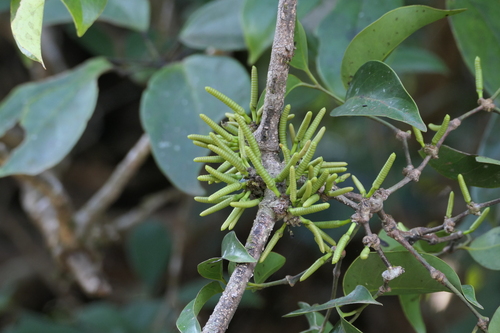
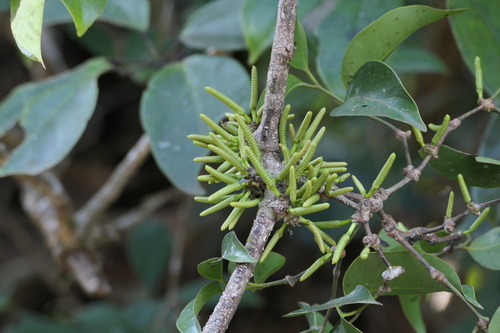
Gnetum tenuifolium
Ridley
Thin-leaved jointfir
iNaturalist· cc-by-nc
(c) missour, some rights reserved (CC BY-NC)
iNaturalist· cc-by-nc
(c) missour, some rights reserved (CC BY-NC)
iNaturalist· cc-by-nc
(c) missour, some rights reserved (CC BY-NC)
Description
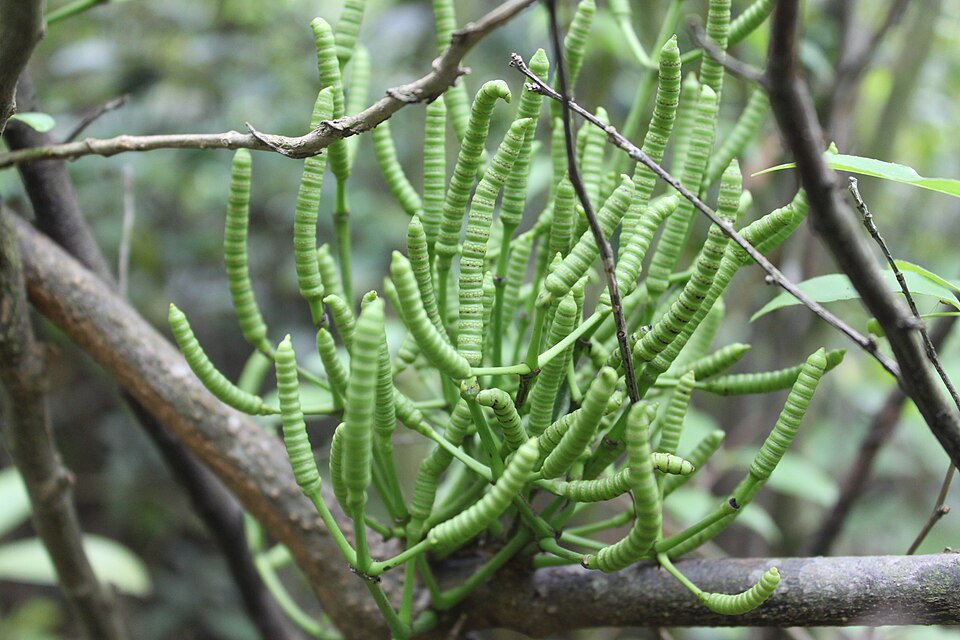
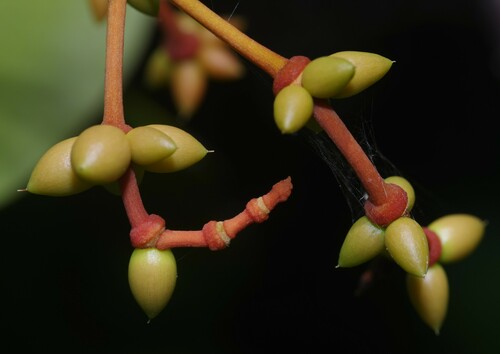
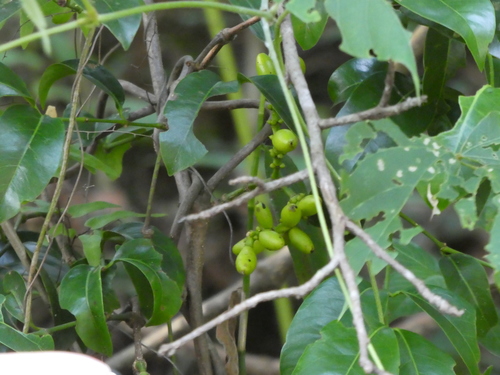
A slender climber. The leaves are up to 24 cm long. The flowers are in simple erect spikes. These are 2-4 cm long. The fruit are oval and like nuts. They are 2 cm long. They have furrows along them.
Edible Uses
The oval fruit (seeds) are boiled and eaten. The roots are dug, cooked, and eaten.
Traditional Uses
The fruit (seeds) are boiled. The root is dug and cooked and eaten.
This uses section is brief — help expand it
Distribution
A tropical plant. It grows in rain-forests at low altitudes.
Where It Grows
Asia, Indochina, Indonesia, Malaysia, SE Asia, Thailand,
Other Information
It is an important food.
Notes
There are about 28 Gnetum species.
Also Known As
Akar mentadu, Akar putat, Akar seborek paya, Dagun, Mentada, Mueai nok, Telinak
References (8)
- Burkill, I.H., 1966, A Dictionary of the Economic Products of the Malay Peninsula. Ministry of Agriculture and Cooperatives, Kuala Lumpur, Malaysia. Vol 1 (A-H) p 1111
- Menninger, E.A., 1977, Edible Nuts of the World. Horticultural Books. Florida p 159
- Milow, P., et al, 2013, Malaysian species of plants with edible fruits or seeds and their evaluation. International Journal of Fruit Science. 14:1, 1-27
- Norfaizal, , M., et al, 2014, Flora Diversity of Sungai Teris, Karu Wildlife reserve, Pahang, Malaysia. Journal of Wildlife and Parks (2014) 28 : 81-91
- PROSEA handbook Volume 9 Plants yielding non-seed carbohydrates. p 188 and No. 2
Show all 8 references Hide references
- Walter, A. & Sam C., 2002, Fruits of Oceania. ACIAR Monograph No. 85. Canberra. p 178
- Wickens, G.E., 1995, Edible Nuts. FAO Non-wood forest products. FAO, Rome. p176
- World Checklist of Useful Plant Species 2020. Royal Botanic Gardens, Kew