Gnetum ula
Brongn.
Indian jointfir
iNaturalist· cc-by-sa
(c) Dinesh Valke, some rights reserved (CC BY-SA)
iNaturalist· cc-by-sa
(c) Dinesh Valke, some rights reserved (CC BY-SA)
iNaturalist· cc-by-sa
(c) Dinesh Valke, some rights reserved (CC BY-SA)
Description
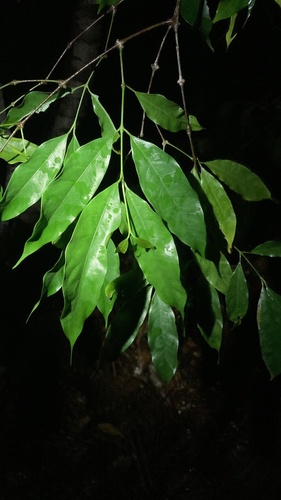
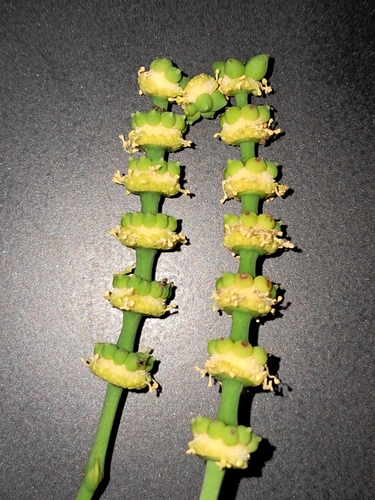
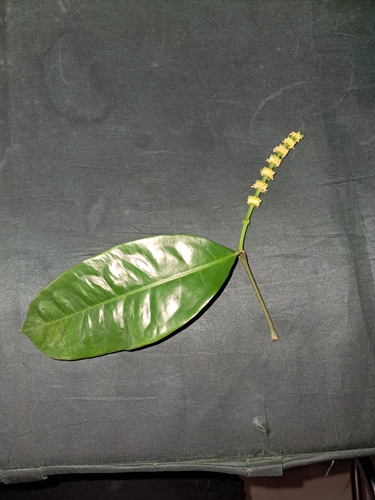
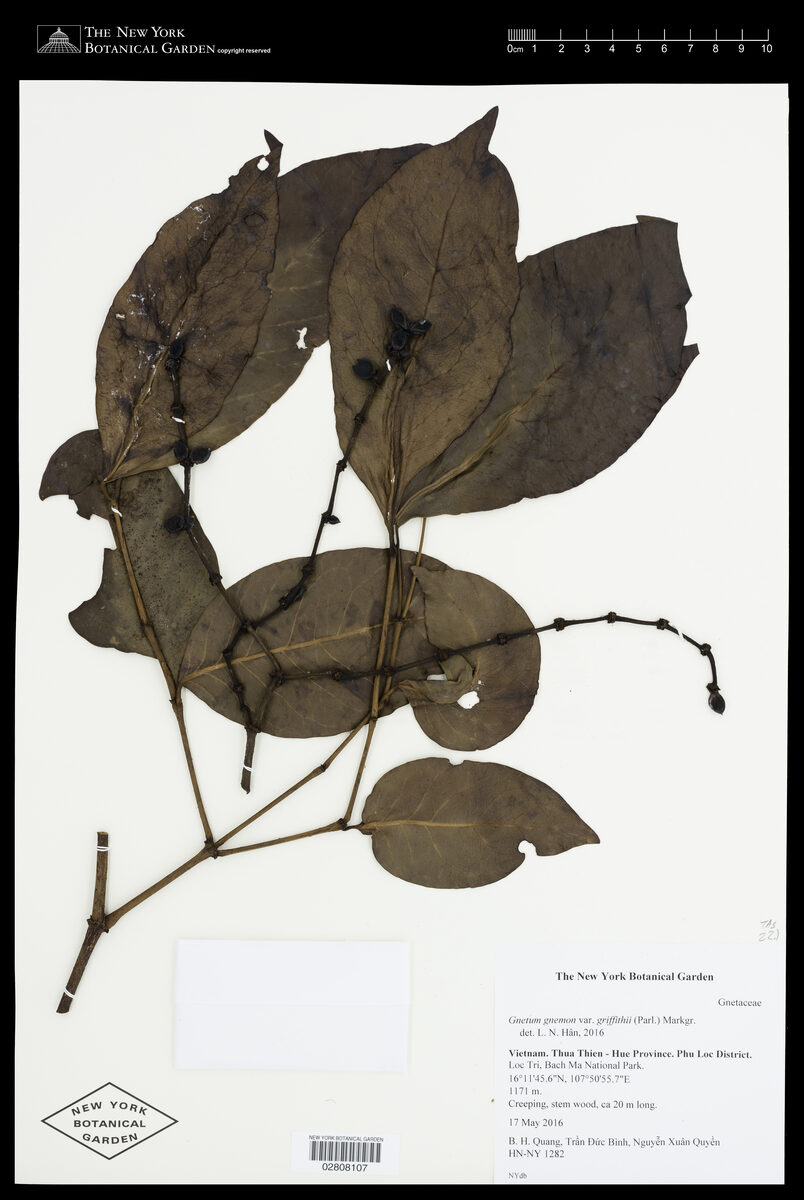
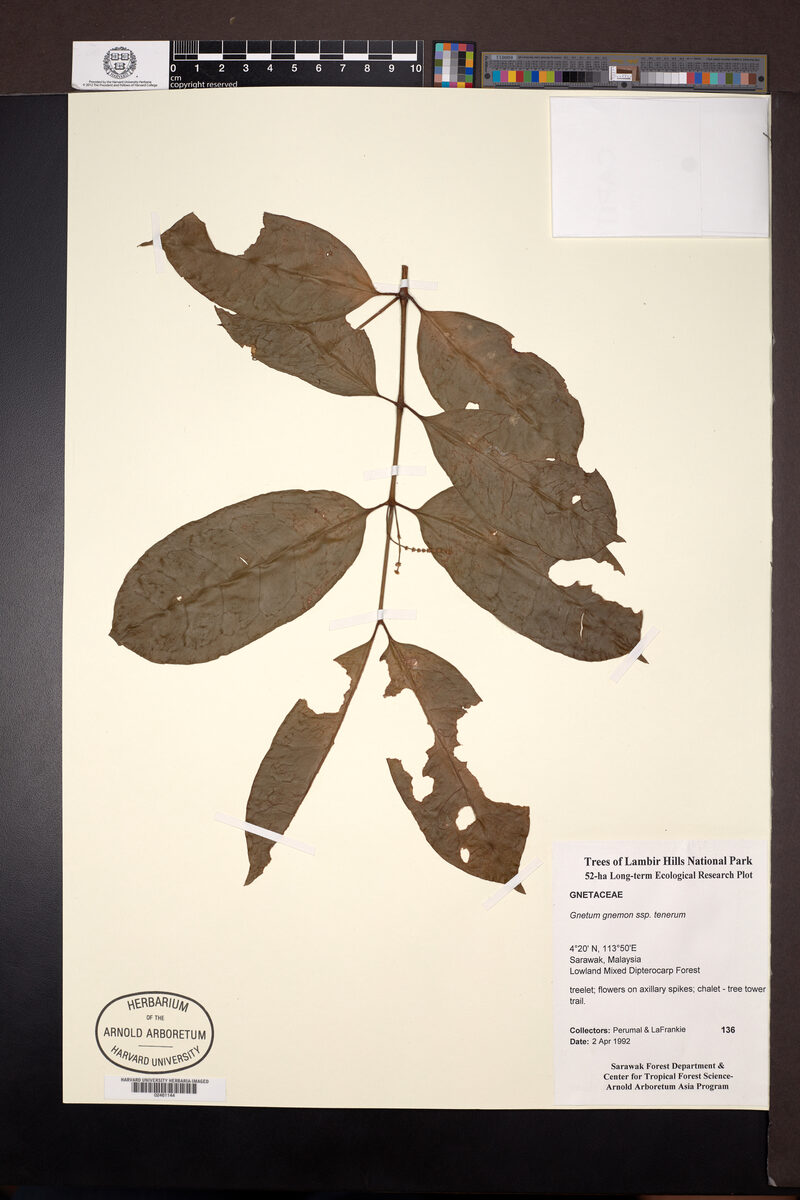
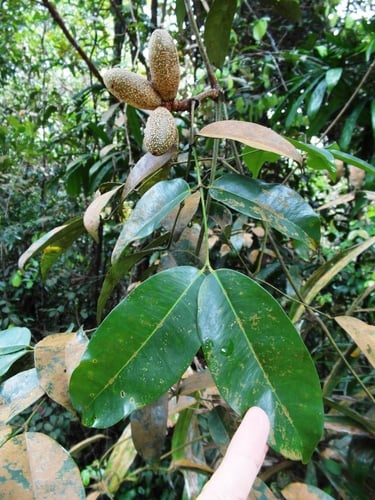
A woody climber. The leaves are opposite and narrowly oval. They are 8-18 cm long and 5-10 cm wide. The flowers are of separate sexes. The male flowers are in rings in spike like cones. These spikes are 3-5 cm long. The female spikes can occur singly or in a group. They are often on the stem. The fruit is fleshy and 8-25 mm long. There is a single hard seed.
Edible Uses
The nuts, seeds, and fruit are eaten.
Distribution
A tropical plant. It grows in evergreen forests under shade. It occurs in the Western Ghats in India.
Where It Grows
Asia, India,
Other Information
The oil is only used to a small extent.
Notes
There are about 28 Gnetum species.
Synonyms
Also Known As
Anapendu, Kodkamballi, Kumbal, Lolori, Navurukatte, Nokate, Odal, Peiodal, Tolumbi, Ula, Umbli
References (3)
- Ambasta, S.P. (Ed.), 2000, The Useful Plants of India. CSIR India. p 242
- Flora and Livestock in Coastal Karnataka. 2007, Report. EMPRI p 193
- Smith, N., et al, 2007, Amazon River Fruits. Flavors for Conservation. Missouri Botanical Gardens Press. p 134