Gnetum urens
(Aubl.) Blume
Thoa piquant
iNaturalist· cc-by-nc
(c) Robin Heymans, some rights reserved (CC BY-NC), uploaded by Robin Heymans
iNaturalist· cc-by-nc
(c) Hervé GALLIFFET, some rights reserved (CC BY-NC)
Summary
Source: WikipediaGnetum urens is a vine native to northern South America. Its common name is bell bird's heart. There are no major economic uses of G. urens. While it has had several names, the accepted scientific name is G. urens (Aubl.) Blume as published in 1834.
Description
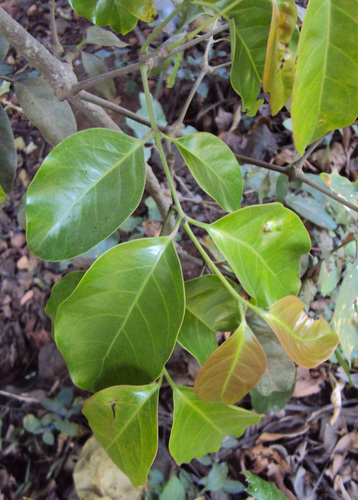
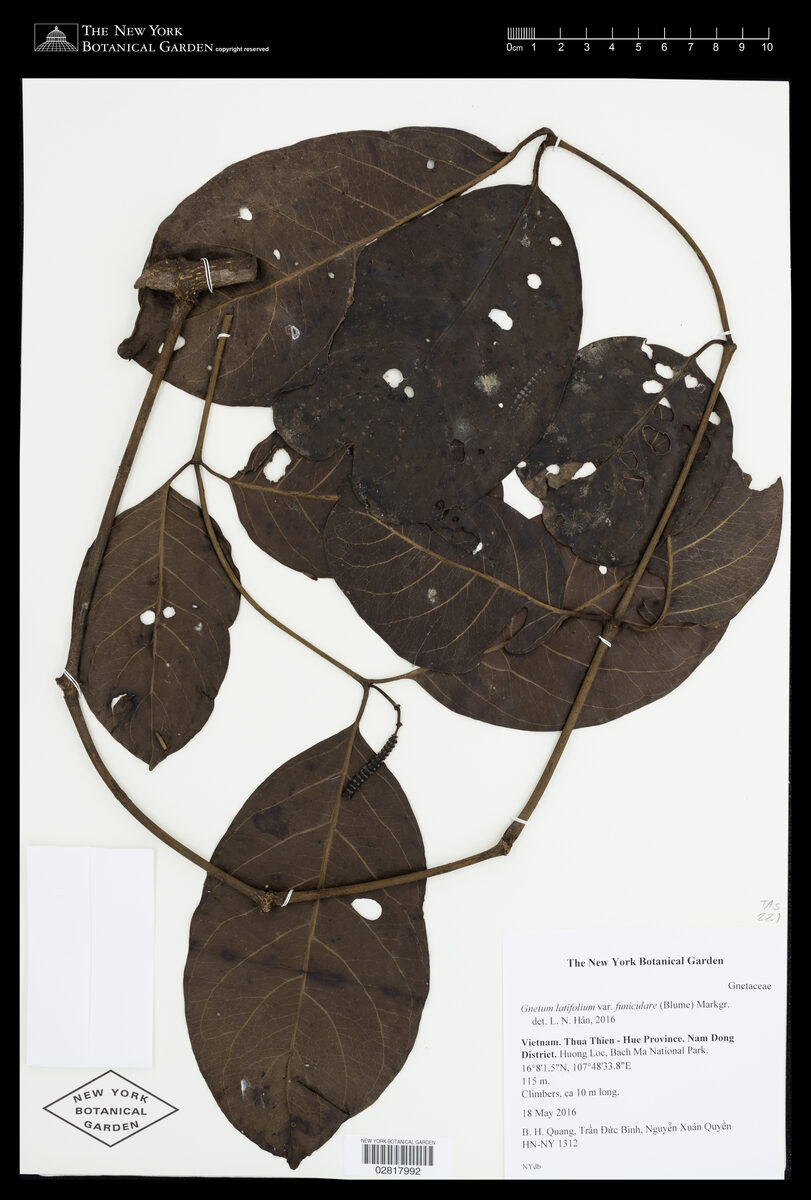
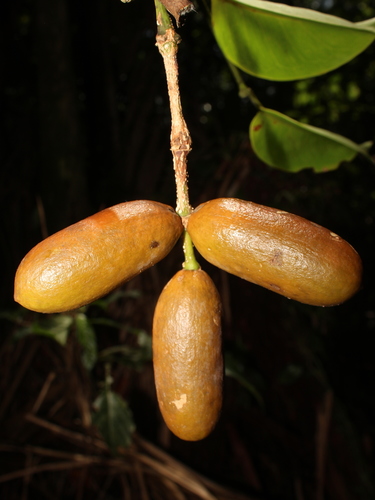
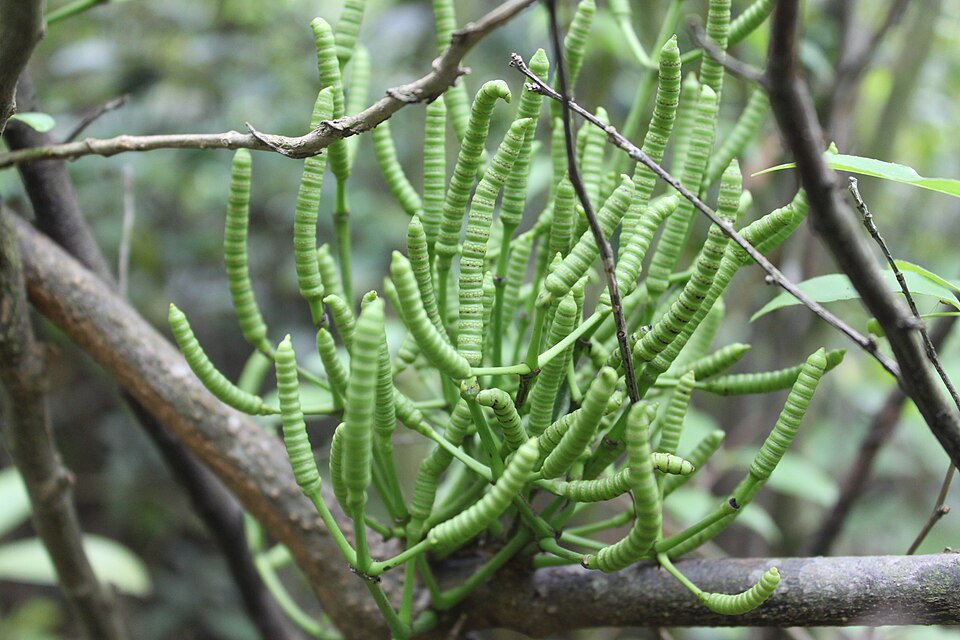
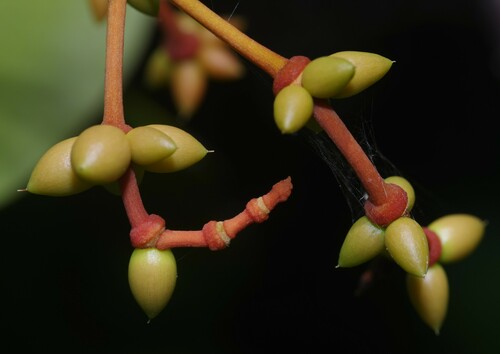
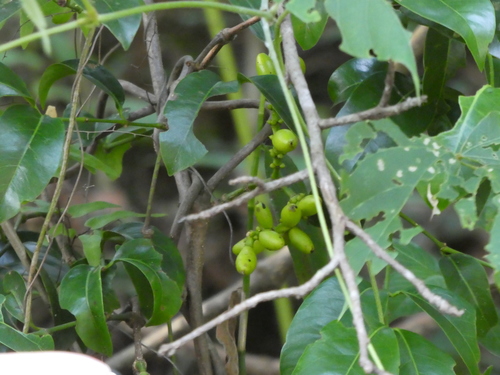
A climbing vine. The bark has white to yellow latex. The leaves are opposite. Plants are separately male and female. The flowers are in rings or spikes. The fruit is narrowly oval. It is 3-4 cm long by 2 cm wide. It is yellow but turns purplish-red. The seed is edible.
Edible Uses
The seeds are eaten raw after the shell is removed.
Traditional Uses
The seeds are eaten raw after the shell has been removed.
This uses section is brief — help expand it
Distribution
It is a tropical plant. It grows in the rainforest especially along rivers and on open slopes. In the Guianas it grows from sea level to 900 m altitude.
Where It Grows
Amazon, Brazil, Colombia, French Guiana, Guianas, Guyana, Peru, South America, Suriname, Venezuela,
Cultivation
Species in this genus usually prefer a position in light to deep shade, growing best in a moist but well-drained, humus-rich soil. A dioecious species, both male and female forms need to be grown if fruit and seed are required.
Synonyms
Also Known As
Blume-hua-acu, Blume-hua-assu, Cipo-do-cacador, Cipo-grande, Gneto-toa, Thoa piquant
References (7)
- Cavalcante, P.B. 1991, Frutas comestíveis da Amazônia. Edições CEJUP.
- Fouqué, A., 1972, Espèces fruitières d'Amérique tropicale. Institut français de recherches fruitierès outre-mer
- Kermath, B. M., et al, 2014, Food Plants in the Americas: A survey of the domesticated, cultivated and wild plants used for Human food in North, Central and South America and the Caribbean. On line draft. p 394
- Kew Plants of the World On line
- Martin, F. W., et al, 1987, Perennial Edible Fruits of the Tropics. USDA Handbook 642 p 95
Show all 7 references Hide references
- Roa, J. A. G. & Boada, D. S. G., 2018, Fundación para el Fortalecimiento de la Fruticultura y Plantas Alimenticias no Convencionales en Colombia.
- van Roosmalen, M.G.M., 1985, Fruits of the Guianan Flora. Utrecht Univ. & Wageningen Univ. p 132