Gnetum scandens
Roxb.
Keluat
iNaturalist· cc-by-sa
(c) Dinesh Valke, some rights reserved (CC BY-SA)
iNaturalist· cc-by-sa
(c) Dinesh Valke, some rights reserved (CC BY-SA)
iNaturalist· cc-by-sa
(c) Dinesh Valke, some rights reserved (CC BY-SA)
Description
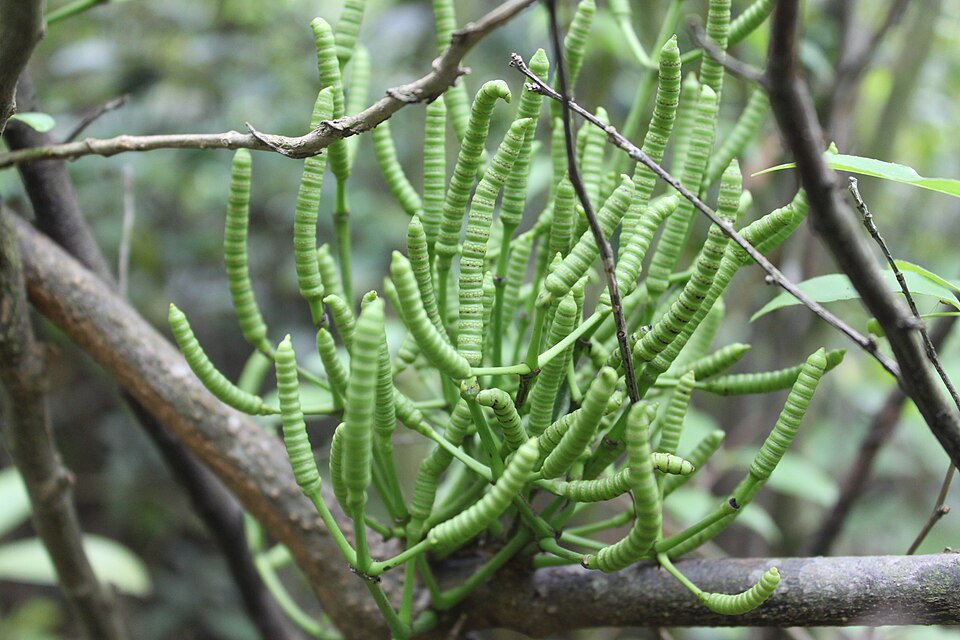
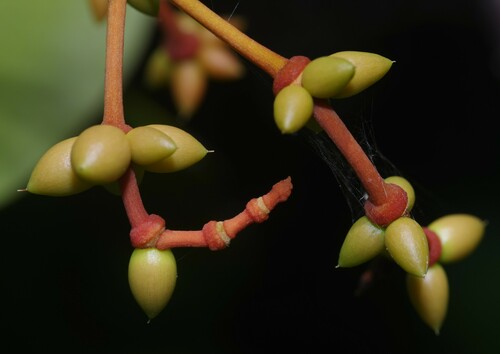
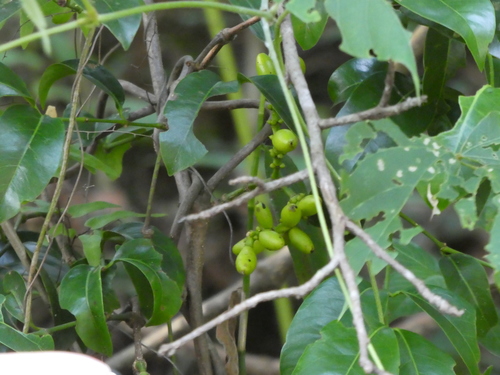
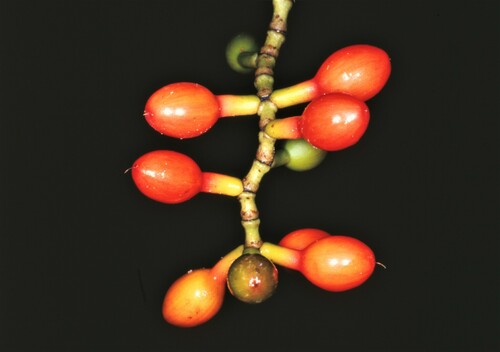
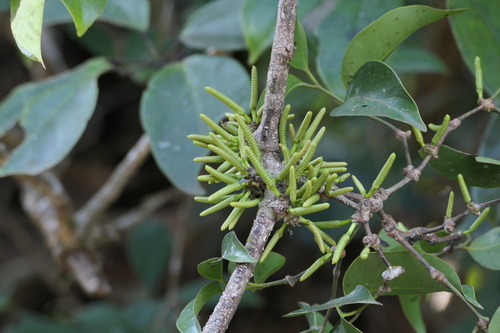
A large climber. It keeps growing from year to year. The stems have swollen nodes. The leaves are opposite and have stalks. They are simple. The flowers are of separate sexes. The male flowers are in spike like cones. These are in loose groups. The female flowers often occur singly. They can be on the stems. The fruit are red, orange or yellow. There is a fleshy coat over the seed.
Edible Uses
The fruit and seeds are eaten.
Distribution
A tropical plant.
Where It Grows
Andaman Islands, Asia, Himalayas, India, Indochina, Laos, Malaysia, Myanmar, SE Asia, Singapore,
Notes
There are about 28 Gnetum species. It is an unresolved name in The Plant List.
Also Known As
Apajuttili, Kaloi, Kodkamballi, Loluga tige, Luliti, Navuru katte
References (4)
- Burkill, I.H., 1966, A Dictionary of the Economic Products of the Malay Peninsula. Ministry of Agriculture and Cooperatives, Kuala Lumpur, Malaysia. Vol 1 (A-H) p 1110
- Delang, C. O., 2007, Ecological Succession of Usable Plants in an Eleven-Year Fallow Cycle in North Lao P.D.R., Ethnobotany Research and Applications. Vol. 5:331-350
- Fl. ind. ed. 1832, 3:518. 1832
- Menninger, E.A., 1977, Edible Nuts of the World. Horticultural Books. Florida p 159