Fagopyrum esculentum
Moench
Buckwheat, Japanese buckwheat, Silverhull buckwheat
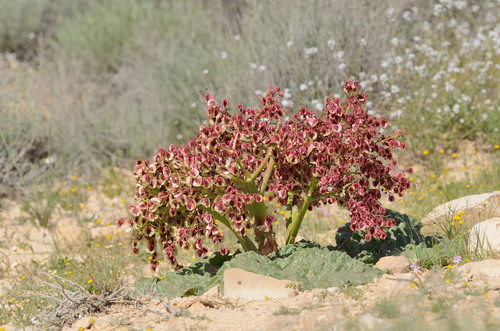
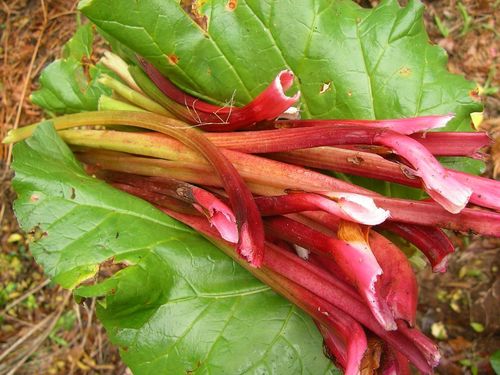
iNaturalist· cc-by
(c) joy russell, some rights reserved (CC BY), uploaded by joy russell
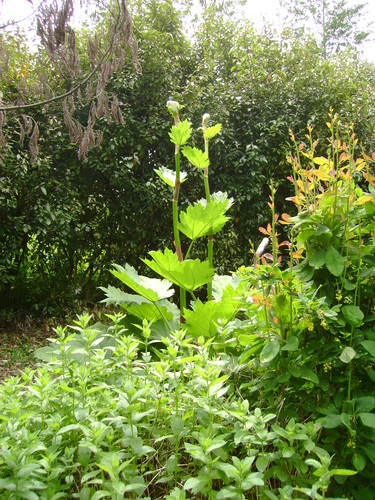
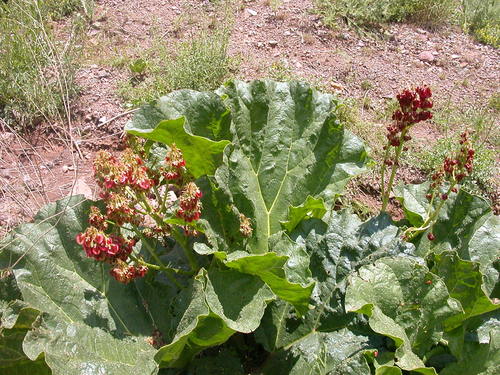
iNaturalist· cc-by-nc
(c) Valentin Hamon, some rights reserved (CC BY-NC)
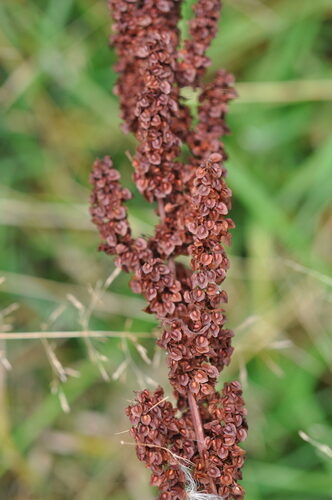
iNaturalist· cc-by-nc
(c) Valentin Hamon, some rights reserved (CC BY-NC)
Summary
Source: WikipediaAnnual herb reaching 1.5 m tall and 0.3 m wide, growing quickly and unsuitable for shade. Frost tender with flowers appearing July to September and seeds maturing August to October. Monoecious flowers pollinated by bees and flies. Thrives in light sandy, medium loamy, or heavy clay soils with good drainage; tolerates poor nutrition, very acid to alkaline pH, and drought conditions. Notable for attracting wildlife.
Description
An upright annual herb up to 1 m high. It spreads to 1 m across. It has angular hollow stems. These are erect and branching. Leaves are heart shaped or triangular and small. It has groups of white or pink flowers. These have a smell. They occur in clusters at the ends of branches. Fruit are small and 3 angled. The plants are not grasses but the seeds are normally grouped with other grain crops.
Edible Uses
Leaves can be eaten raw or cooked like spinach. They are not particularly impressive raw but improve with cooking, and their richness in rutin makes them a very healthy addition to the diet. The seed has a nutty flavour, though a somewhat gritty texture that not everyone enjoys. It can be cooked like rice, soaked overnight in warm water and sprouted for a few days to add to salads, or ground into flour for pancakes, noodles, bread, and similar foods, and used as a thickening agent in soups. Buckwheat flour can be mixed with wheat, barley, or rye flour to improve taste and nutritional value — up to 30% buckwheat flour can be included in wheat bread dough. Because it contains no gluten, it is suitable for people with coeliac disease. The seed is rich in vitamin B6. Excellent beer can be brewed from the grain. Fresh leaves and inflorescences are used for industrial extraction of rutin, which is applied to strengthen the inner lining of blood vessels. Rutin is also used industrially as a natural pigment, antioxidant, stabiliser, food preservative, and UV light absorber.
Traditional Uses
CAUTION: The seeds are used mainly for flour and stock feed. Seeds are bitter. If they are eaten in large amounts they can produce an unpleasant skin disorder. The seeds are eaten in porridge and biscuits etc. The seeds can be made into flour and eaten in pancakes, noodles and breads or for thickening soups and gravies. Seeds can be soaked overnight then sprouted and eaten. The tender leaves and shoots are cooked and eaten. The young leaves can be stored for 4-5 days after harvest.
Medicinal Uses
Buckwheat is a bitter but pleasant-tasting herb used medicinally primarily because its leaves are a good source of rutin. Rutin dilates blood vessels, reduces capillary permeability, and lowers blood pressure, making it useful for a wide range of circulatory problems. The leaves and shoots of flowering plants are acrid, astringent, and vasodilatory, and are used internally for high blood pressure, gout, varicose veins, chilblains, and radiation damage. Vitamin C aids absorption and is best taken alongside rutin. Combined with lime flowers (Tilia species), it is a specific treatment for haemorrhage into the retina. Leaves and flowering stems are harvested as flowering begins and dried for later use — they must be stored in the dark, as active ingredients degrade rapidly in light. Some caution is warranted as the herb has been known to cause light-sensitive dermatitis. A poultice of the seeds has been used to restore milk flow in nursing mothers. An infusion of the herb has been used for erysipelas, an acute infectious skin disease. A homeopathic remedy prepared from the leaves is used for eczema and liver disorders.
Known Hazards
Cases of severe allergic reactions to buckwheat and buckwheat-containing products have been reported. Buckwheat contains fluorescent phototoxic fagopyrins. These can cause fagopyrism in people with diets based on high consumption of buckwheat sprouts, and particularly flowers or fagopyrin-rich buckwheat extracts. Symptoms of fagopyrism in humans may include skin inflammation in sunlight-exposed areas, cold sensitivity, and tingling or numbness in the hands. In the U.S., the presence of buckwheat in cereal grain is considered an economic threat, since many people in the Asian markets are highly allergic to it. Grain elevators use a zero tolerance policy where the occurrence of buckwheat in a load of grain means the entire load is rejected. Buckwheat allergy is especially common in Japan, with potential reactions almost as severe as peanut allergy.
Distribution
It is a temperate plant. It can be grown at high altitudes in the tropics. It will grow on poor soils. It prefers rich soils and a protected sunny position. It can grow in acid soils. It is resistant to frost but damaged by drought. In Nepal it grows between 1000-2500 m altitude. It can grow up to 4,400 m altitude. In Uttar Pradesh it grows up to 3000 m altitude. In Yunnan.
Where It Grows
Africa, Asia, Australia, Austria, Balkans, Belarus, Belgium, Bhutan, Botswana, Brazil, Britain, Bulgaria, Canada, Central Africa, Central Asia, China*, Congo DR, Cuba, Denmark, East Africa, Ecuador, England, Ethiopia, Europe, Finland, France, Germany, Greece, Himalayas, Hungary, India, Indochina, Indonesia, Iran, Iraq, Ireland, Italy, Japan, Kazakhstan, Kenya, Korea, Korea N, Kyrgyzstan, Laos, Latvia, Lithuania, Macedonia, Madagascar, Manchuria, Mediterranean, Middle East, Mongolia, Mozambique, Myanmar, Nepal, Netherlands, New Zealand, Moldova, North America, Northeastern India, Pacific, Pakistan, Papua New Guinea, PNG, Philippines, Poland, Reunion, Russia, Scandinavia, SE Asia, Serbia, Siberia, Sikkim, Slovenia, South Africa, Southern Africa, South America, Spain, Sri Lanka, Sweden, Tajikistan, Tanzania, Tasmania, Thailand, Tibet, Uganda, Ukraine, USA, Vietnam, West Indies, Zambia, Zimbabwe,
Cultivation
Fagopyrum esculentum is a plant of the temperate and subtropical zones, though it can also be grown at higher elevations, generally above 1,500 metres, in the tropics. It grows best in areas where annual daytime temperatures are within the range 17 - 27°c, but can tolerate 7 - 40°c. It is very sensitive to frost. It prefers a mean annual rainfall in the range 700 - 1,000mm, but tolerates 400 - 1,300mm. A very easily grown plant, it prefers dry sandy soils but succeeds in most conditions, including poor, heavy or acid soils and even sub-soils. It prefers a pH in the range 5 - 6.5, tolerating 4.4 - 7.5. It prefers a cool moist climate, but it also succeeds in dry and arid regions. Hot drying temperatures and drying weather at blooming time blast the flowers and prevent seed formation. The plant has a poorly developed root system that makes it rather sensitive to drought. Fagopyrum esculentum is cultivated in many parts of the world for its edible seed. It is a prolific producer of seeds, and these are often spread by animal activity. It easily escapes from cultivation and can become established as a weed of cultivated and waste ground, though it is easy to control and does not usually become a pest. Buckwheat is a fast-growing plant that can reach its full height within 4 - 6 weeks. Flower formation starts 20 days after emergence, the plant continuing to flower until complete senescence and death of the whole plant. After the onset of flowering, the leaves and stems continue to grow while the fruits develop; hence seed ripening is very uneven, making harvesting difficult. From the middle of the flowering period onwards, when the leaf area has reached its maximum, further growth of the vegetative parts is slow, and producing ripe seed becomes the main focus of the plant. The seed is ready for harvesting 70 - 130 days after emergence, depending on cultivar and ecological conditions[141 , 183 , 299 , 418 ]. The seed is harvested when most of it (at least 75%) is mature, and most leaves have yellowed and dropped. The crop is harvested by mowing, after which the stems are bundled and put in heaps to dry. Farmers prefer to harvest early in the morning or late in the afternoon, or even at night, when the plants are slightly damp from dew, to reduce grain shattering. The average seed yield in the United States is 0.9 - 1 tonne per hectare; in Kenya, it is 1 tonne, and in Russia 1 - 1.3 tonnes; but up to 4 tonnes can be obtained. The seed ripens irregularly over a period of several weeks, so it is difficult to harvest. Plants have poor frost resistance, but they are disease and insect resistant. They inhibit the growth of winter wheat. There are some named varieties. The flowers have a pleasant sweet honey scent and are extremely attractive to bees and hoverflies.
Propagation
Sow seed in situ from mid-spring to early summer. Germination typically occurs within 5 days. Earlier sowings are intended for a seed or leaf crop; later sowings are used mainly for leaf crops or green manure.
Other Uses
An excellent green manure plant, buckwheat can be used to reclaim badly degraded soils and subsoils. A blue dye is obtained from the stems and a brown dye from the flowers. It has historically been used as feed for cattle, pigs, and chickens. As a cover crop it is the fastest-maturing of all options, flowering within 3–6 weeks and fully maturing in 11–12 weeks. It grows quickly enough to suppress weeds effectively, a use documented in North America for several centuries. It also prevents erosion, improves soil aggregate stability, and scavenges nutrients such as phosphorus and calcium, including mineralising rock phosphate. Buckwheat is an excellent plant for bee pasture — approximately one acre can provide sufficient forage for a hive, producing around 150 pounds of honey per season. Its flowers also attract beneficial insects including parasitic wasps, minute pirate bugs, insidious flower bugs, tachinid flies, ladybeetles, and hoverflies, which may prey on pests in neighbouring crops. It is sometimes included in birdseed mixes and wildlife food plot plantings.
Production
Seeds usually germinate in 5 days. It has a very short growing period from sowing to maturity. It can produce a crop of leaves in 8 weeks and seeds in 12 weeks. Seed ripen irregularly over several weeks making harvesting difficult. Under cool conditions plants flower in 7-9 months. Commercial grain yields in Australia have been up to 2.5 tonnes/ha. In India yields of 600-800 kg/ha are achieved.
Other Information
It is a commonly cultivated food plant. It is sold in local markets. Nine countries produce thousands of tons.
Notes
The plant contains rutin useful for blood conditions. The plant inhibits the germination of other seeds for a period of time. Seeds are 11% protein. It is insect pollinated.
Nutrition
| Part | Moisture | kJ | kcal | Protein | Vit A | Vit C | Iron | Zinc |
|---|---|---|---|---|---|---|---|---|
| Seed | 11.3 | 1404 | 336 | 10.3 | — | — | 3 | — |
Synonyms
Also Known As
Al-Hintta, Al-Swdaa, B lei, Brank, Bro, Buchweizen, Chutia lofa, Daran, Dayat, Dhemsi sak, Dongthe, Doron, Fafra, Fagopiro, Gamrus, Grano saraceno, Helangala, Ka-la, Koti, Kotu, Kyoubaku, Lompuk, Mach ba-goc, Mariwo, Memil, Mithe phaper, Navadna ajda, Notch-seeded buckwheat, Obul, Ogla, Ogli, Oogal, Phanpar, Phapar, Phaphar, Phaphara, Phaphra, Qiao mai, Sagad, Saracen, Sarrasin, Shari-mam, Soba, Tian qiao mai, Titaphapur, Trigo-sarraceno, Varimbazahamainty, Wakha-yendem
References (86)
- Ambasta, S.P. (Ed.), 2000, The Useful Plants of India. CSIR India. p 218
- Anderson, E. F., 1993, Plants and people of the Golden Triangle. Dioscorides Press. p 211
- Angami, A., et al, 2006, Status and potential of wild edible plants of Arunachal Pradesh. Indian Journal of Traditional Knowledge 5(4) October 2006, pp 541-550
- Aryal, K. P., et al, 2018, Diversity and use of wild and non-cultivated edible plants in the Western Himalaya. Journal of Ethnobiology and Ethnomedicine (2018) 14:10
- Bandyopadhyay, S. et al, 2009, Wild edible plants of Koch Bihar district, West Bengal. Natural Products Radiance 8(1) 64-72
Show all 86 references Hide references
- Bianchini, F., Corbetta, F., and Pistoia, M., 1975, Fruits of the Earth. Cassell. p 28
- Bodkin, F., 1991, Encyclopedia Botanica. Cornstalk publishing, p 469
- Brouk, B., 1975, Plants Consumed by Man. Academic Press, London. p 35
- Brown, D., 2002, The Royal Horticultural Society encyclopedia of Herbs and their uses. DK Books. p 211
- Burkill, I.H., 1966, A Dictionary of the Economic Products of the Malay Peninsula. Ministry of Agriculture and Cooperatives, Kuala Lumpur, Malaysia. Vol 1 (A-H) p 1009
- Campbell, C.G., 1979, Buckwheat, in Simmonds, N.W., (ed), Crop Plant Evolution. Longmans. London. p 235
- Cerne, M., 1992, Wild Plants from Slovenia used as Vegetables. Acta Horticulturae 318
- Cheng, Z., et al, 2022, Ethnobotanical study on wild edible plants used by Dulong people in northwestern Yunnan, China. Journal of Ethnobiology and Ethnomedicine (2022) 18:3
- Dangol, D. R. et al, 2017, Wild Edible Plants in Nepal. Proceedings of 2nd National Workshop on CUAOGR, 2017.
- Dorjey, K., 2015, Exploration of Plant based Traditional Knowledge from Sham region of Ladakh (J. & K.), India. Journal of Plant Development Sciences Vol. 7 (5) : 429-433.
- Dutta, U., 2012, Wild Vegetables collected by the local communities from the Churang reserve of BTD, Assam. International Journal of Science and Advanced Technology. Vol. 2(4) p 121
- Facciola, S., 1998, Cornucopia 2: a Source Book of Edible Plants. Kampong Publications, p 184
- Flora of China @ efloras.org Volume 5
- Flora of Pakistan. www.eFloras.org
- Fox, F. W. & Young, M. E. N., 1982, Food from the Veld. Delta Books. p 304
- French, B.R., 1986, Food Plants of Papua New Guinea, A Compendium. Asia Pacific Science Foundation p 347
- Gangwar, A. K. & Ramakrishnan, P. S., 1990, Ethnobotanical Notes on Some Tribes of Arunachal Pradesh, Northeastern India. Economic Botany, Vol. 44, No. 1 pp. 94-105
- Giménez-Bastida, J. A. and Zieliński, H. (2015), Buckwheat as a Functional Food and Its Effects on Health, Journal of Agricultural and Food Chemistry, 63 (36), pp 7896–7913.
- Haq, N., Anthony, K., Sarwar, M., and Ahmad, Z. (eds.), 1998, Underutilized Crops of Pakistan. Plant Genetic Resources Institute. p 13
- Hedrick, U.P., 1919, (Ed.), Sturtevant's edible plants of the world. p 305
- Heyne, K., 1927, p 599
- Hibbert, M., 2002, The Aussie Plant Finder 2002, Florilegium. p 100
- https://en.wikipedia.org/wiki/List of wild edible plants in Mongolian cuisine
- Hu, Shiu-ying, 2005, Food Plants of China. The Chinese University Press. p 370
- Irving, M., 2009, The Forager Handbook, A Guide to the Edible Plants of Britain. Ebury Press p 168
- Jansen, P.C.M., 2006. Fagopyrum esculentum Moench. [Internet] Record from Protabase. Brink, M. & Belay, G. (Editors). PROTA (Plant Resources of Tropical Africa), Wageningen, Netherlands. < http://database.prota.org/search.htm>. Accessed 16 October 2009.
- Jardin, C., 1970, List of Foods Used In Africa, FAO Nutrition Information Document Series No 2.p 3
- Jain et al, 2011, Dietary Use and Conservation Concern of Edible Wetland Plants at Indo-Burma Hotspot: A Case Study from Northeast India. Journal of Ethnobiology and Ethnomedicine 7:29 p 6
- Jessop, R., 1995, Buckwheat Studies on the Northern Tablelands of NSW. Australian New Crops Newsletter 14.2 No 4.
- Joshi, N., et al, 2007, Traditional neglected vegetables of Nepal: Their sustainable utilization for meeting human needs. Tropentag 2007. Conference on International Agricultural Research for Development.
- Joshi, N. & Siwakoti, M., 2012, Wild Vegetables Used by Local Community of Makawanpur District and Their Contribution to Food Security and Income Generation. Nepal Journal of Science and Technology Vol. 13, No. 1 (2012) 59-66
- Khanal, R., et al, 2014, Documenting abundance and use of underutilized plant species in the mid hill region of Nepal. ECOPRINT 21: 63-71, 2014
- Kiple, K.F. & Ornelas, K.C., (eds), 2000, The Cambridge World History of Food. CUP p 1739
- Kishor, A., et al, 2018, Wild Food Plants of Himachal Pradesh: A Review. Plant Archives Vol. 18 No.2 pp. 2737-2751
- Kumar, P. D., et al, 2015, Ethnobotanical Knowledge and Usage of Wild Plants in Theog Forest Division, Himachal Pradesh, North Western Himalaya. The Journal of Ethnobiology and Traditional Medicine. Photon 124(2015) 922-935
- Kunwar, R.M., et al, 2012, Underutilized Plant Species in Far West Nepal. J. Mt. Sci. (2012) 9:589-600
- Lazarides, M. & Hince, B., 1993, Handbook of Economic Plants of Australia, CSIRO. p 113
- Li, S., et al, 2020, Monpa, memory, and change: an ethnobotanical study of plant use in Mêdog County, South-east Tibet, China. Journal of Ethnobiology and Ethnomedicine. (2020) 16:5 p 22
- Liu, Yi-tao, & Long, Chun-Lin, 2002, Studies on Edible Flowers Consumed by Ethnic Groups in Yunnan. Acta Botanica Yunnanica. 24(1):41-56
- Lokho, K. & Narasimhan, D., 2013, Ethnobotany of Mao-Naga Tribe of Manipur, India. Pleione 7(2): 314-324
- Macmillan, H.F. (Revised Barlow, H.S., et al), 1991, Tropical Planting and Gardening. Sixth edition. Malayan Nature Society. Kuala Lumpur. p 353
- Manandhar, N.P., 2002, Plants and People of Nepal. Timber Press. Portland, Oregon. p 232
- Manju, S., and Sundriyal, R. C., 2001, Wild Edible Plants of the Sikkim Himalaya: Nutritive Values of Selected Species. Economic Botany 55(3): 377-390
- Masoodi, H. U. R. & Sundriyal, R. C., 2020, Richness of non-timber forest products in Himalayan communities—diversity, distribution, use pattern and conservation status. Journal of Ethnobiology and Ethnomedicine 16:56
- Meitei, L. R., et al, 2022, An ethnobotanical study on the wild edible plants used by forest dwellers in Yangoupokpi Lokchao Wildlife Sanctuary, Manipur, India. Ethnobotany Research and Application 23:15
- Menninger, E.A., 1977, Edible Nuts of the World. Horticultural Books. Florida p 148
- Methodus 290. 1794
- Negi, K.S., 1988, Some little known wild edible plants of U.P. Hills. J. Econ. Tax. Bot. Vol. 12 No. 2 pp 345-360
- Negi, P. S. & Subramani, S. P., 2015, Wild Edible Plant Genetic Resources for Sustainable Food Security and Livelihood of Kinnaur District, Himachal Pradesh, India, International Journal of Conservation Science. 6 (4): 657-668
- Neogi, B., Prasad, M. N. V. and Rao, R. R., 1989, Ethnobotany of Some Weeds of Khasi and Garo Hills, Meghalaya, Northeastern India. Economic Botany 43(4): 471-479
- Paczkowska, G . & Chapman, A.R., 2000, The Western Australian Flora. A Descriptive Calatogue. Western Australian Herbarium. p 460
- Patiri, B. & Borah, A., 2007, Wild Edible Plants of Assam. Geethaki Publishers. p 113
- Pham-Hoang Ho, 1999, An Illustrated Flora of Vietnam. Nha Xuat Ban Tre. p 754
- Pieroni, A.,& Giusti, M. E., 2009, Alpine Ethnobotany in Italy: Journal of Ethnobiology and Ethnomedicine. 5:32
- Plants for a Future database, The Field, Penpol, Lostwithiel, Cornwall, PL22 0NG, UK. http://www.scs.leeds.ac.uk/pfaf/
- Plowes, N. J. & Taylor, F. W., 1997, The Processing of Indigenous Fruits and other Wildfoods of Southern Africa. in Smartt, L. & Haq. (Eds) Domestication, Production and Utilization of New Crops. ICUC p 191
- Polunin, O., & Stainton, A., 2006, Flowers of the Himalaya, Oxford India Paperbacks. p 347
- PROSEA (Plant Resources of South East Asia) handbook Volume 10 Cereals. p 95
- Purseglove, J.W., 1968, Tropical Crops Dicotyledons, Longmans. p 640
- Rana, D., et al, 2019, Ethnobotanical knowledge among the semi-pastoral Gujjar tribe in the high altitude (Adhwari’s) of Churah subdivision, district Chamba, Western Himalaya. Journal of Ethnobiology and Ethnomedicine (2019) 15:10
- Rana, J.C. et al, 2011, Genetic resources of wild edible plants and their uses among tribal communities of cold arid regions of India. Genetic Resources and Crop Evolution. 59:135-149
- Ruiters-Welcome, A. K., 2019, Food plants of southern Africa. Ph.D. thesis. Univ. of Johannesburg p 91
- Sachula, et al, 2020, Wild edible plants collected and consumed by the locals in Daqinggou, Inner Mongolia, China. Journal of Ethnobiology and Ethnomedicine (2020) 16:60
- Self, M., 1999, Phoenix Seeds Catalogue p 4
- Singh, A. G., Panthi, M. P., & Tewari, D. D., 2012, Wild Plants Used as Vegetable in Rupandehi District of Nepal and their Ethnomedicinal Importance. J. Nat. Hist. Mus. Vol. 26, 2012, 111-125
- Solomon, C., 2001, Encyclopedia of Asian Food. New Holland. p 158
- Song, M., et al, 2013, Traditional knowledge of wild edible plants in Jeju Island, Korea. Indian Journal of Traditional Knowledge. 12(2) pp 177-194
- Taram, M., et al, 2018, Wild Food Plant Resources of Komkar Adi Tribe of Upper Siang District in Arunachal Pradesh, India. Bulletin of Arunachal Forest Research, Vol. 33(2), 27-35
- Thakur, D., et al, 2017, Why they eat, what they eat: patterns of wild edible plants consumption in a tribal area of Western Himalaya. Journal of Ethnobiology and Ethnomedicine (2017) 13:70
- Torre, de la, L., et al, 2008, Enciclopedia de las Plantas Útiles del Ecuador. Herbario QCA. Pontificia Universidad Católica del Ecuador. p 525
- Tsering, J., et al, 2017, Ethnobotanical appraisal on wild edible plants used by the Monpa community of Arunchal Pradesh. Indian Journal of Traditional Knowledge. Vol 16(4), October 2017, pp 626-637
- Ulian, T., et al, 2020, Unlocking plant resources to support food security and promote sustainable agriculture. Plants, People, Planet. 2020;2:421–445.
- USDA, ARS, National Genetic Resources Program. Germplasm Resources Information Network - (GRIN). [Online Database] National Germplasm Resources Laboratory, Beltsville, Maryland. Available: www.ars-grin.gov/cgi-bin/npgs/html/econ.pl (10 April 2000)
- van Wyk, B., 2005, Food Plants of the World. An illustrated guide. Timber press. p 193
- van Wyk, Be, & Gericke, N., 2007, People's plants. A Guide to Useful Plants of Southern Africa. Briza. p 10
- Welcome, A. K. & Van Wyk, B.-E., 2019, An inventory and analysis of the food plants of southern Africa. South African Journal of Botany 122 (2019) 136–179
- Wiersema, J. H. & Leon, B., 2013, World Economic Plants. A Standard Reference CRC Press. 2nd Ed. p 298
- World Checklist of Useful Plant Species 2020. Royal Botanic Gardens, Kew
- www.efloras.org Flora of China
- Zeven, A. C. & de West, J. M. J., 1982, Dictionary of cultivated plants and their regions of diversity. Wageningen. p 100
- Zhang, L., et al, 2016, Ethnobotanical study of traditional edible plants used by the Naxi people during droughts. Journal of Ethnobiology and Ethnomedicine. 12:39