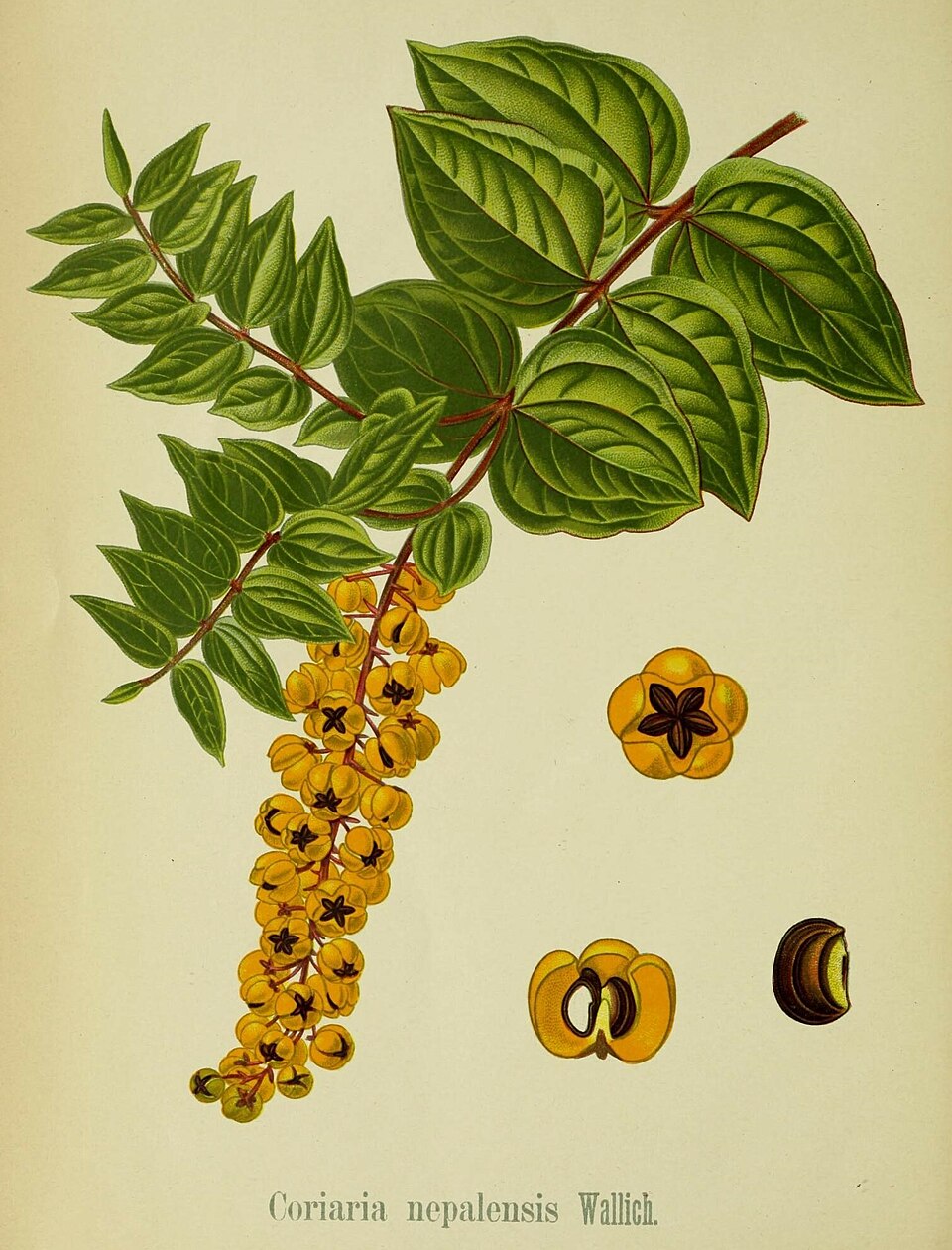
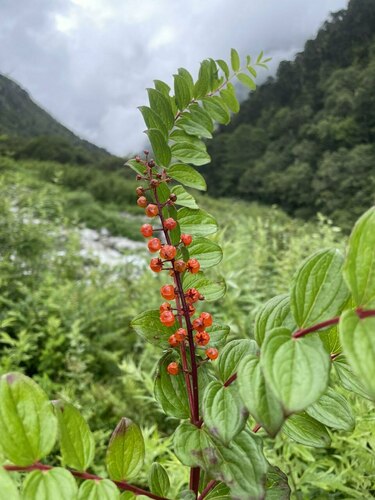
Coriaria napalensis
Wall.
Masuri Berry
gbif· cc-by
Royal Botanic Gardens, Kew
gbif· cc-by-nc-sa
MBG
gbif· cc-by-nc-sa
MBG
Description
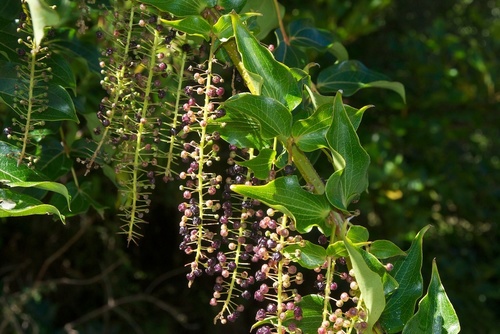
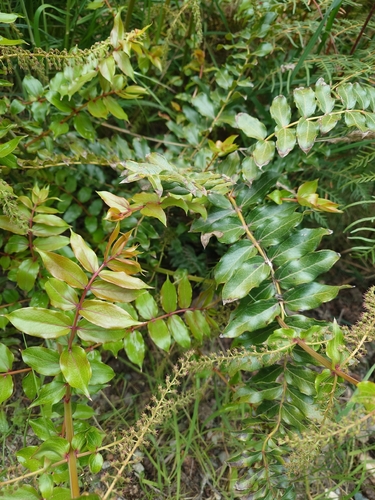
Coriaria napalensis is a deciduous Shrub growing to 2.5 m (8ft 2in). See above for USDA hardiness. It is hardy to UK zone 8. It is in flower in May. The species is hermaphrodite (has both male and female organs). It can fix Nitrogen. Suitable for: light (sandy), medium (loamy) and heavy (clay) soils and prefers well-drained soil. Suitable pH: mildly acid, neutral and basic (mildly alkaline) soils. It can grow in semi-shade (light woodland) or no shade. It prefers moist soil.
Edible Uses
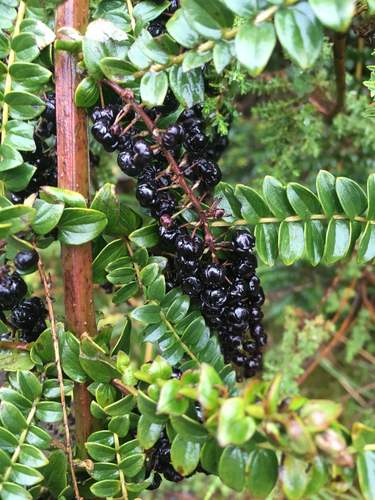
Fruit - raw or used as a beverage. Use with great caution since most parts of the plant, including the seed, are very toxic. Some reports suggest it is safer not to use the fruit at all. The fruit is about 8mm in diameter.
Medicinal Uses
Stomachic. The juice of the bark is used in the treatment of stomach aches. Some cauion is advised - see notes above on toxicity.
Known Hazards
The seed is poisonous. Although we have no more information, it is reasonable to assume that other parts of the plant are also toxic.
Distribution
E. Asia - Himalayas from Pakistan to S.W. China.
Where It Grows
Coming Soon
Cultivation
Prefers a fairly good loamy soil in a sheltered position in full sun or light shade. This species is not very hardy in Britain, it tolerates temperatures down to about -5°c. According to one report plants succeed at Kew but are frequently cut to the ground in severe winters though they resprout from the base. This new growth does not flower in its first year. However, a medium-size tree seen at Kew in 1990 seemed to have survived many winters without untoward damage. The roots of plants in this genus bear nitrogen-fixing nodules. Whilst much of the nitrogen will be utilized by the growing plant, some of it will become available for other plants growing nearby.
Propagation
Seed - sow February/March in a greenhouse. The seed usually germinates in 1 - 3 months at 15°c. When they are large enough to handle, prick the seedlings out into individual pots and grow them on in the greenhouse for at least their first winter. Plant them out into their permanent positions in late spring or early summer, after the last expected frosts. Cuttings of half-ripe wood, 7cm with a heel, July/August in a frame. Fair percentage.
Other Uses
Basketry Dye Ink Tannin Wood. The wood contains a considerable quantity of tannin. The leaves contain 20% tannin. The branches are used for making baskets. Wood - hard, beautifully marked, takes a good polish. Used for picture frames and other small articles.
Also Known As
Masuri Berry, Tanner's tree, Mansur shrub. In Hindi it is known as masuri, makola, or masurya; and in Nepali as macchaino.