Coriaria nepalensis
Wall.
Tanner's tree, Mussoorie berry
iNaturalist· cc-by-nc
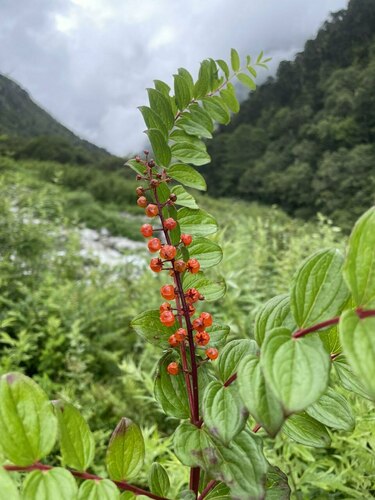
(c) 刘光裕 Liu Guangyu, some rights reserved (CC BY-NC), uploaded by 刘光裕 Liu Guangyu
iNaturalist· cc-by
(c) Sagnik Dutta Roy, some rights reserved (CC BY)
Summary
Source: WikipediaCoriaria nepalensis is a shrub of the genus Coriaria. It grows in the foothills of the Himalayas. It blooms in spring and has bright yellow flowers and red fruits in summer. The plant is also known in English as masuri berry, tanner's tree, or mansur shrub. In Hindi it is known as masuri (मसूरी), makola, or masurya (मसूरिया); and in Nepali as macchaino (मछाईनो).
Description
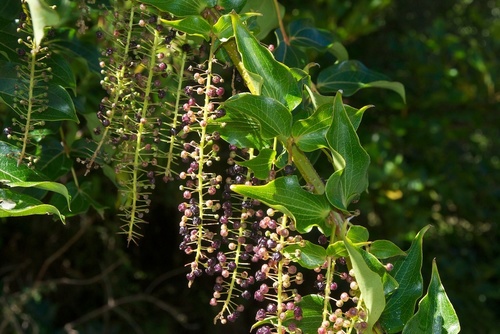
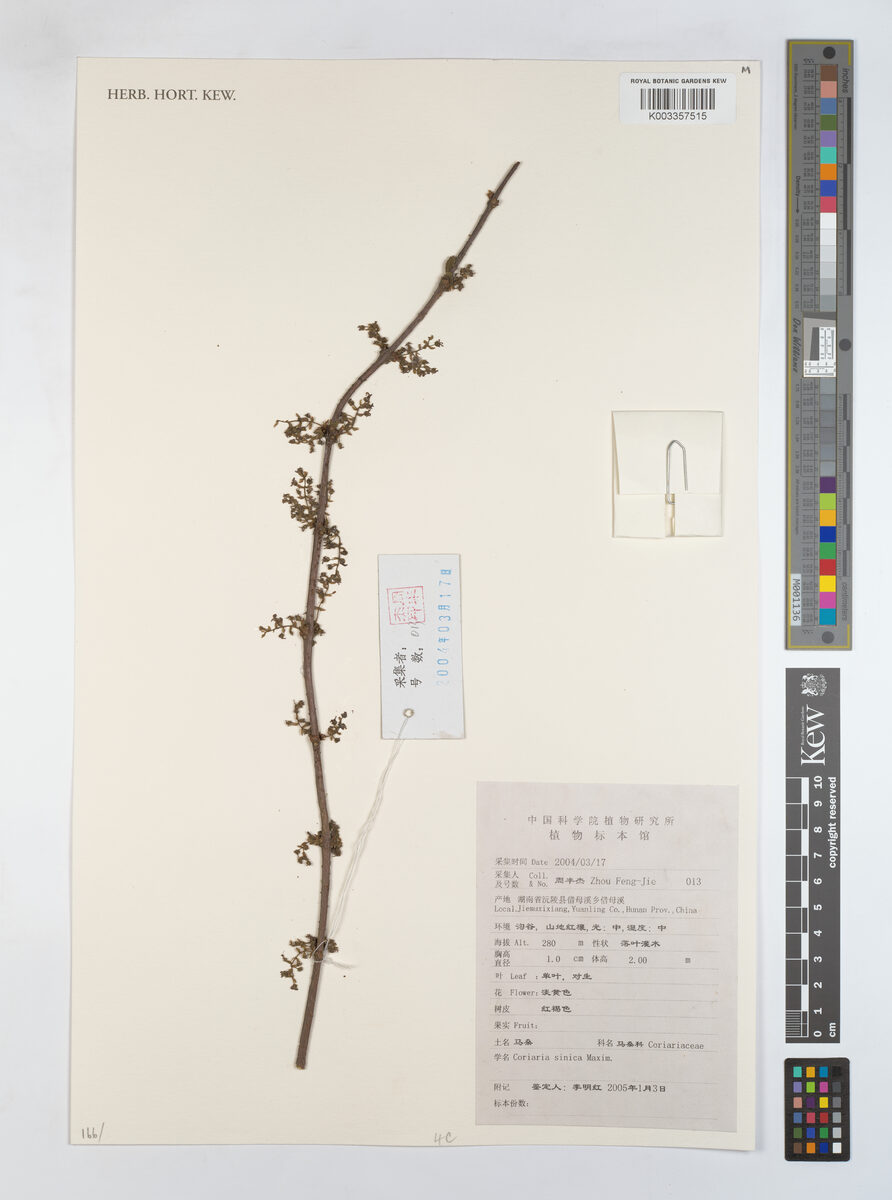
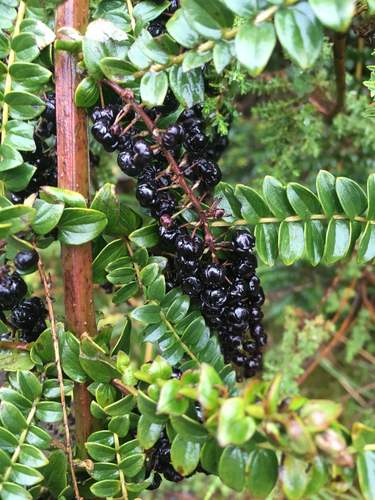
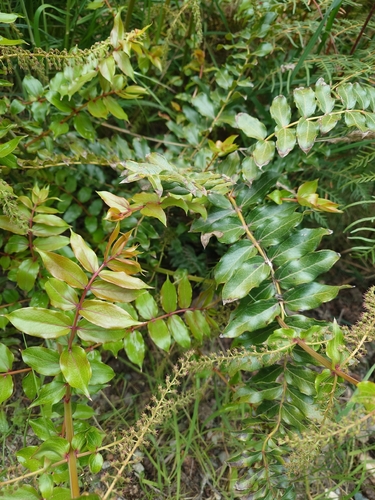
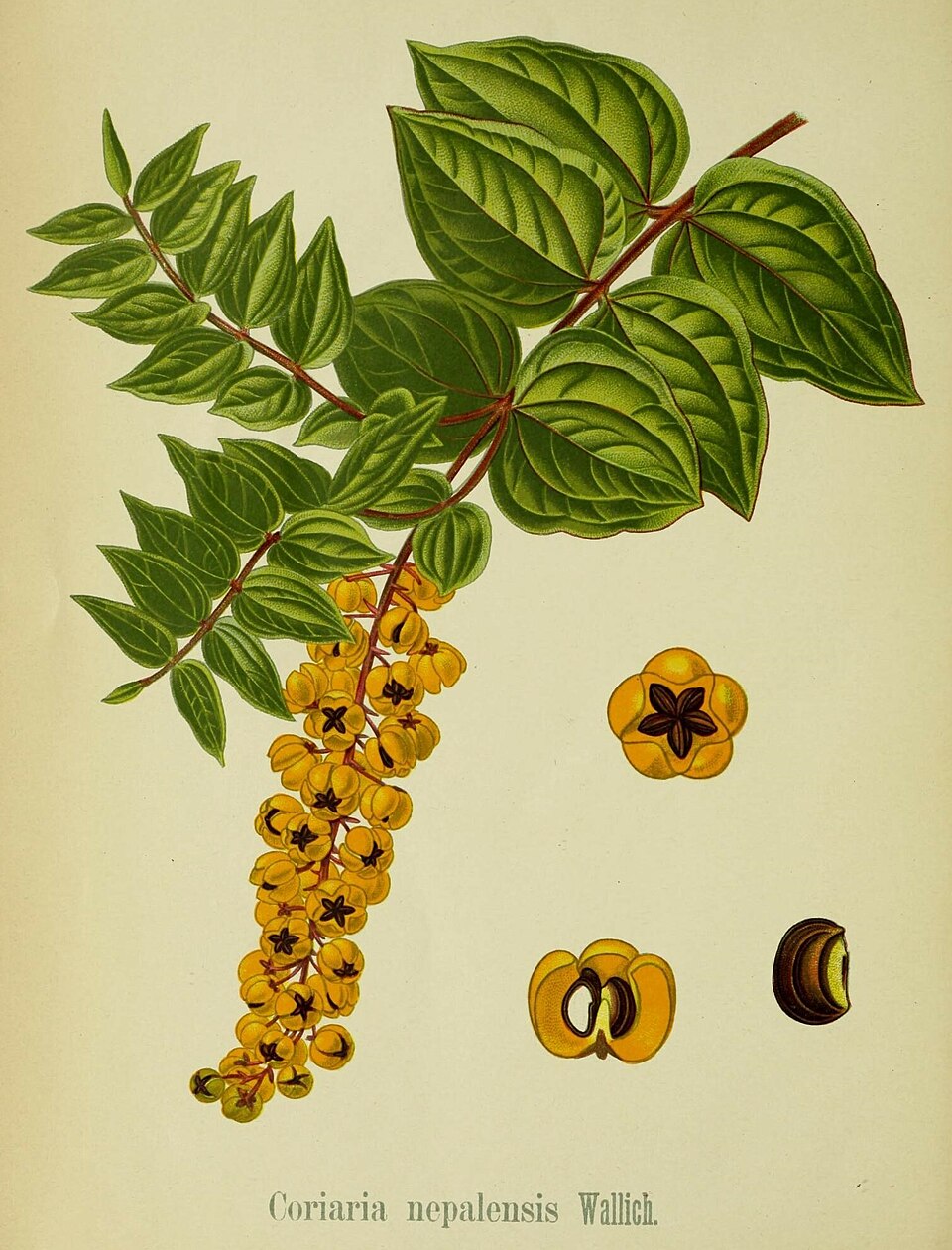
A shrub. It grows to 5 m tall. The leaves are almost without stalks. They are opposite. The leaves are 2-10 cm long by 1.5-4 cm wide. They are oval or sword shaped. They have 3 veins. The flowers do not have stalks. They are red. The fruit is black when ripe.
Edible Uses
The ripe fruit are eaten fresh, typically only in small amounts. The seeds are eaten raw or cooked.
Traditional Uses
The ripe fruit are eaten fresh. They are usually only eaten in small amounts. Eating large amounts can cause dizziness. CAUTION: All plant parts are poisonous except the envelope around the flower. The seeds are eaten raw or cooked.
Known Hazards
All plant parts are poisonous except the envelope around the flower. Eating large amounts of fruit can cause dizziness.
Distribution
A subtropical plant. In Nepal plants grow from 1000-2800 m altitude. They grow in open or shady places. It suits hardiness zones 8-10. In Sichuan and Yunnan.
Where It Grows
Asia, Australia, Bhutan, China, Himalayas, India, Indochina, Myanmar, Nepal, Northeastern India, NW India, Pakistan, SE Asia, Tibet,
Cultivation
Plants are grown from seed or cuttings.
Notes
There are about 30 Coriaria species.
Also Known As
Balel, Bhonjinsi, Machaino, Machhaiino, Machino, Makola, Makroli, Masen, Masuri, Reekhni, Tadrelu, Wamdong
References (19)
- Ambasta, S.P. (Ed.), 2000, The Useful Plants of India. CSIR India. p 142
- Bhattarai, S and Chaudary, R. P., 2009, Wild Edible Plants Used by the People of Manang District, Central Nepal. Ecology of Food and Nutrition, 48:1-20
- Etherington, K., & Imwold, D., (Eds), 2001, Botanica's Trees & Shrubs. The illustrated A-Z of over 8500 trees and shrubs. Random House, Australia. p 226
- Flora of Pakistan. www.eFloras.org
- Gautam, R. S., et al, 2020, Wild Edible Fruits of Nepal. Int. J. Appl. Sci. Biotechnol. Vol 8(3): 289-304
Show all 19 references Hide references
- Gautam, R. S., et al, 2022, Ethnobotanical Review of Wild Edible Plants of Nepal. Journal of Natural History Museum Volume 32, 2021-22 p 110
- GUPTA,
- Hedrick, U.P., 1919, (Ed.), Sturtevant's edible plants of the world. p 217
- Ju, Y., et al, 2013, Eating from the wild: diversity of wild edible plants used by Tibetans in Shangri-la region, Yunnan, China, Journal of Ethnobiology and Ethno medicine 9:28
- Khakurel, D., et al, 2021, Foods from the wild: Local knowledge, use pattern and distribution in Western Nepal. PLOS ONE.
- Khan, M. & Hussain, S., 2014, Diversity of wild edible plants and flowering phenology of district Poonch (J & K) in the northwest Himalaya. Indian Journal of Sci, Res. 9(1): 032-038
- Manandhar, N.P., 2002, Plants and People of Nepal. Timber Press. Portland, Oregon. p 170
- Pl. asiat. rar. 3:67, t. 289. 1832
- Plants for a Future database, The Field, Penpol, Lostwithiel, Cornwall, PL22 0NG, UK. http://www.scs.leeds.ac.uk/pfaf/
- Radha, B., et al, 2013, Wild Edible Plant Resources of the Lohba Range of Kedarnath Forest Division (KFD), Garhwal Himalaya, India. Int. Res J. Biological Sci. Vol. 2 (11), 65-73
- Reis, S. V. and Lipp, F. L., 1982, New Plant Sources for Drugs and Foods from the New York Botanical Garden herbarium. Harvard. p 162
- Singh, H.B., Arora R.K.,1978, Wild edible Plants of India. Indian Council of Agricultural Research, New Delhi. p 54
- Tsering, J., et al, 2017, Ethnobotanical appraisal on wild edible plants used by the Monpa community of Arunchal Pradesh. Indian Journal of Traditional Knowledge. Vol 16(4), October 2017, pp 626-637
- Upreti, K., et al, 2010, Diversity and Distribution of Wild Edible Fruit Plants of Uttarakhand. Bioversity Potentials of the Himalaya. p 166