Coriaria sarmentosa
G.Forst.
Tutu, Wineberry
iNaturalist· cc-by-nc
(c) Ivan A. Popov, some rights reserved (CC BY-NC), uploaded by Ivan A. Popov
iNaturalist· cc-by-nc
(c) Nathan Campbell, some rights reserved (CC BY-NC)
iNaturalist· cc-by-nc
(c) Greg Lasley, some rights reserved (CC BY-NC), uploaded by Greg Lasley
Summary
Source: WikipediaCoriaria sarmentosa is a native shrub or small tree of New Zealand. The species is one of the most abundant Coriaria species in New Zealand known as tutu, known for their toxicity.
Description
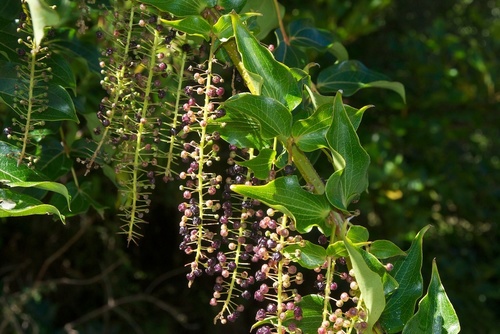
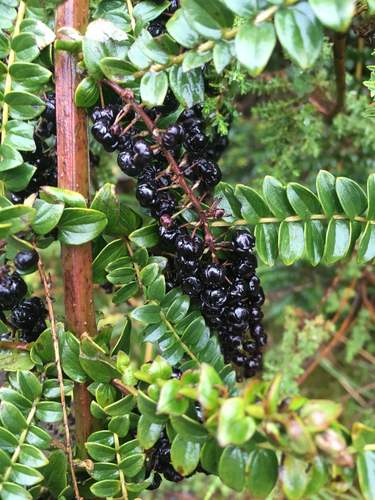
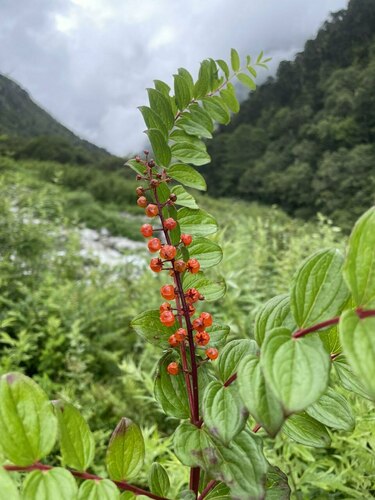
A small shrub. The leaves are shiny. The leaves are opposite each other. The flower stalks grow at right angles to the stem. The flowers are in clusters about 30 cm long. The fruit are shiny and black. They hang like strings of black currants. The floral envelope becomes soft and juicy and covers the actual fruit. These soft black petals or envelopes are edible.
Edible Uses
The fruit can be eaten raw or pressed and drunk as a beverage, and the juice may also be fermented into a wine. Use with great caution, as most parts of the plant including the seed are very toxic, and some reports suggest the fruit should not be used at all.
Traditional Uses
CAUTION: All plant parts are poisonous except the envelope around the flower. The envelope is used for wine, jams, jellies and pies. (The seeds must be removed.). The juice can be squeezed out by squeezing in a fine cloth.
Medicinal Uses
None known.
Known Hazards
As with other species of tutu, the plant is poisonous, and is said to be strong enough to have killed many livestock, and even 2 elephants. The convulsant toxin tutin might be present in all tissues, but is known to exist within leaves and fruit.
Distribution
It is a temperate plant.
Where It Grows
New Zealand*,
Cultivation
Prefers a fairly good loamy soil in a sunny sheltered position[11, 164, 200. Succeeds in light shade. This species is not very hardy in Britain, it tolerates temperatures down to about -5°c and succeeds outdoors from Sussex and westwards. There is some confusion over the name of this species, some botanists unite this species with the S. American C. ruscifolia whilst others maintain that they are distinct. The roots of plants in this genus bear nitrogen-fixing nodules. Whilst much of the nitrogen will be utilized by the growing plant, some of it will become available for other plants growing nearby.
Propagation
Sow seed in February or March in a greenhouse. Germination typically occurs within 1–3 months at 15°C. Once seedlings are large enough to handle, prick them out into individual pots and grow on in the greenhouse for at least their first winter. Plant out into permanent positions in late spring or early summer, after the last expected frosts. Alternatively, take half-ripe cuttings of 7cm with a heel in July or August and root in a frame. A fair percentage will take.
Other Uses
A black ink obtained from the leaves can also be used as a dye. The bark is rich in tannin and can be used similarly. This plant is also a nitrogen fixer.
Notes
There are about 30 Coriaria species.
Synonyms
References (3)
- Crowe, A., 1997, A Field Guide to the Native Edible Plants of New Zealand. Penguin. p 62
- Plants for a Future database, The Field, Penpol, Lostwithiel, Cornwall, PL22 0NG, UK. http://www.scs.leeds.ac.uk/pfaf/
- Skinner, G. & Brown, C., 1981, Simply Living. A gatherer's guide to New Zealand's fields, forests and shores. Reed. p 37