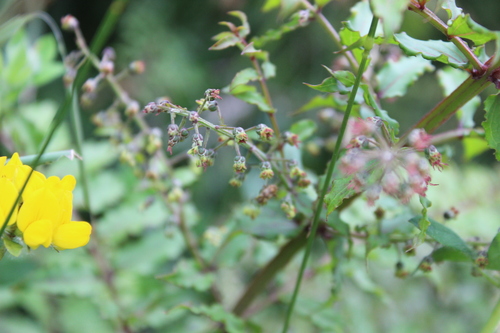
Coriaria terminalis
Hemsl.
iNaturalist· cc-by-nc
(c) ayethirisan, some rights reserved (CC BY-NC)
iNaturalist· cc-by-nc
(c) 綾蛾Actias, some rights reserved (CC BY-NC)
iNaturalist· cc-by
(c) Siddarth Machado, some rights reserved (CC BY)
Summary
Deciduous shrub reaching 1.2 m tall and 2 m wide, hardy to UK zone 8. Flowers July to August with seeds ripening August to September. Hermaphrodite with nitrogen-fixing ability. Adapts to light sandy, medium loamy, and heavy clay soils preferring good drainage. Tolerates mildly acid, neutral, or basic soils. Grows in semi-shade or full sun and prefers moist soil.
Description
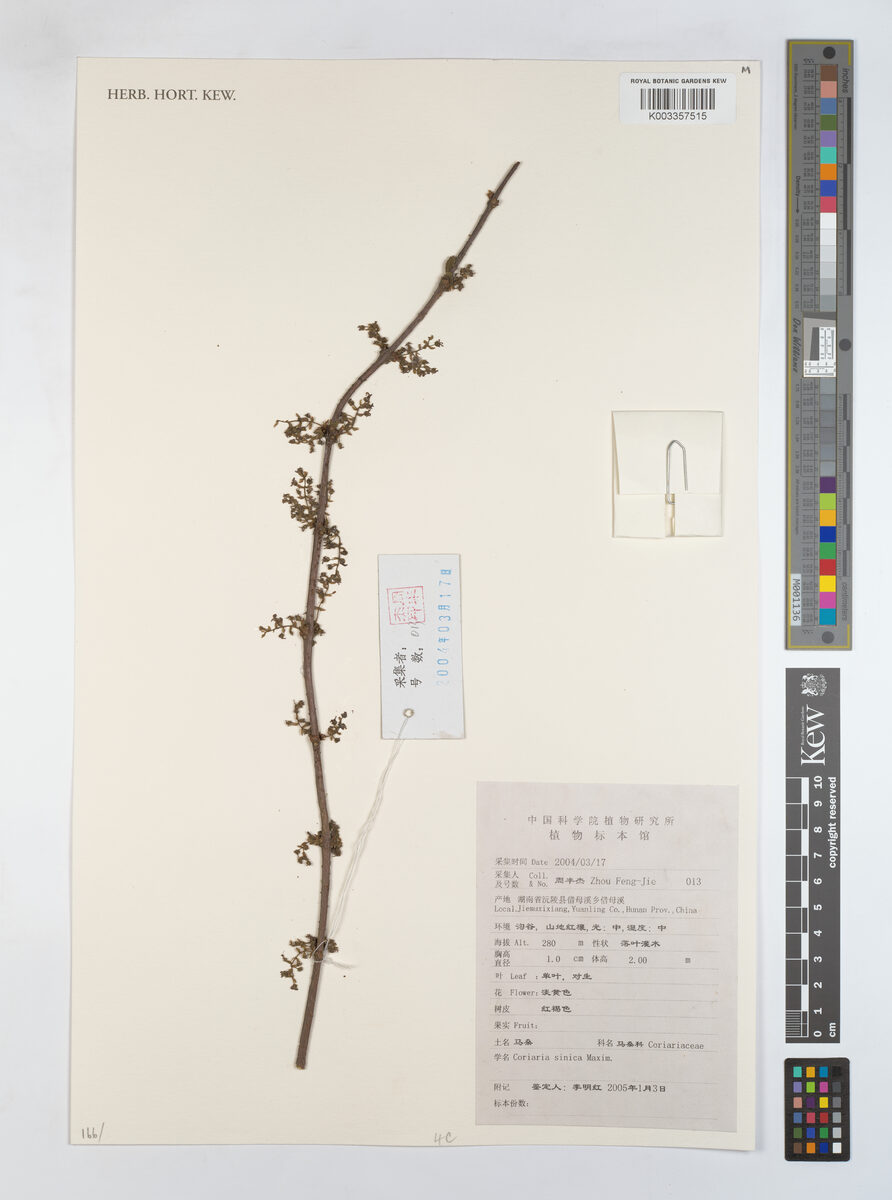
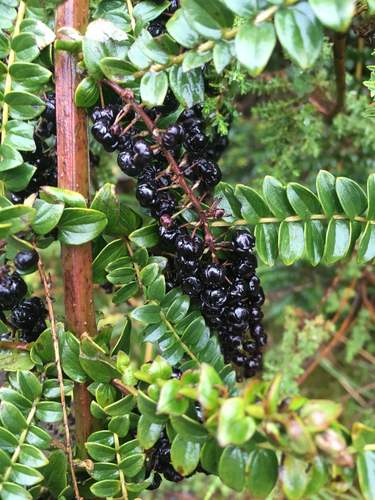
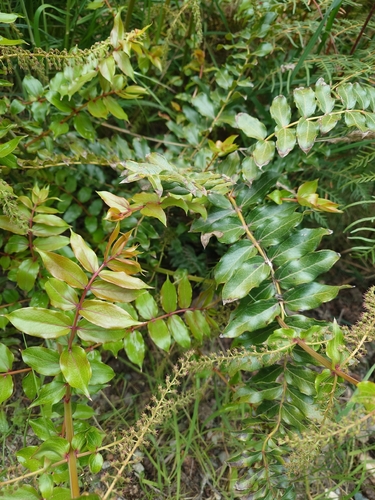
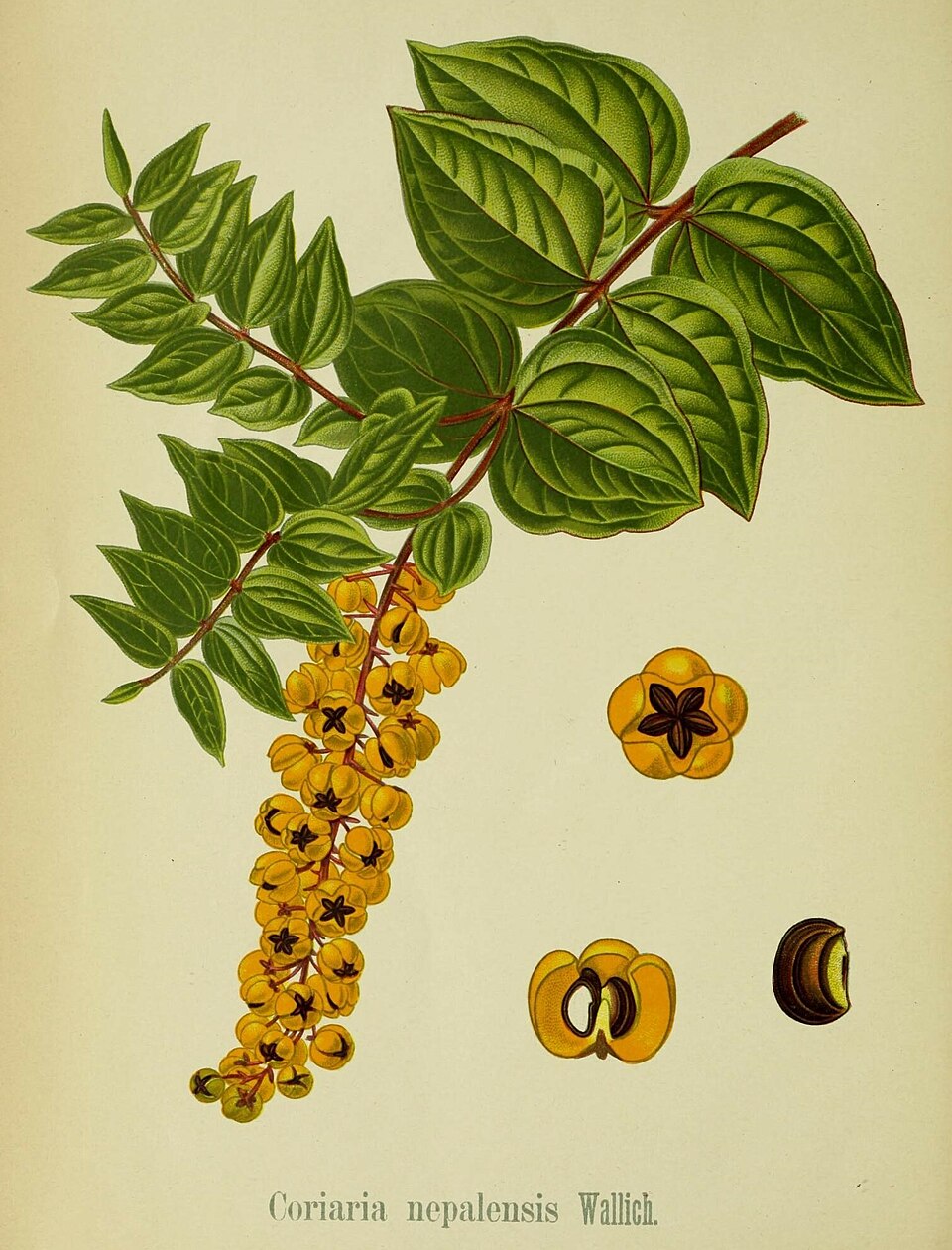
A deciduous shrub. It has rhizomes or underground stems. It grows 1.5 m tall. The leaves have leaflets along the stalk. The leaflets are 8 cm long. The flowering stalks are on the tips of the branches. They can be 15 cm long. The fruit is large and black. They can be red.
Edible Uses
The fruit, which is about 8mm in diameter, can be eaten raw or used as a beverage. The seed must not be eaten. Use with great caution, as most parts of the plant including the seed are probably toxic, and some reports suggest the fruit should not be used at all.
Traditional Uses
CAUTION. It is probably poisonous. Only the outer fleshy part around the ovary is eaten.
This uses section is brief — help expand it
Medicinal Uses
None known.
Known Hazards
Most parts of the plant, including the seed, are probably toxic. Some reports suggest the fruit should not be used at all.
Distribution
It is a warm temperate and subtropical plant. In southern China it grows on mountain slopes between 1,800-3,700 m above sea level. It suits hardiness zones 8-10. In Sichuan and Yunnan.
Where It Grows
Asia, Australia, Bhutan, China, Himalayas, India, Nepal, Northeastern India, Sikkim, Tibet,
Cultivation
Succeeds in any good soil, though it prefers a fairly good loamy soil in full sun or light shade. Requires a sunny sheltered position. This species is one of the hardiest members of the genus, tolerating temperatures down to at least -5°c if sheltered from cold winds. Plants are hardy from Sussex westwards. It is hardy at Kew where it fruits annually and resprouts from the base if cut back in severe winters. Plants flower and fruit at the tips of the current years growth and so can produce fruit even if they have been cut to the ground. They can fruit well even when young, plants growing with us flowered and fruited in their third year from seed. When well sited, suckers can be produced at some distance from the parent plant. The roots of plants in this genus bear nitrogen-fixing nodules. Whilst much of the nitrogen will be utilized by the growing plant, some of it will become available for other plants growing nearby.
Propagation
Sow seed in February or March in a greenhouse. Germination typically occurs within 1–3 months at 15°C. Once seedlings are large enough to handle, prick them out into individual pots and grow on in the greenhouse for at least their first winter. Plant out into permanent positions in late spring or early summer, after the last expected frosts. Take half-ripe cuttings of 7cm with a heel in July or August and root in a frame — a fair percentage will take. The plant can also be propagated by division in spring.
Other Uses
This plant is a nitrogen fixer.
Notes
There are about 30 Coriaria species.
Also Known As
Tong ru, Tshe-lthas-thpas, Zuo mu
References (7)
- Cundall, P., (ed.), 2004, Gardening Australia: flora: the gardener's bible. ABC Books. p 414
- Ding, X., 2021, Collection calendar: the diversity and local knowledge of wild edible plants used by Chenthang Sherpa people to treat seasonal food shortages in Tibet, China. Journal of Ethnobiology and Ethnomedicine 17:40
- Etherington, K., & Imwold, D., (Eds), 2001, Botanica's Trees & Shrubs. The illustrated A-Z of over 8500 trees and shrubs. Random House, Australia. p 226
- Flora of China
- Guo, C., et al, 2022, An Ethnobotany Survey of Wild Plants Used by the Tibetan People of the Yadong River Valley, Tibet, China. Journal of Ethnobiology and Ethnomedicine p 24
Show all 7 references Hide references
- Hooker's Icon. Pl. 23: t. 2220. 1892
- Plants for a Future database, The Field, Penpol, Lostwithiel, Cornwall, PL22 0NG, UK. http://www.scs.leeds.ac.uk/pfaf/