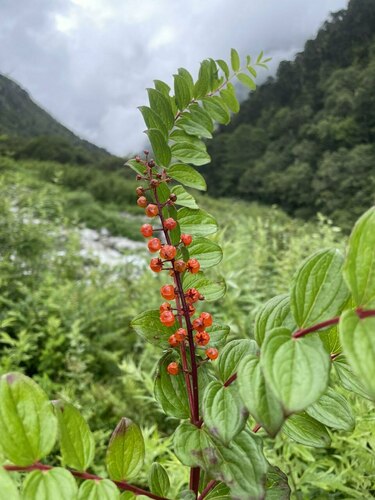
Coriaria thymifolia
Humb. & Bonpl. ex Willd.
Pinan
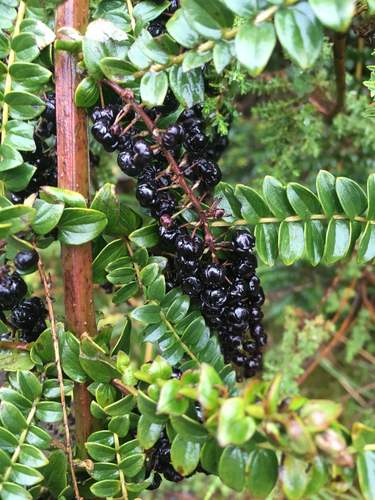
iNaturalist· cc-by
(c) Joe Dillon, some rights reserved (CC BY)
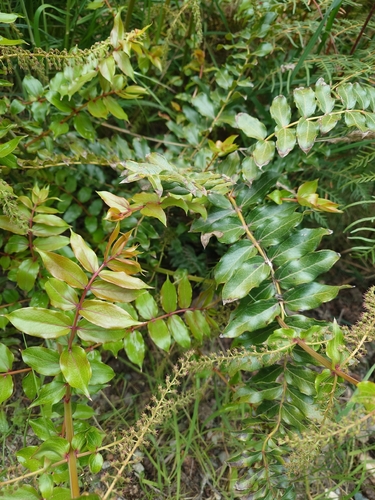
iNaturalist· cc-by
(c) Joe Dillon, some rights reserved (CC BY)
iNaturalist· cc-by
(c) Joe Dillon, some rights reserved (CC BY)
Description
A tropical plant in the Coriariaceae family that produces purple-black fruits when ripe, mainly eaten by children.
This description is brief — help expand it
Edible Uses
In Ecuador, its fruits are reportedly eaten to produce an inebriated state. The eater is said to experience “sensations of soaring through the air”. The effects are said to be similar to those produced by Petunia violacea. Coriaria ruscifolia grows in Mexico as well; it has been suggested that it was the Aztec inebriant known as tlacopétatl. In the Las Huaringas region, a lake plateau in the northern Peruvian Andes, the local healers (curanderos) refer to Coriaria ruscifolia as contra-alergica, “against allergies.” They use the herbage to prepare a bath additive that they use to wash patients suffering from allergic reactions.
Traditional Uses
CAUTION. It is probably poisonous. The fruit should not be eaten in large amounts due to a narcotic effect.
This uses section is brief — help expand it
Known Hazards
The fruits contain catechol derivatives and probably several sesquiterpenes. Sources state that a toxic substance coriamyrtine has been isolated from the plant. The effects are described as initially stimulating but then becoming less pleasant. Death from nervous exhaustion can result. Coriamyrtine is a sesquiterpene; other sesquiterpenes including coriatine, tutine, and pseudotutine have also been reported. Known in Chile as deu, dewü, huique, huiqui, and matarratones, it is reputed to be a toxic hallucinogen. The fruits are made into rat poison in Chile and are said to be lethal for small children. The Mapuche use a tea made from the leaves as an emetic.
Distribution
A tropical plant.
Where It Grows
Ecuador, South America,
Other Information
The fruit are mainly eaten by children.
Notes
There are about 30 Coriaria species.
References (4)
- Joyal, E., 1987, Ethnobotanical Field Notes from Ecuador: Camp, Prieto, Jorgensen, and Giler. Economic Botany 41(2): 163-189
- Reis, S. V. and Lipp, F. L., 1982, New Plant Sources for Drugs and Foods from the New York Botanical Garden herbarium. Harvard. p 162
- Smith, N., Mori, S.A., et al, 2004, Flowering Plants of the Neotropics. Princeton. p 116
- Sp. pl. 4(2):819. 1806