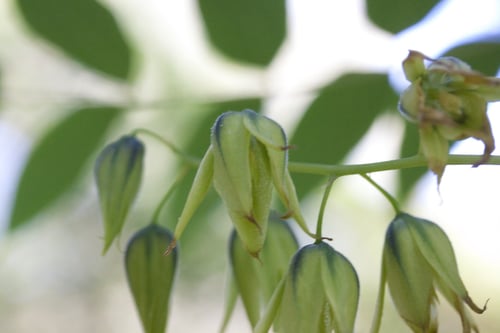
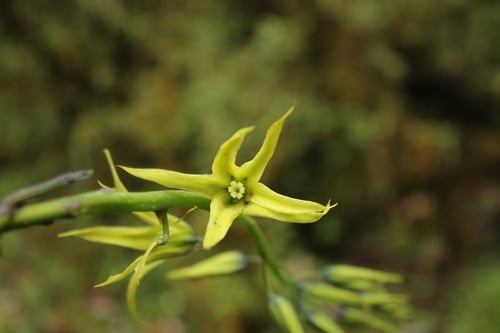
Holboellia latifolia
Wall.
gbif· cc-by-nc
ssnp208
gbif· cc-by-nc
ssnp208
gbif· cc-by-nc
ssnp208
Description
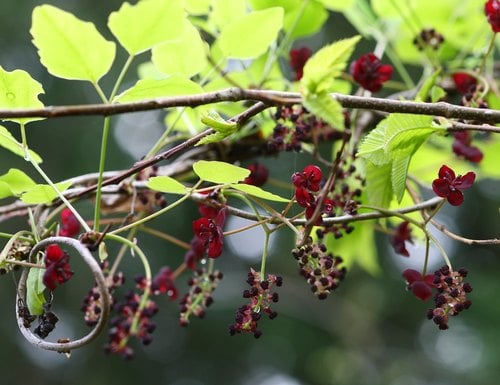
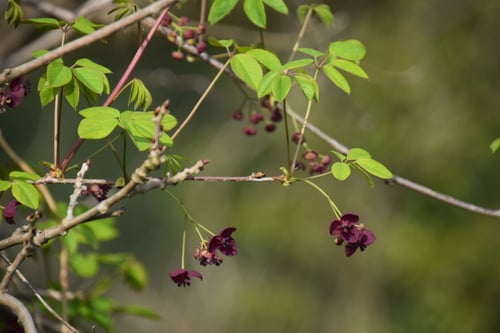
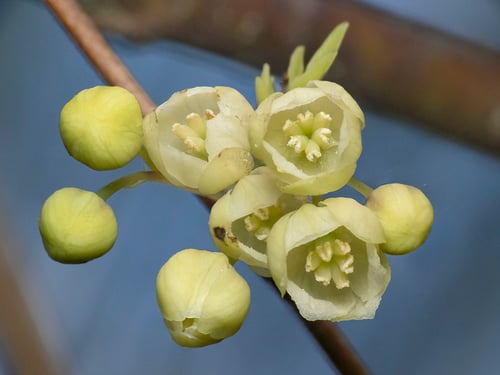
Holboellia latifolia is an evergreen Climber growing to 4 m (13ft 1in). See above for USDA hardiness. It is hardy to UK zone 9. It is in leaf all year, in flower in March. The species is monoecious (individual flowers are either male or female, but both sexes can be found on the same plant). Suitable for: light (sandy), medium (loamy) and heavy (clay) soils. Suitable pH: mildly acid, neutral and basic (mildly alkaline) soils. It can grow in full shade (deep woodland) semi-shade (light woodland) or no shade. It prefers moist soil.
Edible Uses
Fruit - raw. A mealy texture and often considered to be insipid, though it is considered to be very palatable in the Himalayas. The fruit is large, purple, sausage-shaped with many black seeds in the white pulp.The fruit is up to 10cm long.
Distribution
E. Asia - Himalayas from India to China.
Where It Grows
TEMPERATE ASIA: China (Guizhou Sheng, Sichuan Sheng, Xizang Zizhiqu, Yunnan Sheng) TROPICAL ASIA: Bangladesh, Bhutan, India (Sikkim, Assam, Manipur, Meghalaya, Uttar Pradesh, West Bengal, Nepal, Pakistan
Cultivation
Easily grown in any fertile soil in sun or part shade. Plants grow best on a shady wall or when grown into a tree. They succeed in sun or deep shade, but fruits are much more likely to be produced when the plants are grown in a sunny position. Plants are not fully hardy in Britain, they tolerate temperatures down to about -15°c and can be damaged by prolonged periods below -5°c. A plant outdoors between two greenhouse at Cambridge Botanical Gardens was thriving in 1989. Plants thrive in S.W. England but do not fruit freely in this country. Plants at Dartington Hall in Devon occasionally produce fruit. Hand pollination would probably help, fruits are more likely to form in hot summers. There is also some doubt as to whether the plants are monoecious or dioecious, it would be best to grow at least two distinct plants (not cuttings from one plant) and make sure that male and female flowers are present. The flowers are sweetly and heavily scented. The males are produced on the previous years wood whilst females are produced on the current years wood. Plants are fast growing and climb by means of twining. Closely related to H. coriacea. This genus is closely related to Stauntonia spp.
Propagation
Seed - we have no details on this species but suggest sowing the seed as soon as it is ripe if this is possible, otherwise as soon as you obtain it, in a warm greenhouse. When they are large enough to handle, prick the seedlings out into individual pots and grow them on in the greenhouse for at least their first winter. Plant them out into their permanent positions in late spring or early summer, after the last expected frosts. Cuttings of softwood. Cuttings of half-ripe wood in late summer or autumn. Layering.