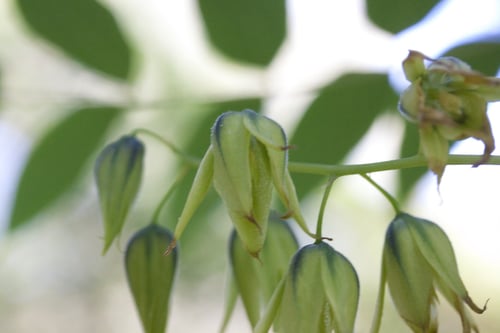
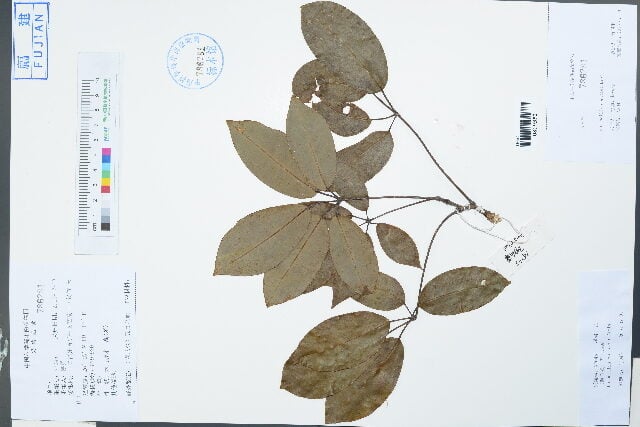
Decaisnea insignis
(Griff.) Hook. f. & Thomson
Mao er shi
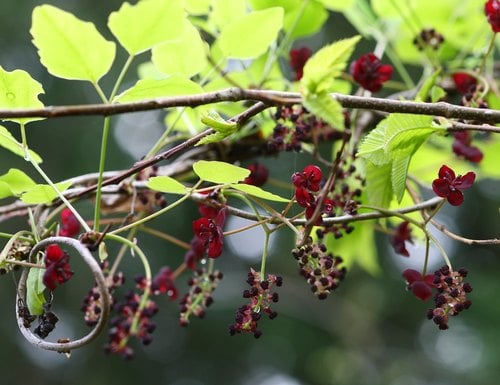
iNaturalist· cc-by-nc
(c) Sangay Wangchuk, some rights reserved (CC BY-NC), uploaded by Sangay Wangchuk
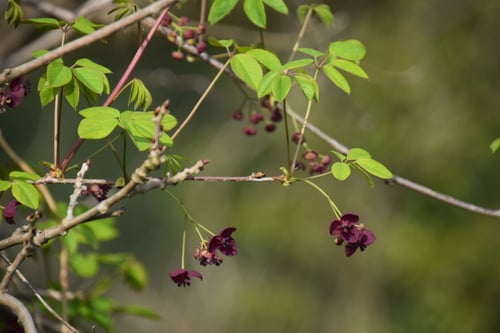
iNaturalist· cc-by-nc
(c) weronikadec_gr4, some rights reserved (CC BY-NC), uploaded by weronikadec_gr4
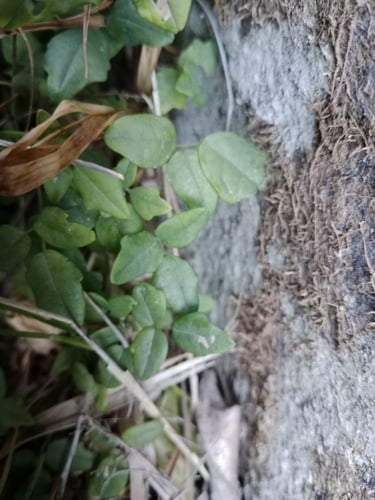
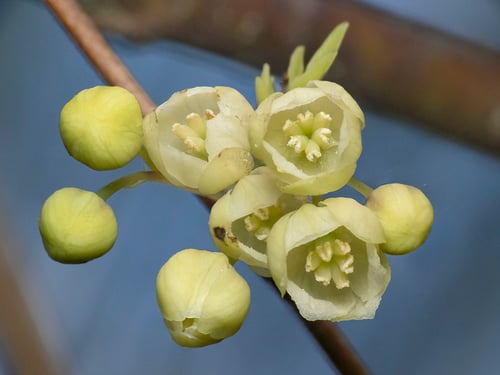
iNaturalist· cc-by-nc
(c) orcinusss, some rights reserved (CC BY-NC)
Summary
Source: WikipediaA deciduous shrub growing to 3.5 m tall, hardy to UK zone 8 and frost tender. Flowers appear in June with seeds ripening September to October. Hermaphroditic and self-fertile. Tolerates light sandy, medium loamy, and heavy clay soils with mildly acid to basic pH. Requires full sun and prefers moist soil.
Description
An erect shrub. It can be 4-5 m high. The branches are robust and break easily. The leaf stalk is 10-20 cm long. The leaf blade is compound with leaflets along the stalk. The leaves are 30-80 cm long with 13-25 leaflets. These are oval and 6-14 cm long by 3-7 cm wide. The flowers are separately male and female. The fruit ripen to bluish-black and hang down. They are 5-10 cm long by 2 cm wide. The seeds are brown or black. They are about 1 cm long.
Edible Uses
The fruit is eaten raw. The yellow pod, around 8cm long, is filled with a white juicy pulp that is very sweet and pleasant to eat.
Traditional Uses
The ripe fruit are eaten.
This uses section is brief — help expand it
Medicinal Uses
No medicinal uses are known for this plant.
Distribution
It is a temperate plant. It grows in China in mixed forests on mountain slopes and wet areas between 900-3,600 m altitude. It needs a protected sunny position. It is resistant to frost but sensitive to drought. In Sichuan and Yunnan.
Where It Grows
Asia, Australia, Bhutan, China, Himalayas*, India, Myanmar, Nepal, Northeastern India, SE Asia, Sikkim, Tibet,
Cultivation
Plants can be grown from fresh seeds.
Propagation
Seed is best sown as soon as it is ripe in a cold frame, where it usually germinates freely in early spring. Stored seed sown in February in a greenhouse generally germinates well within 1–3 months at 18°C. Prick seedlings into individual pots as soon as they are large enough to handle and grow on under protection through their first winter. Plant out in late spring after the last expected frosts. Can also be propagated by cuttings.
Other Uses
No other uses are known for this plant.
Production
In China plants flower in April to June and fruit July to August. In Sikkim fruit are available in October.
Synonyms
Also Known As
Bherasingh, Looduma, Lukchurhauzo, Nomorchi, Ri lei, Xianli
References (21)
- Ambasta, S.P. (Ed.), 2000, The Useful Plants of India. CSIR India. p 164
- Cheng, Z., et al, 2022, Ethnobotanical study on wild edible plants used by Dulong people in northwestern Yunnan, China. Journal of Ethnobiology and Ethnomedicine (2022) 18:3
- Christenhusz, M. J. M., 2012, An overview of Lardizabalaceae. Curtis Botanical magazine 2012 vol. 29(3): pp 235-276
- Cundall, P., (ed.), 2004, Gardening Australia: flora: the gardener's bible. ABC Books. p 477
- Dobriyal, M. J. R. & Dobriyal, R., 2014, Non Wood Forest Produce an Option for Ethnic Food and Nutritional Security in India. Int. J. of Usuf. Mngt. 15(1):17-37
Show all 21 references Hide references
- Flora of China. Vol. 6, p 440 and Flora of China. www.eFloras.org
- Hedrick, U.P., 1919, (Ed.), Sturtevant's edible plants of the world. p 265
- Heywood, V.H., Brummitt, R.K., Culham, A., and Seberg, O. 2007, Flowering Plant Families of the World. Royal Botanical Gardens, Kew. p 181
- Ju, Y., et al, 2013, Eating from the wild: diversity of wild edible plants used by Tibetans in Shangri-la region, Yunnan, China, Journal of Ethnobiology and Ethno medicine 9:28
- Plants for a Future database, The Field, Penpol, Lostwithiel, Cornwall, PL22 0NG, UK. http://www.scs.leeds.ac.uk/pfaf/
- Proc. Linn. Soc. London 2:350. 1854
- Singh, H.B., Arora R.K.,1978, Wild edible Plants of India. Indian Council of Agricultural Research, New Delhi. p 54
- Sundriyal, M., et al, 1998, Wild edibles and other useful plants from the Sikkim Himalaya, India. Oecologia Montana 7:43-54
- Sundriyal, M., et al, 2004, Dietary Use of Wild Plant Resources in the Sikkim Himalaya, India. Economic Botany 58(4) pp 626-638
- Tsering, J., et al, 2017, Ethnobotanical appraisal on wild edible plants used by the Monpa community of Arunchal Pradesh. Indian Journal of Traditional Knowledge. Vol 16(4), October 2017, pp 626-637
- USDA, ARS, National Genetic Resources Program. Germplasm Resources Information Network - (GRIN). [Online Database] National Germplasm Resources Laboratory, Beltsville, Maryland. Available: www.ars-grin.gov/cgi-bin/npgs/html/econ.pl (10 April 2000)
- Wang, J., et al, 2020, An ethnobotanical survey of wild edible plants used by the Yi people of Liangshan Prefecture, Sichuan Province, China. Journal of Ethnobiology and Ethnomedicine 16:10 p 8
- Wiersema, J. H. & Leon, B., 2013, World Economic Plants. A Standard Reference CRC Press. 2nd Ed. p 236
- Wild edible plants of Himachal Pradesh
- World Checklist of Useful Plant Species 2020. Royal Botanic Gardens, Kew
- www.efloras.org Flora of China Vol 6