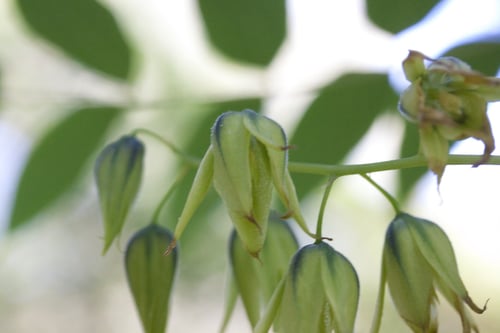
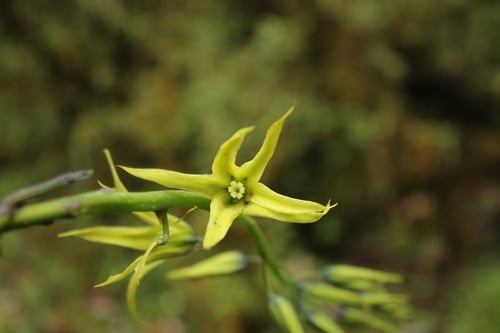
Akebia x pentaphylla
Makino
iNaturalist· cc-by-nc
(c) Ryo.T, some rights reserved (CC BY-NC)
iNaturalist· cc-by-nc
(c) Ryo.T, some rights reserved (CC BY-NC)
iNaturalist· cc-by-nc
(c) Ryo.T, some rights reserved (CC BY-NC)
Summary
Source: WikipediaAkebia x pentaphylla is a deciduous climber reaching 9 m tall. Flowers bloom in April with seeds ripening September to October. The plant is monoecious. It adapts to light sandy, medium loamy, and heavy clay soils preferring well-drained conditions with mildly acidic to basic pH. Growth occurs in full shade, semi-shade, or full sun, with preference for moist soil. Hardy to UK zone 5.
Description
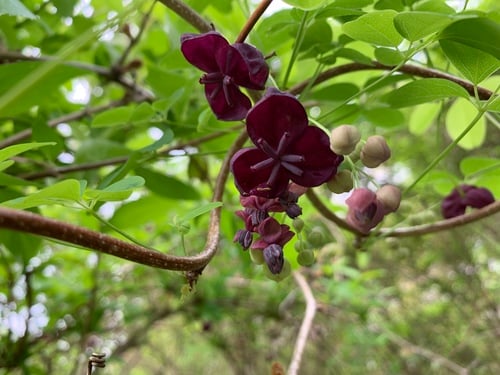
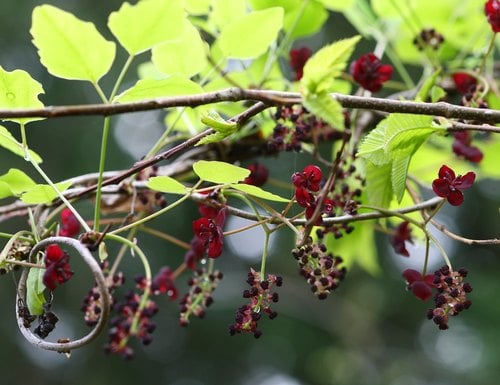
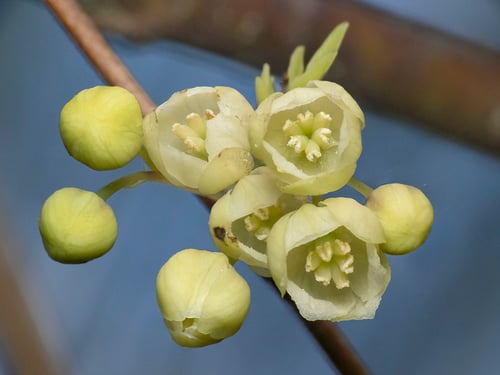
A climbing plant growing up to 9 m long. The leaves occur in threes or fives. They have a bronze-red tint when young. The purple flowers occur in groups. The larger female flowers are above the smaller male flowers. It probably needs more than one vine if plants are self sterile. Hand pollination increases fruit set. The fruit are sausage shaped and purple.
Edible Uses
The fruit is eaten raw. Sweet but somewhat insipid, it has a delicate flavour and a soft, juicy texture that benefits from a little added lemon juice. The fruit is considered a novelty, resembling a deep-purple sausage in appearance. Dried young leaves can be used as a tea substitute.
Traditional Uses
The fruit is eaten raw. The dried young leaves are used as a herbal tea.
This uses section is brief — help expand it
Medicinal Uses
None known.
Distribution
It is cold hardy down to -15°C.
Where It Grows
Asia, China, Japan, Korea,
Cultivation
Plants can be grown from seed. If possible use fresh seed or for stored seed give it one months cold treatment. Seed should be sown on the surface of the soil. The seed usually germinates in 1 - 3 months at 15°C. Plants do not transplant easily. Hand pollination helps fruit bearing. Male pollen from a separate plant should be used. As plants are probably self sterile 2 plants from different sources should be grown together. Plants can be grown from cuttings of the vine or root. Plants can also be grown by layering. In warm climates plants need to be pruned back heavily.
Propagation
Sow seed in a cold frame as soon as it ripens, surface-sowing in a light position. Germination typically takes 1–3 months at 15°C. Stored seed needs 1 month of cold stratification and can be very difficult to germinate. Note that this is a hybrid species and will not come true from seed. Prick seedlings into individual pots when large enough and grow on in light shade in the greenhouse through at least their first winter. Plant out in late spring or early summer after the last frost. Half-ripe cuttings taken in July/August in a frame can be slow to root. Softwood cuttings can also be taken in spring. Root cuttings are possible in December in a warm greenhouse. Layering in early spring is very reliable — plants tend to self-layer, and rooted sections can be dug up and planted directly into permanent positions.
Other Uses
The peeled stems are very pliable, can be bleached, and are suitable for basket making.
Notes
There are about 4-5 Akebia species.
Synonyms
References (2)
- Lyle, S., 2006, Discovering fruit and nuts. Land Links. p 54
- Plants for a Future database, The Field, Penpol, Lostwithiel, Cornwall, PL22 0NG, UK. http://www.scs.leeds.ac.uk/pfaf/