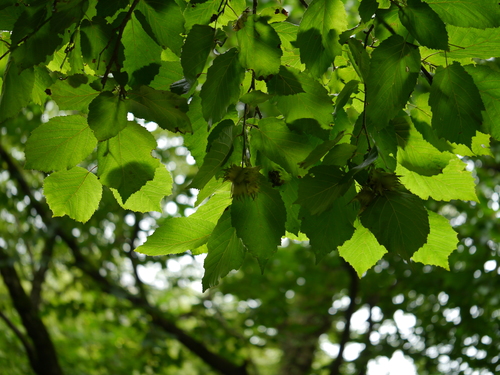
Corylus cornuta californica - (A.DC.)E.Murray.
(A.DC.)E.Murray.
California Hazel
gbif· cc-by-nc
lillybyrd
gbif· cc-by-nc
lunchhiker
gbif· cc-by-nc
dircasandderelicts
Description
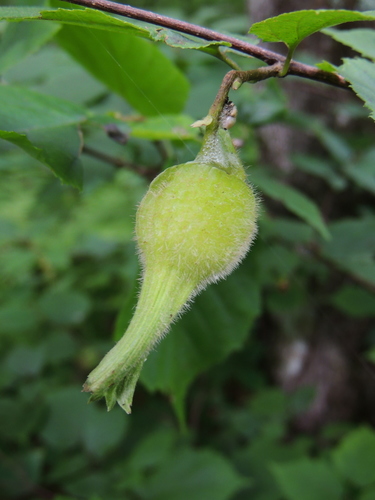
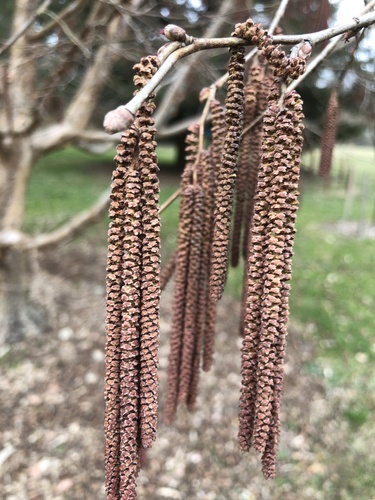
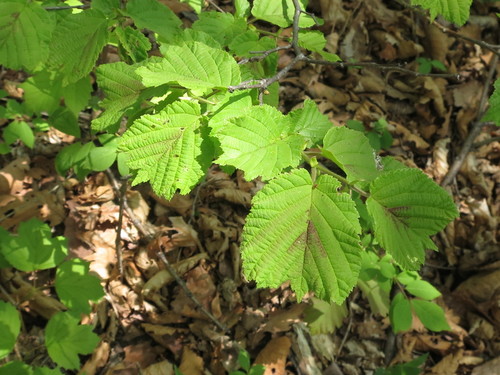
Corylus cornuta californica is a deciduous Shrub growing to 8 m (26ft 3in) at a medium rate. See above for USDA hardiness. It is hardy to UK zone 4. It is in flower from April to May, and the seeds ripen from September to October. The species is monoecious (individual flowers are either male or female, but both sexes can be found on the same plant) and is pollinated by Wind. The plant is self-fertile. It is noted for attracting wildlife. Suitable for: light (sandy), medium (loamy) and heavy (clay) soils. Suitable pH: mildly acid, neutral and basic (mildly alkaline) soils and can grow in very alkaline soils. It can grow in semi-shade (light woodland) or no shade. It prefers dry or moist soil. The plant can tolerates strong winds but not maritime exposure.
Edible Uses
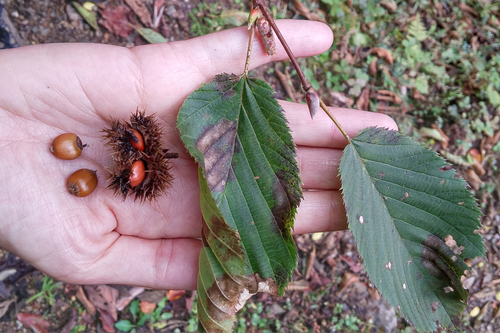
Oil. Seed - raw or cooked. Eaten fresh or preserved for winter use. The seed ripens in mid to late autumn and will probably need to be protected from squirrels. When kept in a cool place, and not shelled, the seed should store for at least 12 months. An edible oil is obtained from the seed.
Distribution
South-western N. America.
Where It Grows
British Columbia, California, Oregon, Washington
Cultivation
An easily grown plant, it succeeds in most soils, but is in general more productive of seeds when grown on soils of moderate fertility. It does less well in rich heavy soils or poor ones. Does well in a loamy soil. Very suitable for an alkaline soil, but it dislikes very acid soils. Plants are fairly wind tolerant. Members of this genus bear transplanting well and can be easily moved even when relatively large.
Propagation
Seed - best sown as soon as it is harvested in autumn in a cold frame. Germinates in late winter or spring. Stored seed should be pre-soaked in warm water for 48 hours and then given 2 weeks warm followed by 3 - 4 months cold stratification. Germinates in 1 - 6 months at 20°c. When large enough to handle, prick the seedlings out into individual pots and grow them on in a cold frame or sheltered place outdoors for their first winter. Plant them out into their permanent positions in late spring or early summer. Layering in autumn. Easy, it takes about 6 months. Division of suckers in early spring. Very easy, they can be planted out straight into their permanent positions.
Other Uses
Biomass Fencing Fibre Oil Paper. Hazels can be used in agroforestry systems as a hedge, windbreak, or for erosion control. They can also be intercropped with other plants, benefiting soil health and biodiversity. A fibre is obtained from the inner bark and is used to make paper. The branches are removed in the autumn, the leaves removed and the branches steamed then the fibre is removed. The fibres are cooked for two hours with lye and then put through a blender. It makes a brown paper. The fibre is also used for cordage.
Synonyms
Also Known As
Western beaked hazel or California hazelnut. Corylus cornuta ssp. californica. Corylus cornuta var. californica