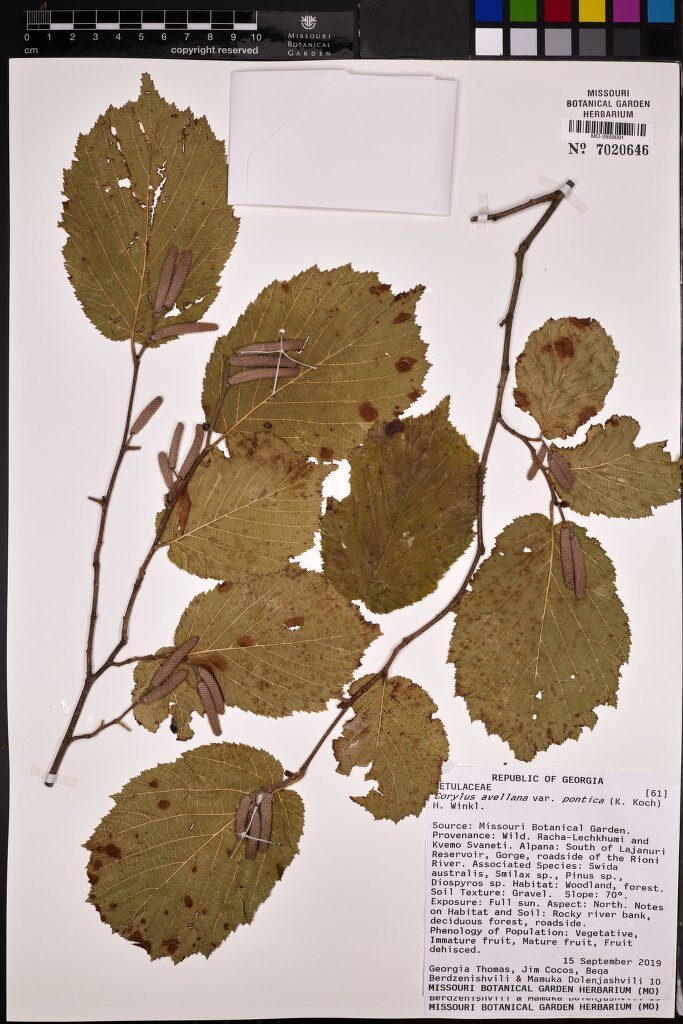
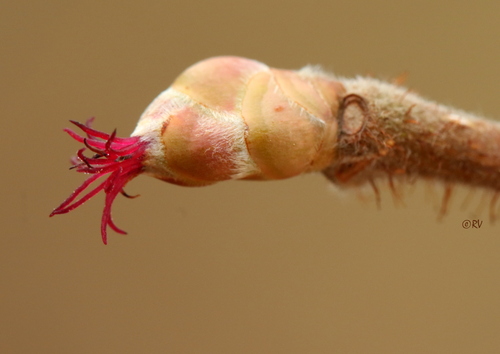
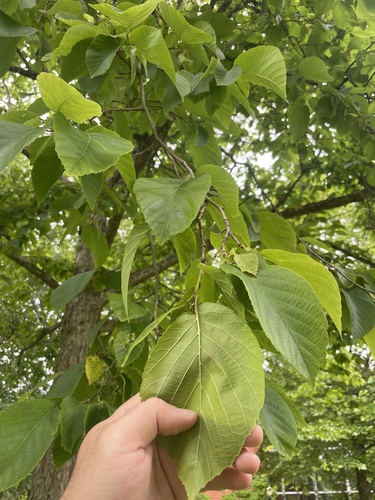
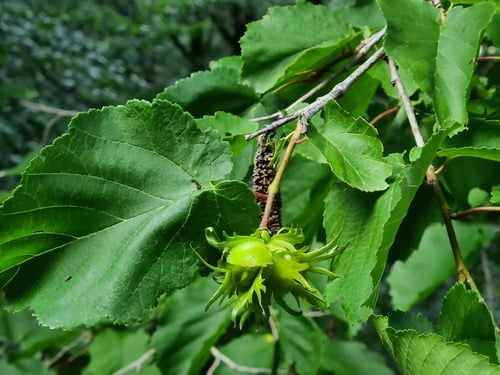
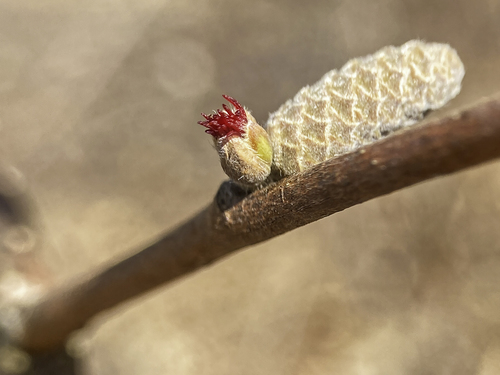
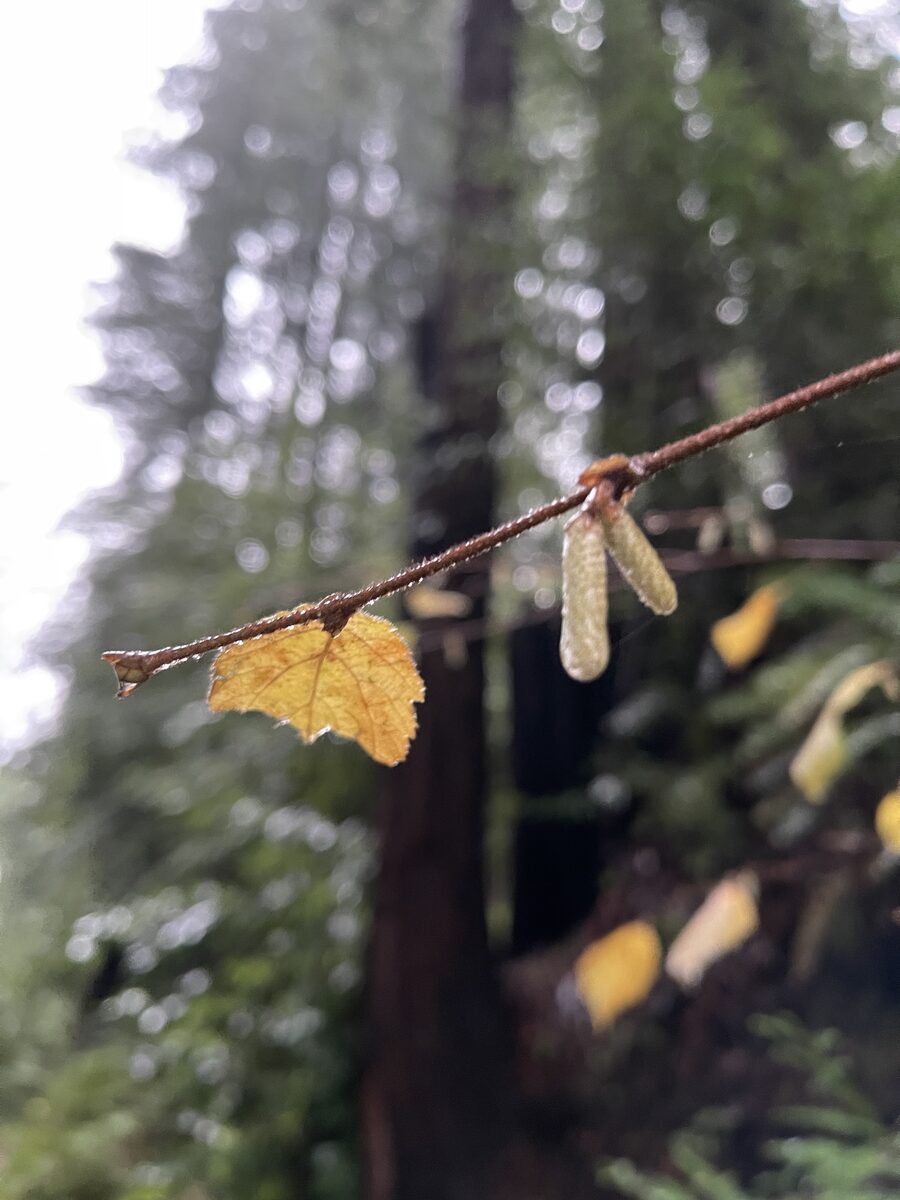
Alnus cordata
(Loisel) Duby
Italian elder
iNaturalist· cc-by
(c) Thierry Arbault, some rights reserved (CC BY), uploaded by Thierry Arbault
iNaturalist· cc0
no rights reserved, uploaded by Stephen James McWilliam
iNaturalist· cc0
no rights reserved, uploaded by Stephen James McWilliam
Summary
Source: WikipediaAlnus cordata, the Italian alder, is a tree or shrub species belonging to the family Betulaceae, and native to the southern Apennine Mountains (Campania, Basilicata and Calabria, mainly on western mountain sides) and the north-eastern mountains of Corsica. It has been introduced in Sicily, Sardinia, and more recently in Central-Northern Italy, other European countries (France, Belgium, Spain, Portugal, United Kingdom) and extra-European countries (Chile, New Zealand), where it has become naturalised.
Description
Alnus cordata is a deciduous tree growing to 25 m (82 ft) tall by 8 m (26 ft) wide at a fast rate. Hardy to UK zone 6, with foliage from April to December and flowers in March. Monoecious species wind-pollinated with nitrogen-fixing root bacteria. Grows in medium loamy and heavy clay soils including nutritionally poor types, tolerating mildly acid to mildly alkaline pH. Adapts to semi-shade or full sun and prefers dry, moist, or wet soils. Tolerates maritime exposure well.
Edible Uses
None known.
Medicinal Uses
None known.
Distribution
It is a temperate plant. It suits hardiness zone 6. Arboretum Tasmania.
Where It Grows
Australia, Tasmania, USA,
Cultivation
Thrives on poor and dryish soils, even on chalk, but prefers to be near water. Prefers a heavy soil and a damp situation. Grows well in heavy clay soils. Tolerates very infertile sites. This species has a symbiotic relationship with certain soil micro-organisms, these form nodules on the roots of the plants and fix atmospheric nitrogen. Some of this nitrogen is utilized by the growing plant but some can also be used by other plants growing nearby. A very ornamental tree, it is very fast growing, reaching 12 metres tall in 20 years in an exposed maritime position at Rosewarne in N. Cornwall. Very tolerant of salt winds, it establishes rapidly in exposed positions. According to World Economic Plants, the correct author of this species is (Loisel.)Loisel. and not Desf. as we have given here. However, since all our other sources have quoted Desf., we have decided not to alter it at this time (1999). In garden design, as well as the above-ground architecture of a plant, root structure considerations help in choosing plants that work together for their optimal soil requirements including nutrients and water.
Propagation
Seed is best sown in a cold frame as soon as it is ripe, barely covered. Spring-sown seed also germinates successfully provided it is not covered. Germination occurs in spring as temperatures rise. Prick seedlings out into individual pots once large enough to handle. If growth is sufficient they can be planted into permanent positions during summer; otherwise overwinter in pots outdoors and plant out in spring. With larger quantities of seed, sow thinly in an outdoor seedbed in spring and either plant out in autumn or winter, or grow on for a further season before transplanting. Cuttings of mature wood can be taken as soon as leaves fall in autumn and rooted outdoors in sandy soil.
Other Uses
This tree makes an excellent windbreak for maritime areas, establishing well even in very exposed sites and growing quickly. Trees grown from seed have reached 4 metres in height by age five with no signs of wind-shaping in a highly exposed location in Cornwall. It also functions as an effective pioneer species for re-establishing woodland on disused farmland or difficult sites, rapidly creating sheltered conditions that allow more permanent woodland trees to establish. Bacteria on the roots fix atmospheric nitrogen, enabling the tree to thrive in poor soils and making some nitrogen available to neighbouring plants. The heavy leaf canopy also contributes to building soil humus content when leaves fall in autumn. As the woodland canopy closes, alder seedlings struggle in the resulting shade and the species gradually dies out naturally.
Synonyms
References (2)
- Baker, M. L. & de Salas, M. F., 2012, A Census of the Vascular Plants of Tasmania. (On line)
- Jackes,D. A., Edible Forest Gardens