Alnus rhombifolia
Nutt.
White alder
iNaturalist· cc-by-nc
(c) Lauren Glevanik, some rights reserved (CC BY-NC), uploaded by Lauren Glevanik
iNaturalist· cc-by-nc
(c) rosemarys, some rights reserved (CC BY-NC), uploaded by rosemarys
iNaturalist· cc-by-nc
(c) Sarah, some rights reserved (CC BY-NC), uploaded by Sarah
Summary
Source: WikipediaAlnus rhombifolia, the white alder, is an alder tree native to western North America, from British Columbia and Washington east to western Montana, southeast to the Sierra Nevada, and south through the Peninsular Ranges and Colorado Desert oases in Southern California. It occurs in riparian zone habitats at an altitudes range of 100–2,400 metres (330–7,870 ft). While not reported in northern Baja California, it has been predicted on the basis of its climatic adaptation to occur there also. Alnus rhombifolia is primarily found in the chaparral and woodlands, montane, and temperate forests ecoregions.
Description
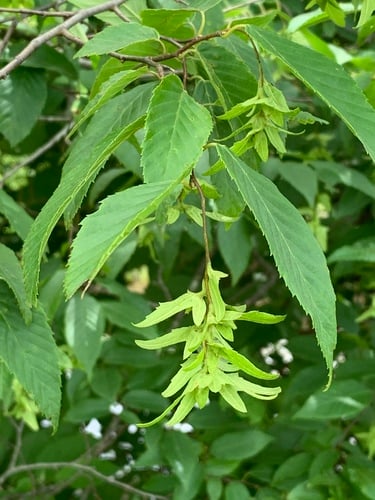
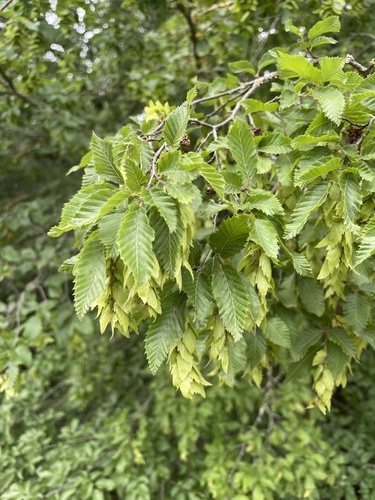
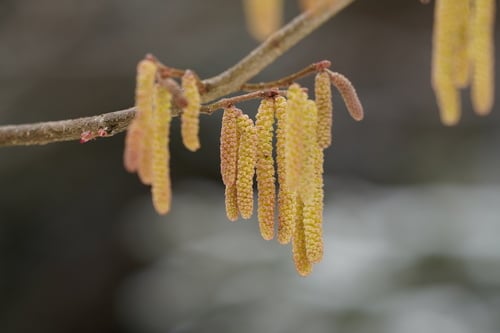
A deciduous tree. It grows 35 m tall and spreads 5 m wide. The stem is slender and erect. The bark is mottled and pale grey. The leaves are oval and taper. They are 10 cm long. The flowers are catkins. The male ones are 15 cm long. The fruit are oval cones 1 cm across.
Edible Uses
Catkins can be eaten raw or cooked, though they have a bitter flavour. The inner bark is also edible; while no detailed preparation method is given here, inner bark is typically dried and can be used as a flavouring in soups or mixed with cereal flours when making bread.
Medicinal Uses
The bark is astringent, diaphoretic, emetic, haemostatic, stomachic and tonic. A decoction of dried bark is used to treat diarrhoea, haemorrhages in consumption and stomach aches, and to facilitate childbirth. Externally it can be applied as a wash for babies with skin diseases or nappy rash. A poultice of the wood is applied to burns.
Known Hazards
The freshly harvested inner bark is emetic but is alright once it has been dried.
Distribution
It will grow in most moist, well-drained soils. It is best in an open sunny position. It is resistant to frost but sensitive to drought.
Where It Grows
Australia, North America, USA*,
Cultivation
Prefers a heavy soil and a damp situation. Grows well in heavy clay soils. Tolerates very infertile sites. A fairly fast-growing but short-lived species, reaching its maximum size in 50 - 60 years. This species has a symbiotic relationship with certain soil micro-organisms, these form nodules on the roots of the plants and fix atmospheric nitrogen. Some of this nitrogen is utilized by the growing plant but some can also be used by other plants growing nearby. In garden design, as well as the above-ground architecture of a plant, root structure considerations help in choosing plants that work together for their optimal soil requirements including nutrients and water.
Propagation
Seed is best sown in a cold frame as soon as it is ripe, only just covered. Spring-sown seed also germinates successfully provided it is not covered. Germination occurs as temperatures rise in spring. Seedlings should be pricked out into individual pots when large enough to handle, then planted into permanent positions in summer if growth is sufficient, or overwintered in pots and planted out the following spring. With sufficient seed, sow thinly in an outdoor seed bed in spring; seedlings can be planted into permanent positions in autumn or winter, or grown on for a further season before planting. Cuttings of mature wood can be taken as soon as the leaves fall in autumn and rooted outdoors in sandy soil.
Other Uses
The bark and strobils are a source of tannin. The roots have been used to make baskets. The inner bark can be dried, ground into a powder and mixed with flour and water for use as a dye, though the specific colour is not recorded. Fresh bark can be chewed and used as a red dye. The wood is light, soft, not strong, brittle, close and straight-grained, and very durable in water; it is of limited value as low-grade lumber and is used principally for fuel.
References (2)
- Bocek, B. R., 1984, Ethnobotany of Costanoan Indians, California, Based on Collections by John P. Harrington. Economic Botany 38(2): 240-255
- Bodkin, F., 1991, Encyclopedia Botanica. Cornstalk publishing, p 67