Alnus glutinosa subsp. barbata
(C. A. Mey.) Yalt.
gbif· cc-by-nc
Шильников Дмитрий Сергеевич
gbif· cc-by-nc
Шильников Дмитрий Сергеевич
gbif· cc-by-nc
Шильников Дмитрий Сергеевич
Summary
Source: WikipediaAlnus glutinosa, the common alder, black alder, European alder, European black alder, or just alder, is a species of tree in the family Betulaceae, native to most of Europe, southwest Asia and northern Africa. It thrives in wet locations where its association with the bacterium Frankia alni enables it to grow in poor quality soils. It is a medium-sized, short-lived tree growing to a height of up to 30 metres (98 feet). It has short-stalked rounded leaves and separate male and female flowers in the form of catkins. The small, rounded fruits are cone-like and the seeds are dispersed by wind and water. The common alder provides food and shelter for wildlife, with a number of insects, lichens and fungi being completely dependent on the tree. It is a pioneer species, colonising vacant land and forming mixed forests as other trees appear in its wake. Eventually common alder dies out of woodlands because the seedlings need more light than is available on the forest floor. Its more usual habitat is forest edges, swamps and riverside corridors. The timber has been used in underwater foundations and for manufacture of paper and fibreboard, for smoking foods, for joinery, turnery and carving. Products of the tree have been used in ethnobotany, providing folk remedies for various ailments, and research has shown that extracts of the seeds are active against pathogenic bacteria.
Description
A tree.
This description is brief — help expand it
Edible Uses
The common alder is used as a pioneer species and to stabilise river banks, to assist in flood control, to purify water in waterlogged soils and to moderate the temperature and nutrient status of water bodies. It can be grown by itself or in mixed species plantations, and the nitrogen-rich leaves falling to the ground enrich the soil and increase the production of such trees as walnut, Douglas-fir and poplar on poor quality soils. Although the tree can live for up to 160 years, it is best felled for timber at 60 to 70 years before heart rot sets in. On marshy ground it is important as coppice-wood, being cut near the base to encourage the production of straight poles. It is capable of enduring clipping as well as marine climatic conditions and may be cultivated as a fast-growing windbreak. In woodland natural regeneration is not possible as the seeds need sufficient nutrients, water and light to germinate. Such conditions are rarely found at the forest floor and as the forest matures, the alder trees in it die out. The species is cultivated as a specimen tree in parks and gardens, and the cultivar 'Imperialis' has gained the Royal Horticultural Society's Award of Garden Merit.
Known Hazards
Pollen from the common alder, along with that from birch and hazel, is one of the many sources of tree pollen allergy. As pollen is often present in the atmosphere at the same time as that of hazel, hornbeam and oak, and they have similar physicochemical properties, it is difficult to separate out their individual effects. In central Europe, these tree pollens are the second most common cause of allergic conditions after grass pollen.
Distribution
It is a temperate plant.
Where It Grows
Caucasus, Georgia,
Synonyms
Also Known As
Murq'ani, Tkhmela
References (2)
- Bussman, R. W., et al, 2016, A comparative ethnobotany of Khevsureti, Samtskhe-Javakheti, Tusheti, Svaneti, and Racha-Lechkhumi, Republic of Georgia (Sakartvelo), Caucasus. Journal of Ethnobiology and Ethnomedicine (2016) 12:4 (As Alnus barbata)
- Bussman, R. W., et al, 2021, Unity in diversity—food plants and fungi of Sakartvelo (Republic of Georgia), Caucasus. Journal of Ethnobiology and Ethnomedicine (2021) 17:72 p 7 (As Alnus barbata)
More from Betulaceae
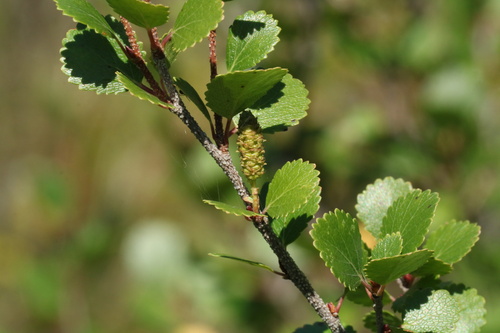
Betula glandulosa
Scrub birch, Ground birch, Dwarf birch
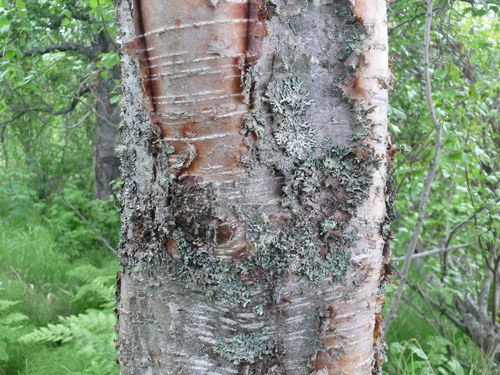
Betula kenaica
Kenai Birch, Alaskan Paper Birch
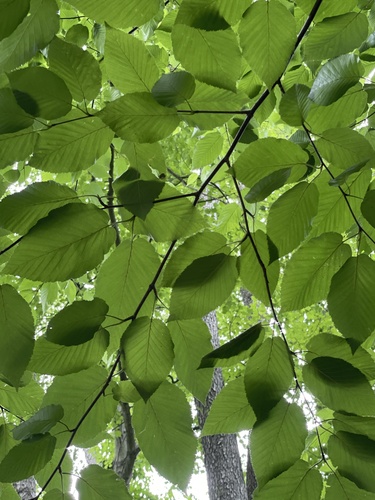
Betula lenta
Sweet birch, Black birch
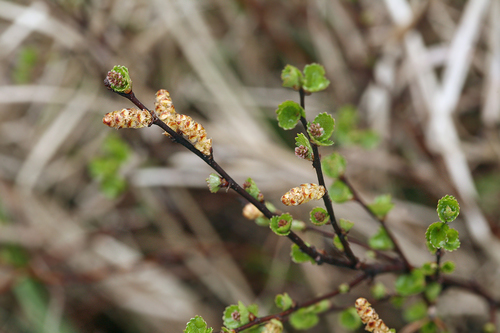
Betula nana
Bog Birch, Dwarf Birch, Smooth Dwarf, Birch, Swamp Birch
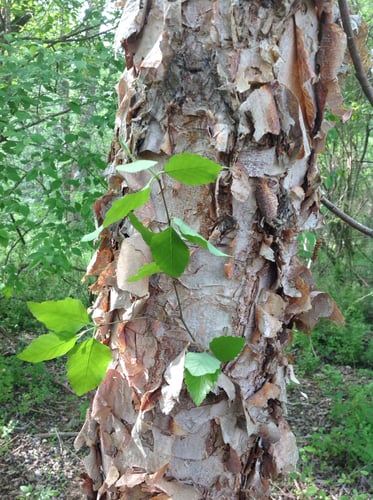
Betula nigra
River Birch, Red Birch, Tropical birch
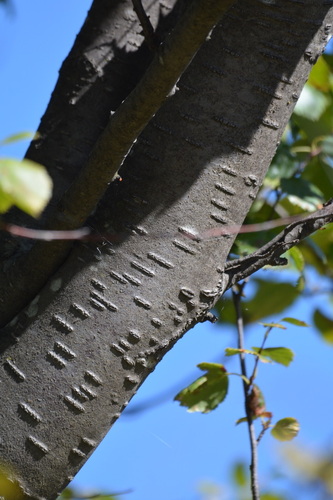
Betula occidentalis
Water birch, White birch