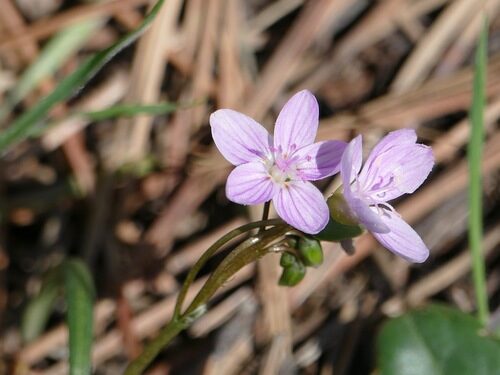
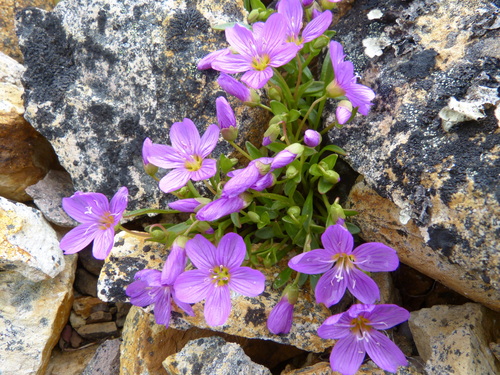
Claytonia rubra - (Howell) Tidestr.
(Howell) Tidestr.
Redstem Springbeauty
gbif· cc-by-nc
fish_narc
gbif· cc-by-nc
fish_narc
gbif· cc-by-nc
fish_narc
Description
Claytonia rubra is a ANNUAL growing to 0.1 m (0ft 4in) by 0.1 m (0ft 4in) at a fast rate. See above for USDA hardiness. It is hardy to UK zone 5. The flowers are pollinated by Insects. It is noted for attracting wildlife. Suitable for: light (sandy), medium (loamy) and heavy (clay) soils, prefers well-drained soil and can grow in nutritionally poor soil. Suitable pH: mildly acid, neutral and basic (mildly alkaline) soils. It cannot grow in the shade. It prefers dry or moist soil and can tolerate drought.
Edible Uses
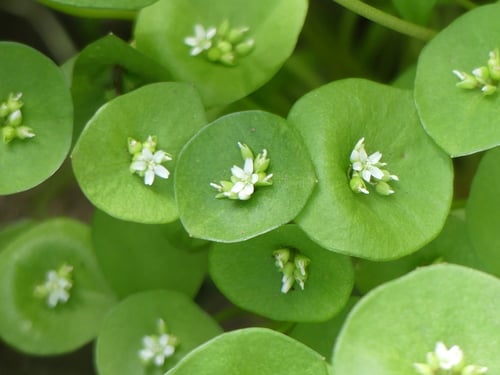
Edible leaves and tender stems, best young; good salad or soup green, especially useful in drier western habitats where miner’s lettuce may be less abundant. Edible Uses & Rating: Leaves and tender stems are edible and are the primary food. It rates as a good spring green, though often more limited by smaller plant size and slightly tougher or more drought-stressed texture depending on site conditions. Taste, Processing & Kitchen Notes: Flavor is generally mild in the Claytonia pattern, sometimes with a slightly more pronounced vegetal note if plants are growing under dry stress. Texture is tender when young, and can become tougher as the plant ages. It is well-suited to salads when harvested early and can also be wilted into soups. If the foliage tastes stronger than expected, quick blanching and draining can improve palatability. Seasonality (Phenology): Often most available from spring into early summer, commonly blooming from about April to July, depending on elevation and moisture. It declines as heat increases and soils dry. Safety & Cautions (Food Use): Harvest from clean sites and wash thoroughly. Because it grows low to the ground, grit and debris are common, especially in open shrubland settings. Harvest & Processing Workflow: Harvest young, tender leaves and stems early in the season, rinse well, and eat fresh or lightly cooked. If using older plants, chop and blanch quickly, then add to soups or mixed greens dishes. Cultivar/Selection Notes: No notable cultivars; coloration varies with exposure and stress. Look-Alikes & Confusion Risks: Most confusion is with miner’s lettuce and Indian lettuce, both edible. The shared perfoliate upper leaves are a strong indicator of this edible group. Traditional / Indigenous Use Summary: Claytonia greens were widely used as spring vegetables across western North America. Red lettuce fits the same pattern as a seasonal, moisture-dependent green, complementing more carbohydrate-focused foods.
Known Hazards
Harvest from clean sites and wash thoroughly. Because it grows low to the ground, grit and debris are common, especially in open shrubland settings.
Distribution
Widespread across much of the western third of the United States.
Where It Grows
US. USA. British Columbia, California, Colorado, Idaho, Montana, Nevada, Oregon, South Dakota, Utah, Washington, Wyoming.
Cultivation
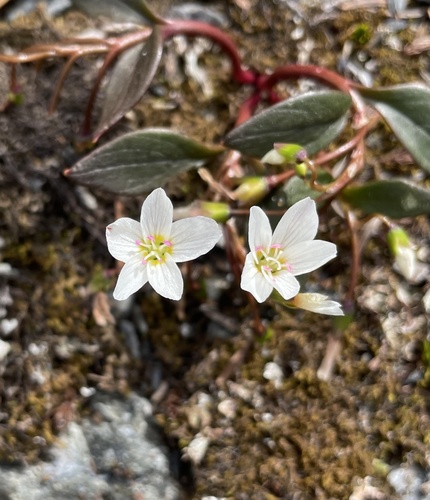
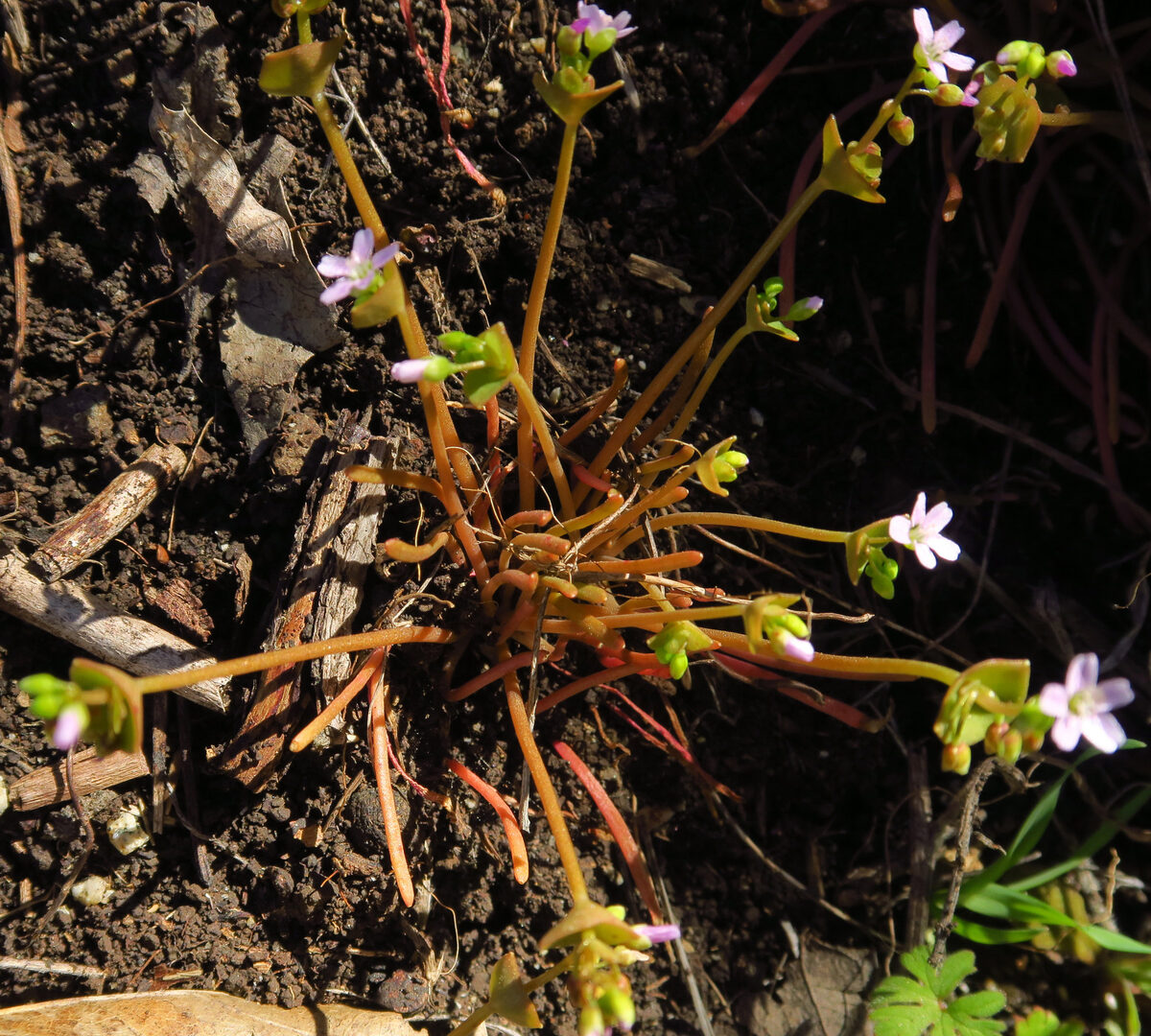
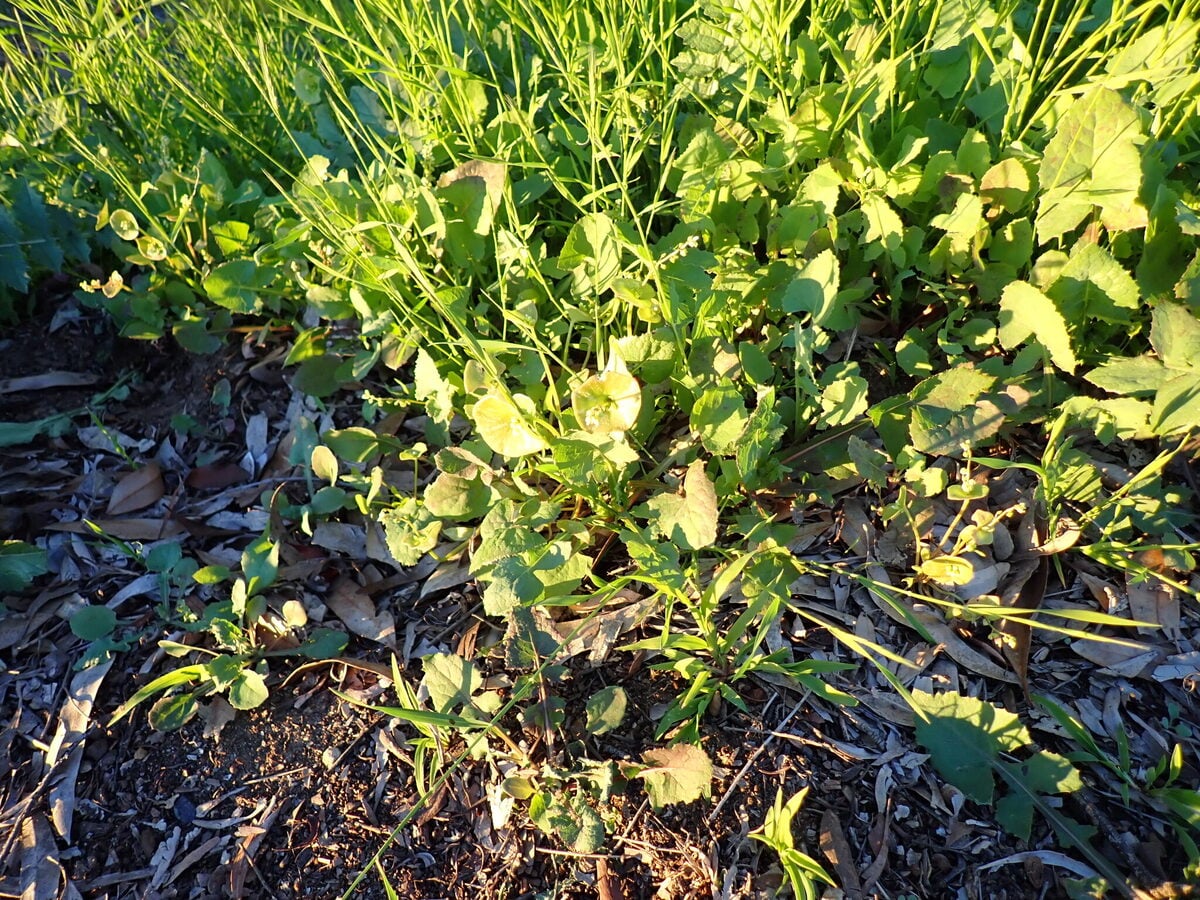
Red lettuce is a small, edible spring green best harvested young. It extends the Claytonia “lettuce” pattern into drier landscapes and can be a useful early-season vegetable in shrublands and open woodlands. Growing Conditions: Red lettuce is often found in drier shrublands or evergreen woodlands where spring moisture is sufficient for a brief growth period. It tolerates more open, sun-exposed microsites than miner’s lettuce, especially where nights remain cool. Habitat & Range: Widespread across much of the western third of the United States, particularly in drier upland settings compared with miner’s lettuce. Size & Landscape Performance: A small, low annual that can form sparse to moderate patches. In gardens, it would behave as a seasonal volunteer green that favors cool weather and moisture, often showing red coloration under sun and stress. Cultivation (Horticulture): Cultivation is similar to that of other Claytonia greens: sow in cool seasons, provide some moisture, and harvest young. It is less commonly cultivated than miner’s lettuce but can perform well in cooler, drier beds. Pests & Problems: The main issue is rapid quality decline as the plant ages or dries. Leaves can become less tender and more intensely flavored in hot, dry conditions. Pollination: Pollinated by small insects visiting the modest flowers, seed set is usually reliable where plants complete their short season. Identification & Habit: Red lettuce is an annual with clustered stems and fibrous roots, sometimes bearing minute tuberous bodies. Basal leaves are often prostrate, long-stalked, and broad, and the plant frequently shows red coloration early. Like miner’s and Indian lettuce, it has two opposite cauline leaves fused around the upper stem, creating a perfoliate structure, and small white-to-pink flowers in racemes. Compared with miner’s lettuce, it tends to be smaller, lower, and redder overall. FAMILY: Montia family (Montiaceae) – Claytonia genus. COMMON NAMES: Redstem springbeauty, red lettuce. USDA Hardiness Zones: Approx. Zones 4–9. Typical Size: About 1–10 cm tall; annual, often low and prostrate.
Propagation
Propagation is by seed. Like related Claytonia lettuces, it can self-seed in suitable conditions.
Other Uses
Provides small early flowers for insects and contributes to spring groundcover that protects soil surface during brief wet windows.
Synonyms
Also Known As
Redstem Springbeauty or Red Lettuce (Claytonia rubra).