Claytonia umbellata
Watson
Great Basin spring beauty
iNaturalist· cc-by-nc
(c) Tommy Stoughton, some rights reserved (CC BY-NC), uploaded by Tommy Stoughton
iNaturalist· cc-by-nc
(c) 2012 Gary A. Monroe, some rights reserved (CC BY-NC)
iNaturalist· cc-by-nc
(c) 2012 Gary A. Monroe, some rights reserved (CC BY-NC)
Summary
Source: WikipediaClaytonia umbellata is a species of wildflower in the purslane family known by the common name Great Basin springbeauty. It is native to the Great Basin of the United States, where it grows mainly in subalpine coniferous forests, often on north-facing exposed slopes in the talus. It is a perennial herb growing from a tuberous root up to 5 centimeters wide and a thin taproot. Most of the stem develops underground, as do the petioles of the most basal leaves. Above the ground appear a few oval-shaped fleshy red to green leaves and an inflorescence of up to 12 flowers. Each flower has five magenta to deeply pink-tinted white petals.
Description
Claytonia umbellata is a perennial growing to 20cm tall, hardy to UK zone 4. Flowering occurs April to July with seeds ripening in May. The hermaphroditic flowers are pollinated by insects. It requires light or medium well-drained soils with mildly acid pH and cannot grow in shade. The plant prefers moist soil.
Edible Uses
Edible leaves and tubers, but harvest is frequently discouraged due to scarcity or conservation concern; prioritize identification and stewardship unless abundance and legality are clear. Edible Uses & Rating: Leaves are edible and tubers are edible. Practical food rating is moderated by two factors: patchiness and conservation ethics. Where it is rare or protected, it should be treated as non-harvestable. Where abundant and harvest is lawful and ethical, the tuber-bearing habit suggests meaningful food potential. Taste, Processing & Kitchen Notes: Leaves are expected to be mild and tender in the springbeauty pattern. Tubers are expected to be starchy and broadly potato-like in culinary use. Boiling and roasting are the simplest preparations. Because plants may be rhizomatous, underground structures can be more complex than in strictly tuber-only species, which makes careful cleaning and preparation important. Seasonality (Phenology): Typically blooms from late spring into summer in many Great Basin and interior settings, often from May to August. Edible leaves are best early in the active season, while tubers can be harvested during the active window if and only if harvest is appropriate. Safety & Cautions (Food Use): The key caution is conservation and legality. If the species is locally rare or protected, it should not be harvested. From an identification standpoint, as with other tuber plants, avoid digging unknown underground organs without intact above-ground confirmation. Harvest & Processing Workflow: Where harvest is ethically and legally appropriate, locate plants during bloom, excavate carefully with minimal disturbance, and prioritize small, limited sampling rather than bulk collection. Clean tubers thoroughly, then boil or roast. If conservation status is uncertain, treat the plant as “observe only” and harvest common alternatives instead. Cultivar/Selection Notes: No common cultivars; natural variation occurs by site. Look-Alikes & Confusion Risks: Flowering plants are fairly recognizable as Claytonia, but an underground confusion risk exists if digging outside bloom or without intact plant confirmation. The larger risk is harvesting a conservation-sensitive species rather than confusing it with a toxic look-alike. Traditional / Indigenous Use Summary: Tuber-bearing springbeauties fit a broader western pattern of valued underground foods, but use documentation can be uneven and strongly shaped by local abundance and access. In Great Basin contexts, ethical use today must also account for modern conservation concerns. Leaves - raw or cooked. Flowers - raw. Roots - cooked. The globose tubers are up to 5cm in diameter. The native North Americans roasted them in sand before eating them.
Medicinal Uses
None known
Known Hazards
The key caution is conservation and legality. If the species is locally rare or protected, it should not be harvested. From an identification standpoint, as with other tuber plants, avoid digging unknown underground organs without intact above-ground confirmation.
Distribution
It is a temperate plant.
Where It Grows
North America, USA,
Cultivation
Great Basin springbeauty is a potentially valuable edible tuber plant, but it is often best treated as a conservation-aware species to be recognized rather than harvested. Where abundant and permitted, it may provide edible leaves and tubers comparable to those of other spring beauties. Growing Conditions: This species favors open, rocky slopes in evergreen communities, generally with well-drained soils and a pronounced seasonal moisture pulse. It persists in areas with moderate competition and microclimates that preserve spring moisture long enough for growth and flowering. Habitat & Range: Primarily associated with Nevada and Oregon in the interior West, often on open rocky slopes within evergreen vegetation zones. Size & Landscape Performance: A small spring perennial that can persist for years, but is not a massing groundcover in most settings. Where it becomes rhizomatous, it can occupy small patches in suitable microsites. Cultivation (Horticulture): Cultivation is possible for native plant enthusiasts, but should be approached with conservation awareness. It would require well-drained soil, seasonal moisture, and a period of dormancy. It is generally better cultivated as an ornamental native than as a food plant. Pests & Problems: Scarcity and habitat sensitivity are the main practical issues. Rocky sites can also make excavation difficult and destructive if attempted. Identification & Habit: This springbeauty arises from a globe-shaped tuber and may develop rhizomes as it matures. It typically bears two free, stalked cauline leaves with elliptic to ovate blades. Flowers are showy, pinkish-purple with darker striping, arranged in racemes, and notably may lack bracts beneath the flower cluster. Its open, rocky-slope setting is also a helpful field cue, along with evergreen community association. FAMILY: Montia family (Montiaceae) – Claytonia genus. COMMON NAMES: Great Basin springbeauty. USDA Hardiness Zones: Approx. Zones 3–8. Typical Size: About 2–25 cm tall; perennial with a tuber and, in mature plants, rhizomatous spread.
Propagation
Surface sow seed on a peat-based compost in spring in a cold frame. Germination usually takes place within 2–4 weeks at 10°C. When large enough to handle, prick seedlings out into individual pots and grow on in the cold frame for at least their first winter. Plant out in late spring or early summer after the last expected frosts. Offsets can also be divided in spring or autumn.
Other Uses
Provides nectar and pollen for pollinators in rocky-slope ecosystems and contributes to spring floral diversity. Underground storage organs represent a seasonal energy strategy that may also support wildlife.
Notes
They have also been put in the family Portulacaceae.
Also Known As
Great Basin Springbeauty (Claytonia umbellata.
References (2)
- Kermath, B. M., et al, 2014, Food Plants in the Americas: A survey of the domesticated, cultivated and wild plants used for Human food in North, Central and South America and the Caribbean. On line draft. p 241
- Plants for a Future database, The Field, Penpol, Lostwithiel, Cornwall, PL22 0NG, UK. http://www.scs.leeds.ac.uk/pfaf/
More from Montiaceae
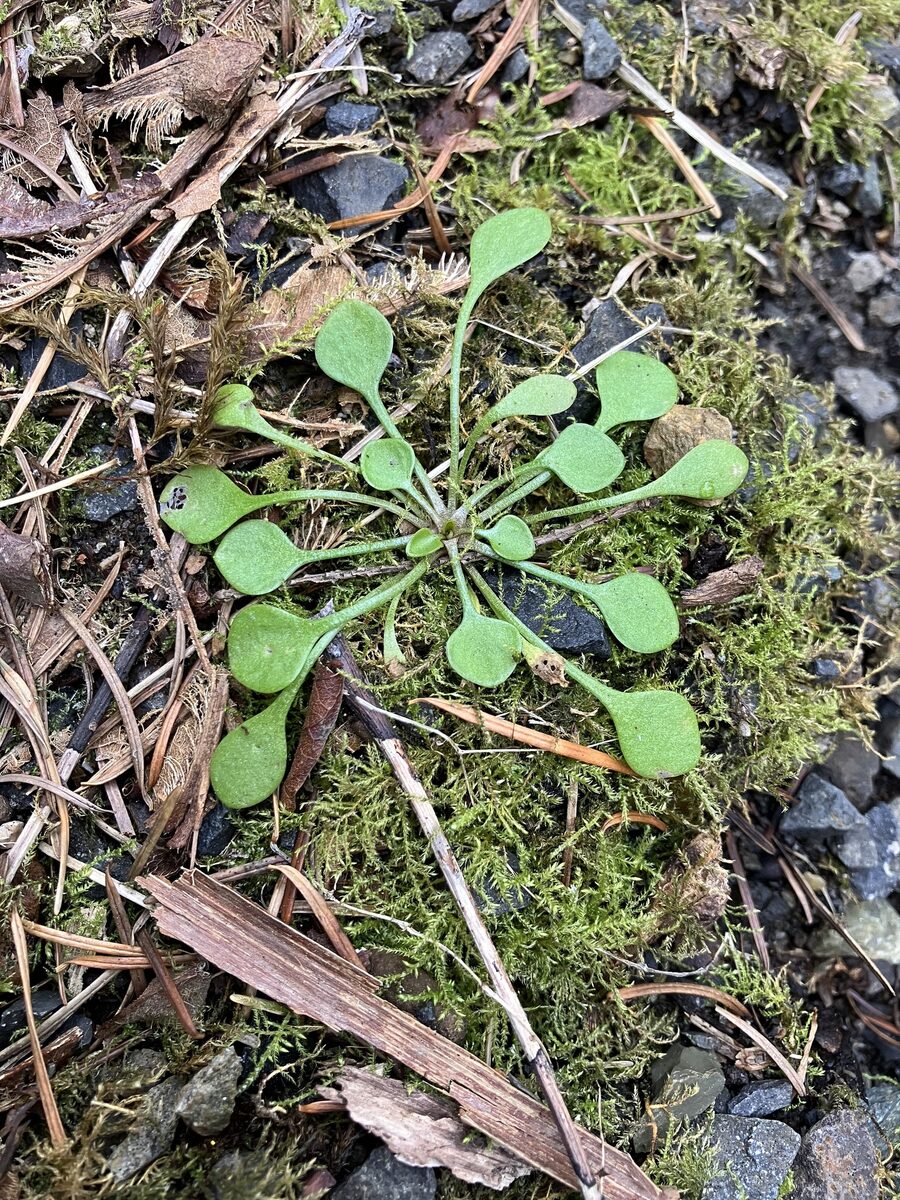
Claytonia rubra - (Howell) Tidestr.
Redstem Springbeauty
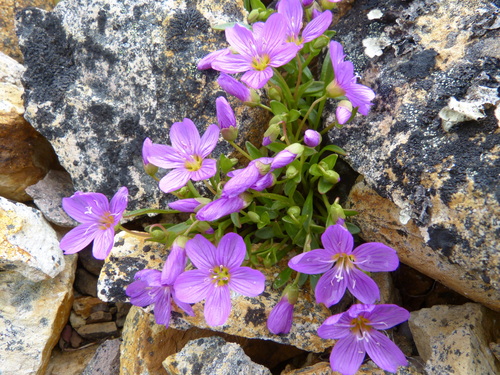
Claytonia scammaniana
Scamman's Springbeauty
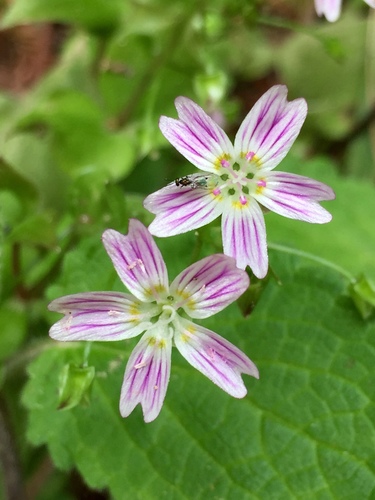
Claytonia sibirica
Pink purslane, Siberian Springbeauty, Siberian miner’s lettuce
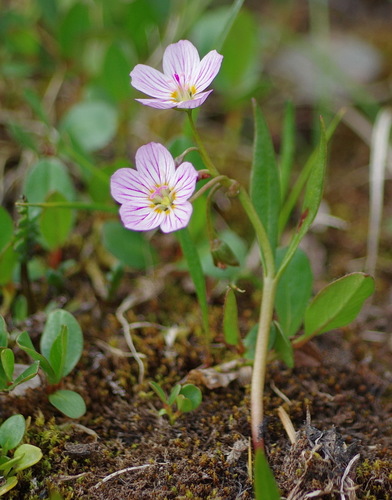
Claytonia tuberosa
Tuberous spring beauty
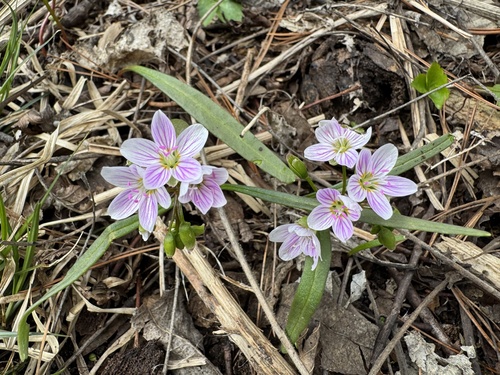
Claytonia virginica
Spring beauty, Virginia Springbeauty, Fairy spuds
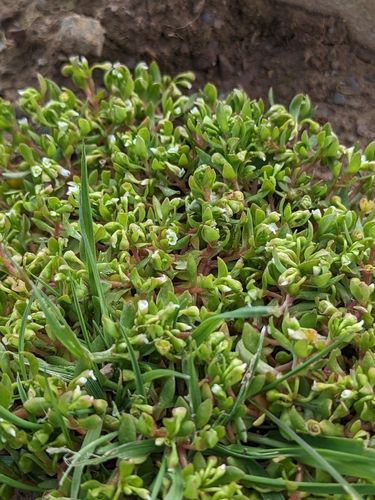
Montia fontana subsp. amporitana