Claytonia sibirica
L.
Pink purslane, Siberian Springbeauty, Siberian miner’s lettuce
iNaturalist· cc-by-nc
(c) cypripedium18, some rights reserved (CC BY-NC), uploaded by cypripedium18
iNaturalist· cc-by-nc-sa
(c) M. Goff, some rights reserved (CC BY-NC-SA), uploaded by M. Goff
iNaturalist· cc-by-nc
(c) Yury O. Kopylov-Guskov, some rights reserved (CC BY-NC), uploaded by Yury O. Kopylov-Guskov
Summary
Source: WikipediaClaytonia sibirica is a flowering plant in the family Montiaceae, commonly known as pink purslane, candy flower, Siberian spring beauty or Siberian miner's lettuce. A synonym is Montia sibirica. It is native to Aleutian Islands and western North America and has been introduced into parts of Europe and Scandinavia.
Description
An annual herb with glossy leaves. It can keep growing from year to year. It grows 20 cm tall. It grows each year from seed. It can have a few or several stems. There are a single pair of opposite leaves on these. The leaves are broadly oval. It is a spreading plant. The leaves are oval and dark green. They form a ring at the base in young plants. The leaves at the base have long stalks. At the top there is a cluster of flowers. The flowers are pink. They have 5 notched white or red petals. The flowers are 1 cm across.
Edible Uses
Leaves are edible raw or cooked, with a fairly bland flavour and a distinct earthy aftertaste similar to raw beetroot, making them quite pleasant in salads or as a cooked green. Leaves are available year-round but can turn bitter in summer, particularly in hot, dry positions. Though on the small side, they are produced in abundance and are very easy to harvest.
Traditional Uses
The leaves are eaten raw or cooked. They are slightly bitter so are best mixed with other leaves. The young leaves are mixed into salads and eaten raw. They can also be cooked briefly and eaten as a green vegetable.
Medicinal Uses
The plant is diuretic. A poultice of chewed leaves has been applied to cuts and sores. The juice has been used as eye drops for sore, red eyes. A cold infusion of the stems has been used as an antidandruff hair wash.
Distribution
It is a cool temperate climate plant. It grows well in cool and shady places. It grows in sandy and acid soils. It grows along the coastal shores and on moist open hillsides. It suits hardiness zone 4.
Where It Grows
Alaska, Australia, Britain, Canada, Europe, Ireland, North America, Siberia, Tasmania, USA,
Cultivation
A very tolerant and easily grown plant, it prefers a moist peaty soil and is unhappy in dry situations. It succeeds in full sun though is happier when given some shade and also grows in the dense shade of beech trees. Plants usually self-sow freely. This is an excellent and trouble-free salad plant. It is extremely cold-hardy and can provide edible leaves all year round in all areas of the country even if it is not given protection. Montia sibirica (L.) Howell is a synonym of Claytonia sibirica L. A clumping mat former. Forming a dense prostrate carpet spreading indefinitely.
Propagation
Sow seed in spring or autumn in situ. Germination is usually rapid.
Other Uses
A good ground cover for shady positions. Though short-lived as a perennial, it self-sows freely and forms a dense, weed-excluding mat.
Notes
It is also put in the family Portulacaceae.
Synonyms
References (9)
- Facciola, S., 1998, Cornucopia 2: a Source Book of Edible Plants. Kampong Publications, p 187 (As Montia sibirica)
- Heller, C. A., 1962, Wild Edible and Poisonous Plants of Alaska. Univ. of Alaska Extension Service. p 9
- Hibbert, M., 2002, The Aussie Plant Finder 2002, Florilegium. p 69 (As Montia sibirica)
- Irving, M., 2009, The Forager Handbook, A Guide to the Edible Plants of Britain. Ebury Press p 259
- Jackes, D. A., Edible Forest Gardens (As Montia sibirica)
Show all 9 references Hide references
- Kermath, B. M., et al, 2014, Food Plants in the Americas: A survey of the domesticated, cultivated and wild plants used for Human food in North, Central and South America and the Caribbean. On line draft. p 241
- MacKinnon, A., et al, 2009, Edible & Medicinal Plants of Canada. Lone Pine. p 205
- Plants for a Future database, The Field, Penpol, Lostwithiel, Cornwall, PL22 0NG, UK. http://www.scs.leeds.ac.uk/pfaf/
- USDA Plants Database
More from Montiaceae
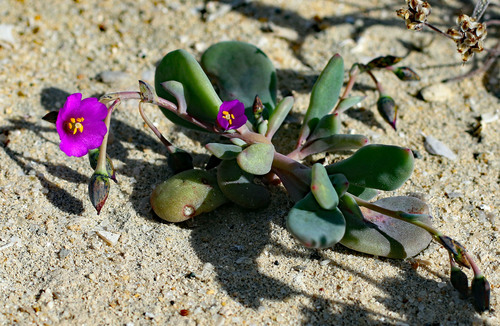
Cistanthe maritima
Seaside cistanthe
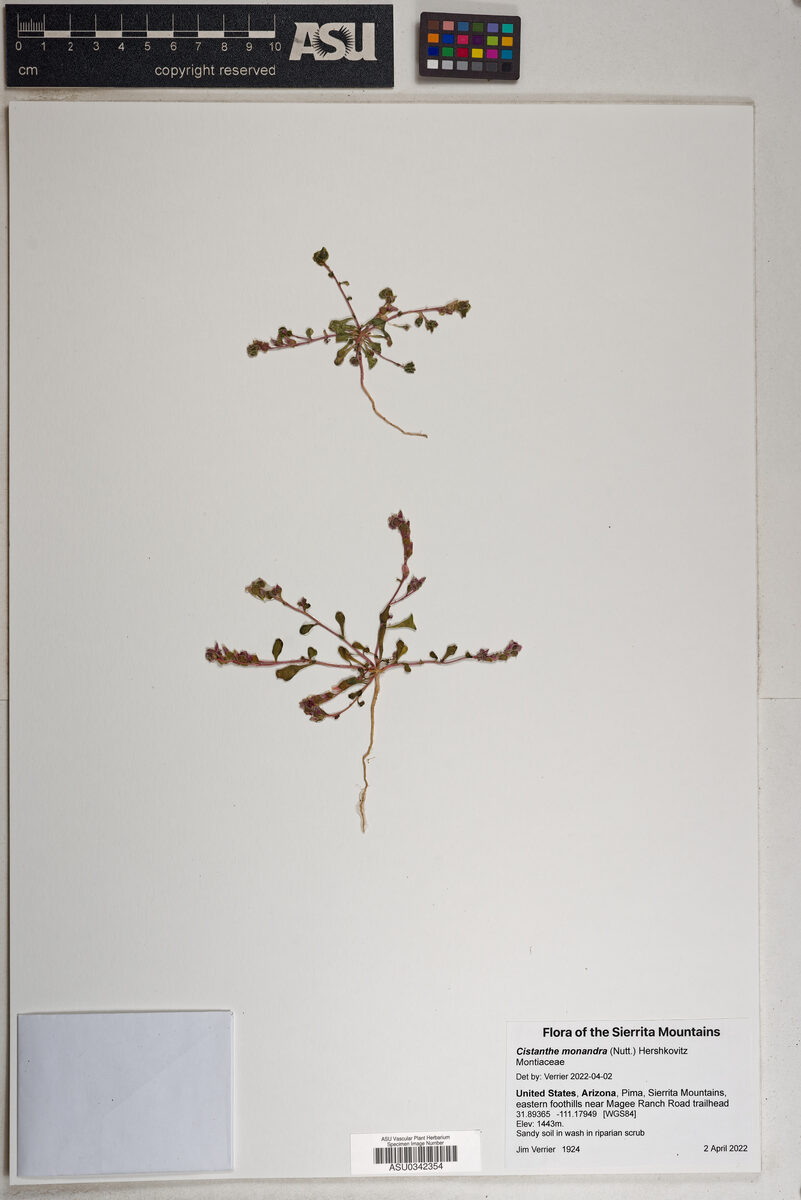
Cistanthe monandra
Common Pussypaws
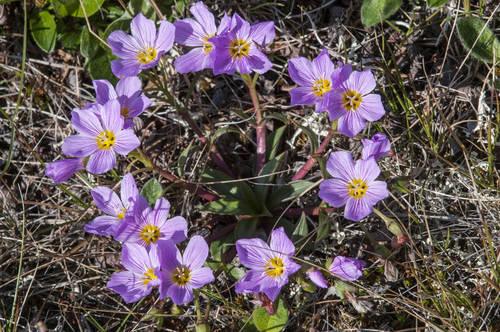
Claytonia acutifolia
Bering Sea spring beauty, Siberian narrow-leafed spring beauty
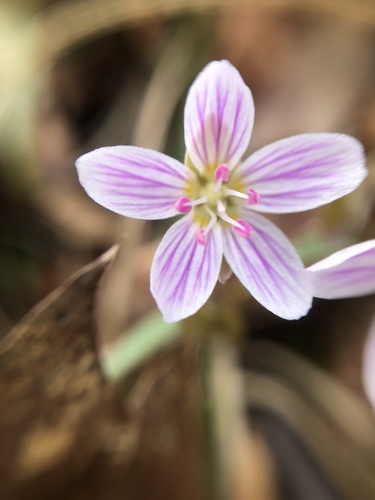
Claytonia caroliniana
Carolina spring beauty, Broad-leaved spring beauty
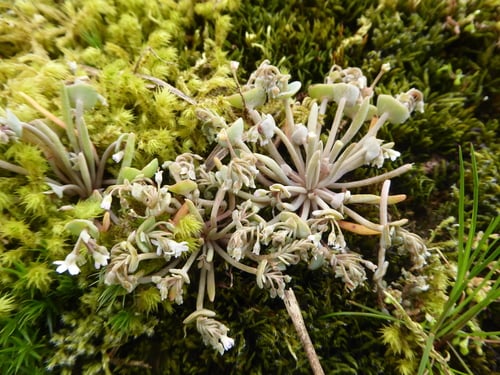
Claytonia exigua
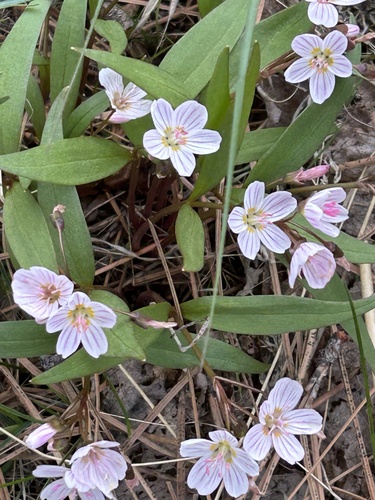
Claytonia lanceolata
Western spring beauty, Lanceleaf spring beauty