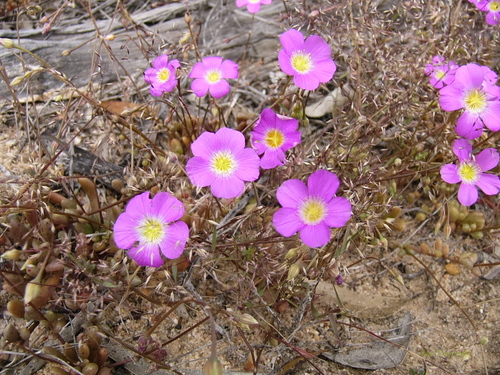
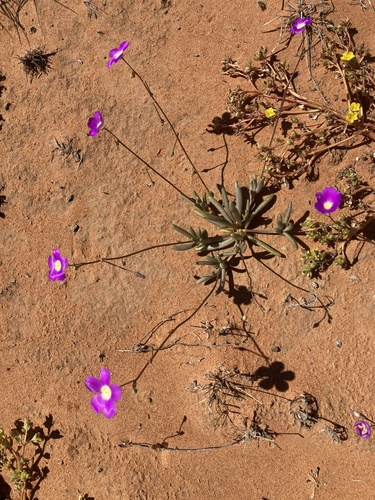
Claytonia rosea
Rydb.
Rosy Springbeauty
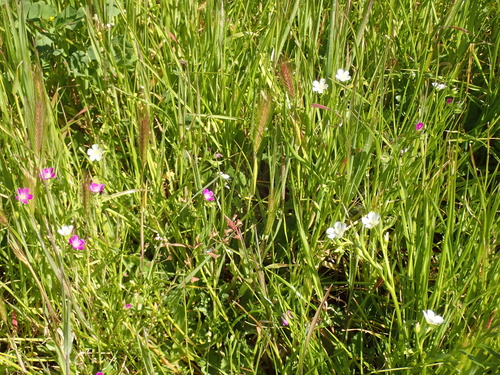
iNaturalist· cc-by-nc
(c) Suzanne Dingwell, some rights reserved (CC BY-NC), uploaded by Suzanne Dingwell
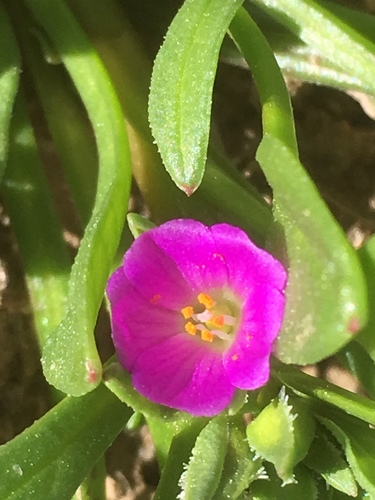
iNaturalist· cc-by-nc
(c) Doug Grinbergs, some rights reserved (CC BY-NC), uploaded by Doug Grinbergs
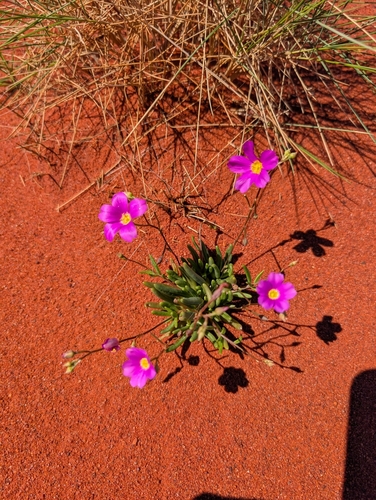
iNaturalist· cc-by-nc
(c) Nathan Taylor, some rights reserved (CC BY-NC), uploaded by Nathan Taylor
Description
Claytonia rosea is a PERENNIAL growing to 0.2 m (0ft 6in) by 0.2 m (0ft 6in) at a fast rate. See above for USDA hardiness. It is hardy to UK zone 4. The flowers are pollinated by Insects. It is noted for attracting wildlife. Suitable for: light (sandy), medium (loamy) and heavy (clay) soils and prefers well-drained soil. Suitable pH: mildly acid, neutral and basic (mildly alkaline) soils. It can grow in semi-shade (light woodland) or no shade. It prefers moist soil.
Edible Uses
Edible leaves and likely excellent edible tubers, with harvest best timed to bloom for visibility and safe identification. Edible Uses & Rating: Leaves are edible and useful as a minor spring green. Tubers are the main edible resource and, by close relationship and structural similarity, are expected to be comparable in value to other edible springbeauty tubers. Overall food rating depends heavily on abundance, because yield per individual plant is limited even when tubers are larger. Taste, Processing & Kitchen Notes: Leaves are typically mild and tender when young. Tubers are expected to be starchy and potato-like, with the same general culinary flexibility as other springbeauties. Boiling and roasting are the most practical methods, and whole-tuber cooking minimizes loss. If tubers are large enough, they can be sliced and dried to create a storable product or ground into a flour-like meal. Seasonality (Phenology): Commonly blooms in spring, often March through May, depending on elevation and local climate. Edible leaves are best early. Tubers are present through the plant’s active season, but harvest is most practical during bloom when plants are easy to locate and confirm. Safety & Cautions (Food Use): As with any tuber harvest, the safety priority is correct identification and avoiding indiscriminate digging of unknown underground storage organs. Ethical harvest is also important: take tubers only where populations are clearly abundant and local rules allow it. Harvest & Processing Workflow: Locate plants during bloom, confirm identification, then excavate broadly to account for offset tubers. Rinse thoroughly and cook simply by boiling or roasting. If using leaves, take only small amounts from many plants to reduce stress on any one individual. Cultivar/Selection Notes: No notable cultivars; natural color variation in flowers may occur. Look-Alikes & Confusion Risks: Genus-level confusion is low during bloom, but underground confusion risk rises if digging outside of the flowering season. Always tie tubers to a confirmed, intact plant. Traditional / Indigenous Use Summary: Tuber-bearing springbeauties fit a well-known pattern of Indigenous use across the West, where small geophytes could provide reliable starchy food during seasonal transitions. Documentation may vary by region, but the food logic is consistent with other Claytonia tubers.
Known Hazards
As with any tuber harvest, the safety priority is correct identification and avoiding indiscriminate digging of unknown underground storage organs. Ethical harvest is also important: take tubers only where populations are clearly abundant and local rules allow it.
Distribution
Arizona, New Mexico, Utah, Colorado, and Wyoming.
Where It Grows
US. USA. Arizona, Colorado, Mexico Northeast, New Mexico, Utah
Cultivation
Rosy springbeauty is a small spring perennial with potentially high-value tubers and pleasant leaves, best considered a seasonal delicacy and carbohydrate opportunity where it is locally abundant. Growing Conditions: Rosy springbeauty is associated with oak and pine communities, generally in soils that provide spring moisture followed by seasonal drying. It occupies the same ecological niche as other spring ephemerals that “race” through growth before summer stress. Claytonia rosea (Western Springbeauty) generally prefers partial shade to full sun, particularly in areas with moist, well-drained, nutrient-rich soil. While it is a versatile, low-growing perennial native to mountainous, woody areas, it thrives best in conditions that mimic its natural habitat. Habitat & Range: Reported from Arizona, New Mexico, Utah, Colorado, and Wyoming, generally in upland woodland communities. Size & Landscape Performance: Small above ground, potentially more substantial below ground due to larger tuber size. In gardens, it would behave as a spring-emergent perennial that needs dormancy cycles respected. Cultivation (Horticulture): Cultivation is possible for native plant gardeners, but harvesting tubers conflicts with ornamental persistence. It is best grown for spring flowers and occasional leaf sampling rather than as a “dig-and-eat” crop. Pests & Problems: The main constraint is scarcity and the short season. As with other spring beauties, digging can easily miss tubers if done narrowly or carelessly. Pollination: Likely pollinated by spring-active insects attracted to showy petals and striping that function as nectar guides. Identification & Habit: This is a small perennial arising from a globe-shaped tuber that can be much larger than those of western springbeauty. It typically has two cauline leaves that are free and often stalked, and it produces showy, striped pinkish-purple flowers in racemes with multiple bracts. The combination of habitat, flower color, and the springbeauty form makes genus-level recognition straightforward. COMMON NAMES: Rosy springbeauty, Rocky Mountain springbeauty, western springbeauty (regional usage). USDA Hardiness Zones: Approx. Zones 3–8. Typical Size: About 2–15 cm tall; perennial arising from a larger globe-shaped tuber.
Propagation
Propagation is by seed and tuber persistence. Establishment tends to be slow, typical of many small perennial geophytes.
Other Uses
Provides early flowers for pollinators and participates in spring energy flow in woodland ecosystems. Tubers may be eaten by wildlife, contributing to its ecological role as a spring carbohydrate store. Cultivation is possible for native plant gardeners, but harvesting tubers conflicts with ornamental persistence. It is best grown for spring flowers and occasional leaf sampling rather than as a “dig-and-eat” crop.
Synonyms
Also Known As
Rosy springbeauty, Rocky Mountain springbeauty, western springbeauty (regional usage).