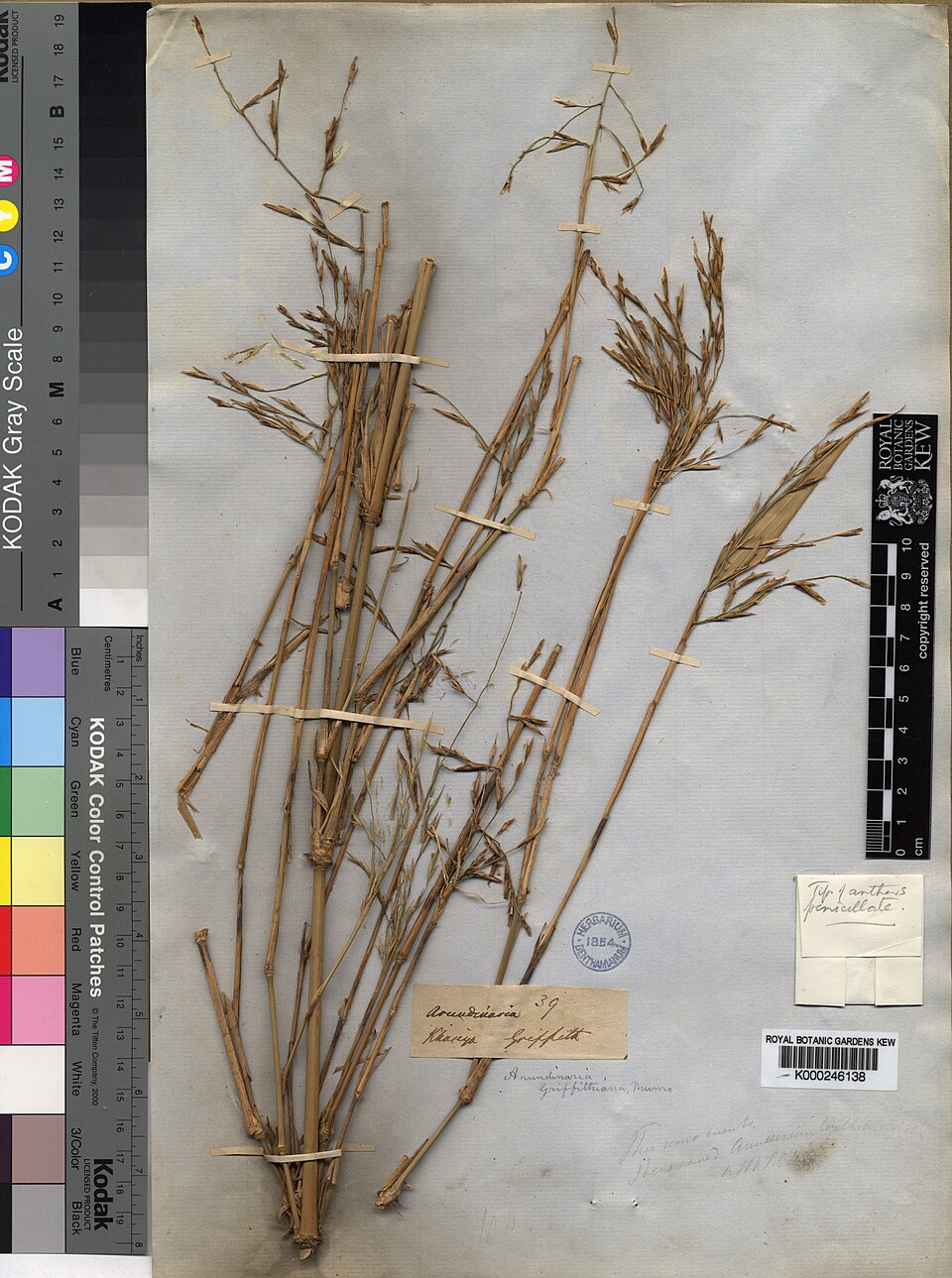
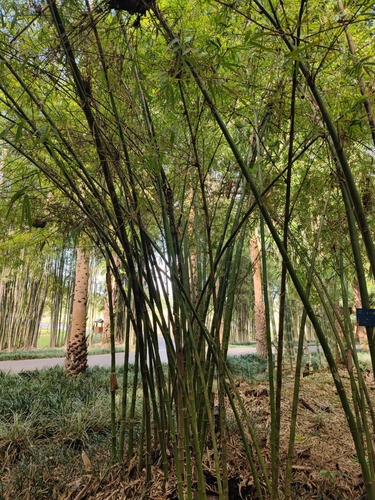
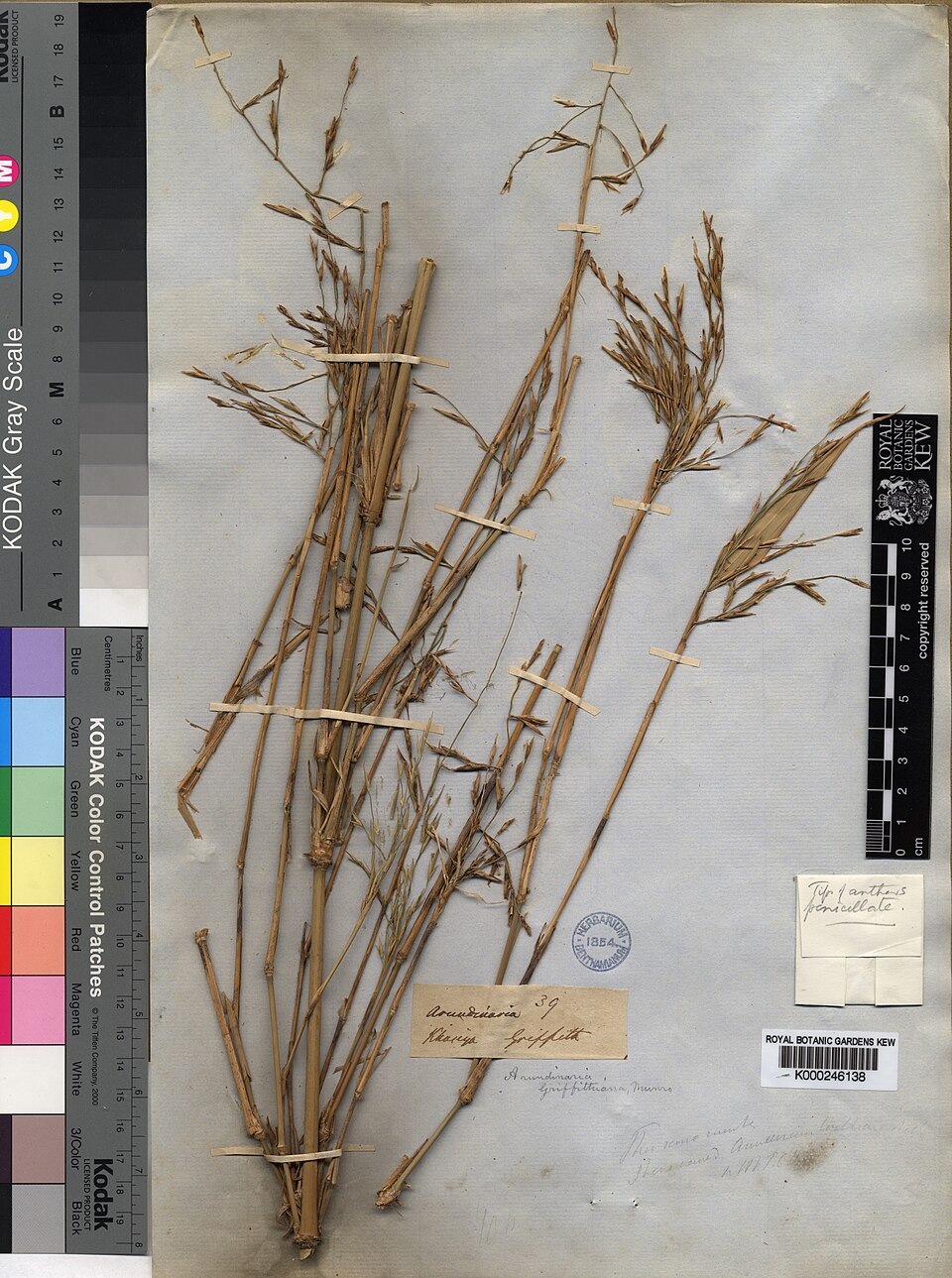
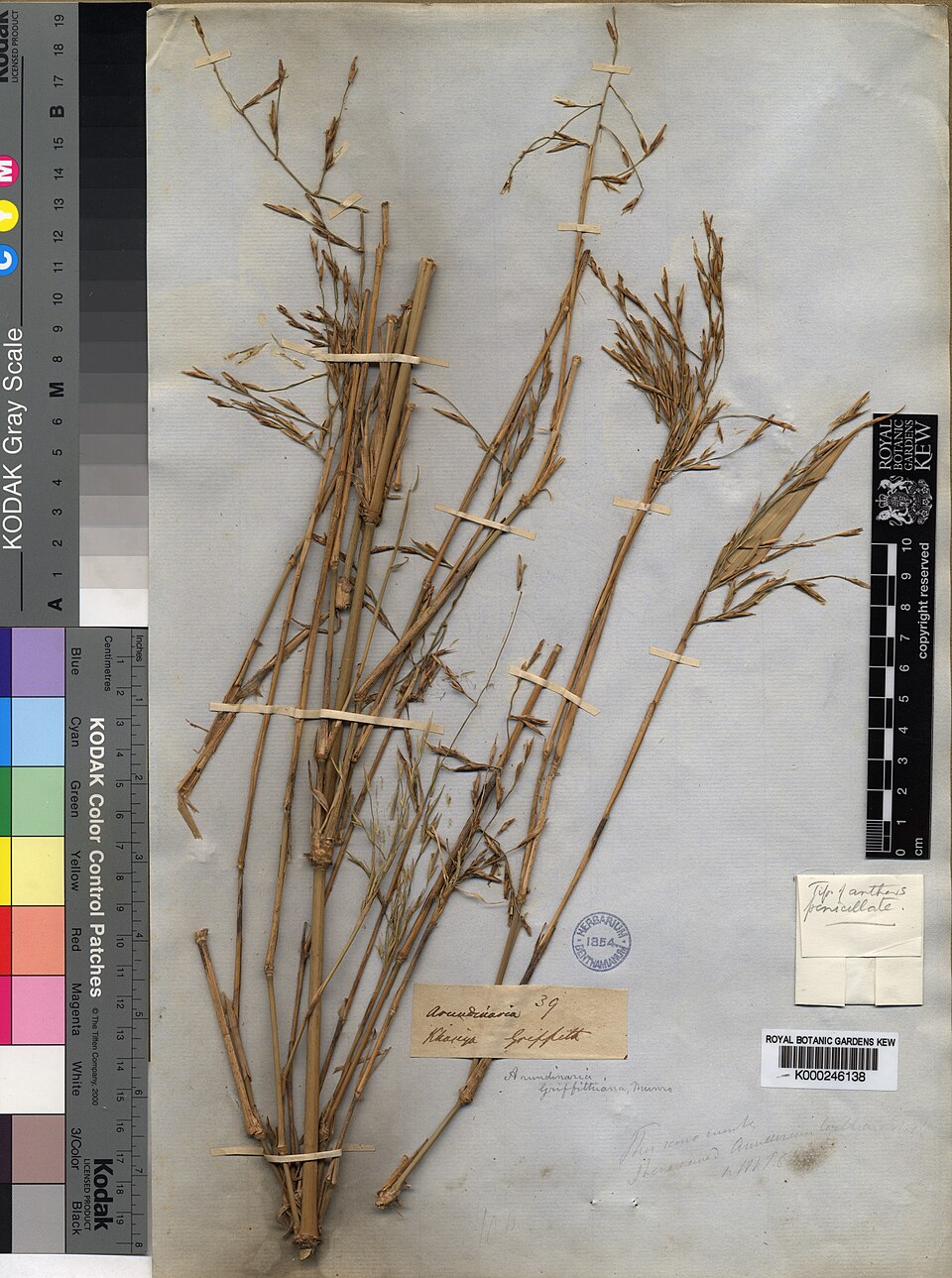
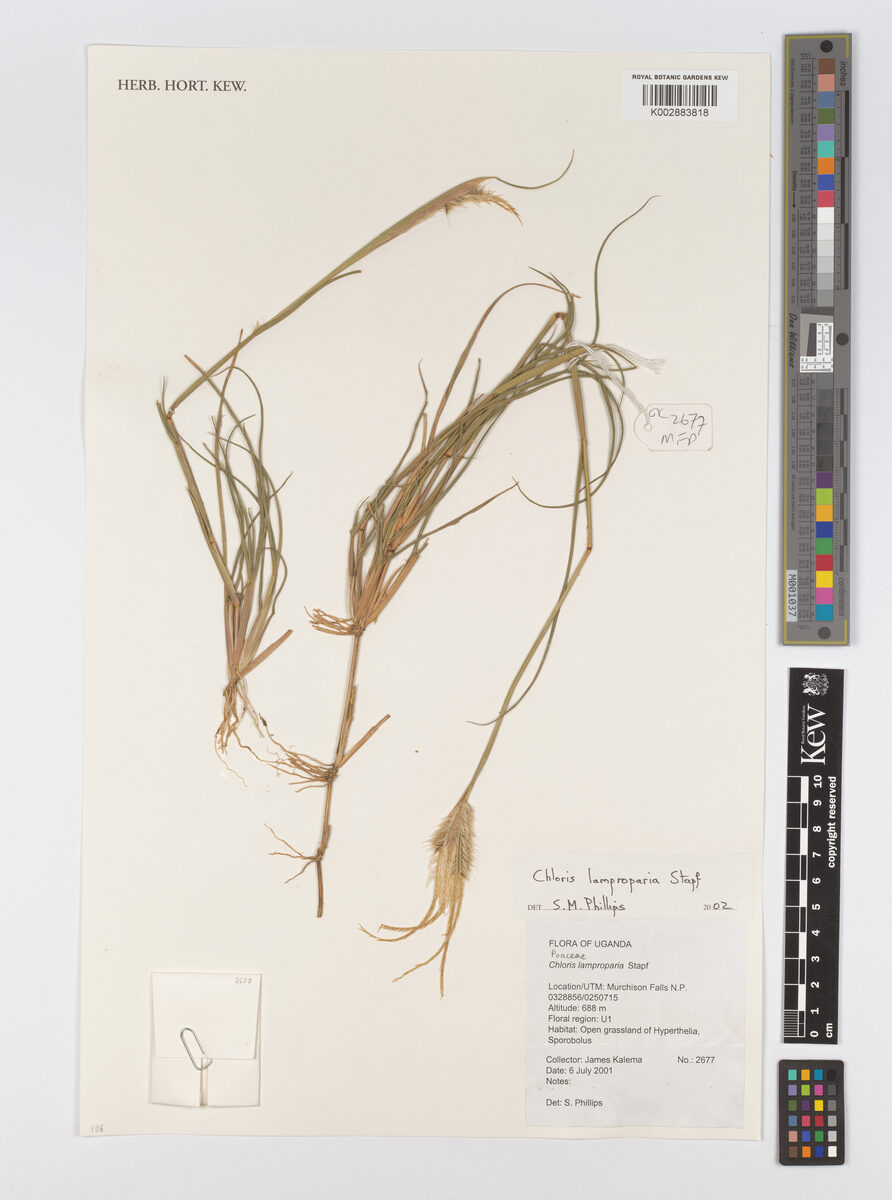
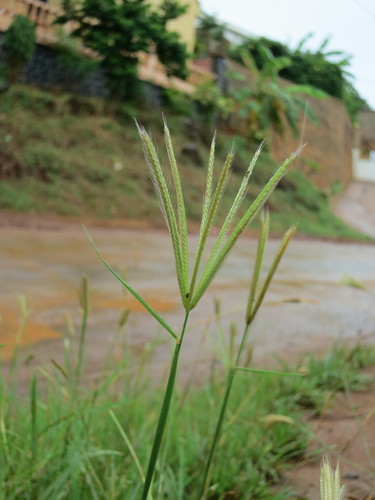
Eragrostis cilianensis
(All.) Vignolo ex Janchen
Stink grass, Smelly lovegrass
iNaturalist· cc-by
(c) Kevin Faccenda, some rights reserved (CC BY), uploaded by Kevin Faccenda
iNaturalist· cc-by-nc
(c) Michal Ducháček, some rights reserved (CC BY-NC)
iNaturalist· cc-by-nc
(c) Michal Ducháček, some rights reserved (CC BY-NC)
Summary
Source: WikipediaEragrostis cilianensis is a species of grass known by several common names, including stinkgrass, candy grass, and gray lovegrass.
Description
An annual grass. It forms tufts. It grows to 60 cm high. It has an unpleasant smell. The leaf blades are 8 mm wide. They have small dark glands along the edge. The flower panicle is narrow. It is 5-20 cm long. There is a dark ring of glands on the axis below the lower branches of the flower. The spikelets are narrow and 6-18 mm long. There are 10-30 flowers.
Edible Uses
Seed - eaten as a cereal. It can be made into cakes or eaten as a gruel. The seed is small and fiddly to utilize - it is most commonly seen as a famine food, used when nothing better is available. The grass is edible, and is taken as a normal part of the diet by people in the Lake Chad area. Does this refer to the leaves or the seed?.
Traditional Uses
The seeds are used for making bread and also for beer. They are also used for porridge.
This uses section is brief — help expand it
Medicinal Uses
A root-decoction is taken as a treatment against flu in the event of an epidemic.
Known Hazards
This is a famine food, suggesting limited nutritional value or acceptability outside emergency situations.
Distribution
It grows in subtropical and warm temperate places. It often gets established in poor open pasture. It grows between sea level and 2,000 m above sea level. It can grow in arid places. In Argentina it grows from sea level to 3,000 m above sea level. Tasmanian Herbarium.
Where It Grows
Afghanistan, Africa, Albania, Algeria, Angola, Argentina, Armenia, Asia, Australia, Azerbaijan, Azores, Balkans, Belgium, Belize, Bermuda, Bolivia, Botswana, Brazil, Britain, Bulgaria, Burkina Faso, Burundi, Cameroon, Canada, Cape Verde, Caribbean, Caucasus, Central Africa, Central African Republic, CAR, Central America, Central Asia, Chad, Chile, China, Congo, Costa Rica, Côte d'Ivoire, Cyprus, Czech Republic, East Africa, Ecuador, Egypt, El Salvador, Eswatini, Ethiopia, Europe, France, Gabon, Georgia, Germany, Ghana, Greece, Guatemala, Honduras, Hungary, India, Indochina, Iran, Iraq, Israel, Italy, Ivory Coast, Japan, Kazakhstan, Kenya, Korea, Kyrgyzstan, Lebanon, Lesotho, Libya, Lord Howe Island, Madagascar, Malawi, Malaysia, Mali, Mauritania, Mediterranean, Mexico, Middle East, Moldova, Morocco, Mozambique, Myanmar, Namibia, Nicaragua, Niger, Nigeria, North Africa, North America, Pakistan, Paraguay, Peru, Portugal, Romania, Rwanda, Sahel, Scandinavia, SE Asia, Senegal, Slovakia, Somalia, South Africa, Southern Africa, South America, Spain, Sri Lanka, St Helena, Sudan, Swaziland, Sweden, Switzerland, Syria, Taiwan, Tajikistan, Tanzania, Tasmania, Thailand, Tunisia, Turkey, Türkiye, Turkmenistan, Uganda, Ukraine, United Arab Emirates, UAE, Uruguay, USA, Venezuela, West Africa, Yemen, Yugoslavia, Zambia, Zimbabwe,
Cultivation
A common weed of cultivation. In some parts of the USA, where it has become naturalised, it is considered a pest, whilst in Sudan it is a weed of irrigated land.
Propagation
Seed - sow in situ, only just covering the seed. Germination is usually very quick and free.
Other Uses
The culm yields straw that is used for thatching, though its quality is inferior. It is made into palliasses in Kordofan, and plaited into circular covers for pots holding milk or millet mash in the process of fermentation. People in N Nigeria make the straw into matting. The plant's vigorous habit makes it useful as a pioneer coloniser, - it is used in Tanzania, along with some other grasses, in reclaiming eroded land.
Other Information
It is a famine food.
Notes
There are about 300 Eragrostis species.
Synonyms
Also Known As
Bettada akabu hullu, Ginchile, Kaodia, Ranpohe, Samba lani, Tsimbony
References (27)
- Abbiw, D.K., 1990, Useful Plants of Ghana. West African uses of wild and cultivated plants. Intermediate Technology Publications and the Royal Botanic Gardens, Kew. p 25
- Ambasta, S.P. (Ed.), 2000, The Useful Plants of India. CSIR India. p 197
- Burkill, H. M., 1985, The useful plants of west tropical Africa, Vol. 2. Kew.
- Curtis, W.M., & Morris, D.I., 1994, The Student's Flora of Tasmania. Part 4B St David's Park Publishing, Tasmania, p 325
- Dalziel, J. M., 1937, The Useful plants of west tropical Africa. Crown Agents for the Colonies London.
Show all 27 references Hide references
- Dashorst, G.R.M., and Jessop, J.P., 1998, Plants of the Adelaide Plains & Hills. Botanic Gardens of Adelaide and State Herbarium. p 180
- Flora of Australia Volume 49, Oceanic Islands 1, Australian Government Publishing Service, Canberra. (1994) p 475
- Flora of Pakistan. www.eFloras.org
- Grivetti, L. E., 1980, Agricultural development: present and potential role of edible wild plants. Part 2: Sub-Saharan Africa, Report to the Department of State Agency for International Development. p 32
- Hussey, B.M.J., Keighery, G.J., Cousens, R.D., Dodd, J., Lloyd, S.G., 1997, Western Weeds. A guide to the weeds of Western Australia. Plant Protection Society of Western Australia. p 54
- Jardin, C., 1970, List of Foods Used In Africa, FAO Nutrition Information Document Series No 2.p 3
- Lamp, C.A., Forbes, S.J. and Cade, J.W., 1990, Grasses of Temperate Australia. Inkata Press. p 162
- Lazarides, M. & Hince, B., 1993, Handbook of Economic Plants of Australia, CSIRO. p 91
- Long, C., 2005, Swaziland's Flora - siSwati names and Uses http://www.sntc.org.sz/flora/
- Lulekal, E., et al, 2011, Wild edible plants in Ethiopia: a review on their potential to combat food insecurity. Afrika Focus - Vol. 24, No 2. pp 71-121
- Mitt. Naturwiss. Vereins Univ. Wien ser. 2, 5:110. 1907 (Vignolo, Malpighia 18:386. 1904, pro syn.)
- Mutie, F. M., et al, 2023, Important Medicinal and Food Taxa (Orders and Families) in Kenya, Based on Three Quantitative Approaches. Plants 2023, 12, 1145
- Paczkowska, G. & Chapman, A.R., 2000, The Western Australian Flora. A Descriptive Catalogue. Western Australian Herbarium. p 104
- Peters, C. R., O'Brien, E. M., and Drummond, R.B., 1992, Edible Wild plants of Sub-saharan Africa. Kew. p 22
- Royal Botanic Gardens, Kew (1999). Survey of Economic Plants for Arid and Semi-Arid Lands (SEPASAL) database. Published on the Internet; http://www.rbgkew.org.uk/ceb/sepasal/internet [Accessed 3rd June 2011]
- Ruiters-Welcome, A. K., 2019, Food plants of southern Africa. Ph.D. thesis. Univ. of Johannesburg p 87
- Swaziland's Flora Database http://www.sntc.org.sz/flora
- Tasmanian Herbarium Vascular Plants list p 85
- van Wyk, Be, & Gericke, N., 2007, People's plants. A Guide to Useful Plants of Southern Africa. Briza. p 10
- Welcome, A. K. & Van Wyk, B.-E., 2019, An inventory and analysis of the food plants of southern Africa. South African Journal of Botany 122 (2019) 136–179
- Wheeler, J.R.(ed.), 1992, Flora of the Kimberley Region. CALM, Western Australian Herbarium, p 1163
- World Checklist of Useful Plant Species 2020. Royal Botanic Gardens, Kew