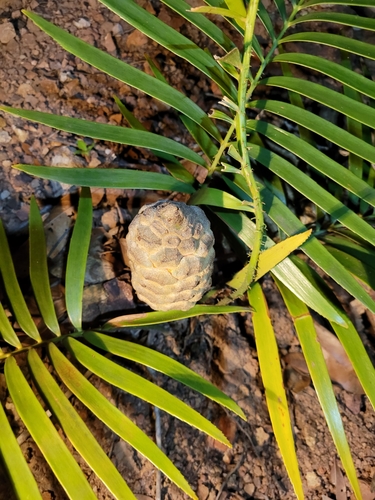
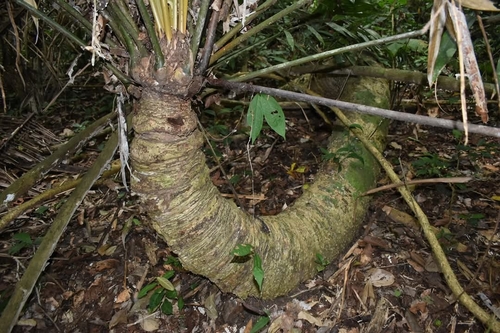
Encephalartos altensteinii
Lehm.
Breadtree, Eastern Cape Cycad, Prickly cycad
iNaturalist· cc-by-nc
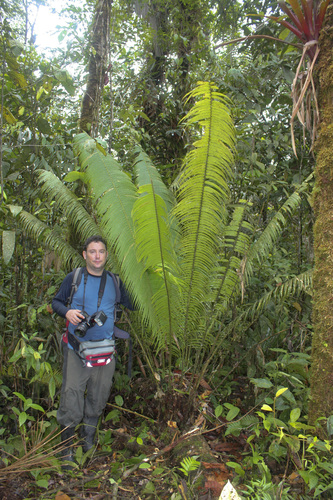
(c) qgrobler, some rights reserved (CC BY-NC), uploaded by qgrobler
iNaturalist· cc-by-nc
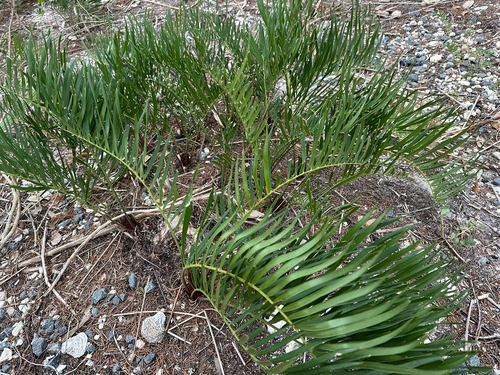
(c) avrilweir, some rights reserved (CC BY-NC)
iNaturalist· cc-by-nc
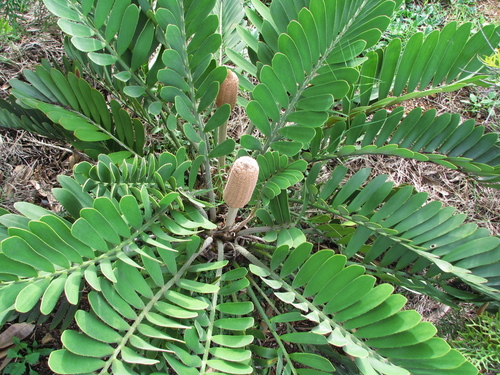
(c) qgrobler, some rights reserved (CC BY-NC), uploaded by qgrobler
Summary
Source: WikipediaEncephalartos altensteinii is a species of palm-like cycad in the family Zamiaceae. It is endemic to South Africa. The species name altensteinii commemorates Altenstein, a 19th-century German chancellor and patron of science. It is commonly known as the breadtree, broodboom, Eastern Cape giant cycad or uJobane (Zulu). It is listed as vulnerable due to habitat destruction, use for traditional medicine and removal by collectors.
Description
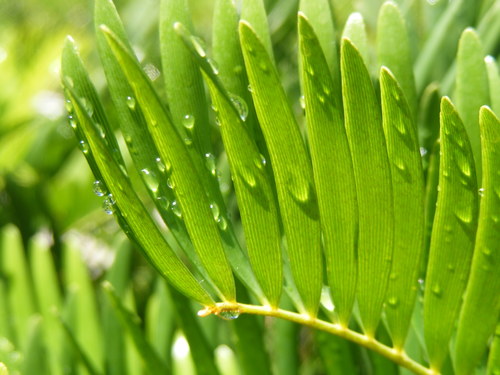
A tall cycad. The stem is 6.5 m tall. The tree may or may not have branches. The leaves are 3 m long and are straight or curved backwards. The leaflets are rigid and broad. They are 15 cm long and can be 2.5 cm across. Usually there are teeth on the edges. The fruit are cones and usually 2-5 cones occur together. The male cones are greenish yellow and up to 50 cm long by 12 cm across and the female cones are 55 cm long by 28 cm wide. The female cone has protuberances over it. The seed are about 3.5 cm long. The are bright red.
Edible Uses
The seeds have historically been eaten during famines, though normally regarded as poisonous. The gum from the cone is edible, as is the pith.
Traditional Uses
The seeds have been recorded as eaten in times of famine. Normally they are regarded as poisonous. The gum from the cone is edible.
This uses section is brief — help expand it
Known Hazards
The seeds are normally regarded as poisonous.
Distribution
It is a tropical plant. It occurs in coastal regions. It grows in low forest and on rocky hillsides. It needs well drained soil. It can grow in part shade. In Adelaide Botanical Gardens. It grows in hardiness zones 10-11.
Where It Grows
Africa, Asia, Australia, Indonesia, SE Asia, Singapore, South Africa*, Southern Africa,
Cultivation
Plants can be grown from seeds or suckers. It can be grown from pieces of the stem.
Production
It is very slow growing.
Notes
There are about 50 Encephalartos species. Probably in a hot house in Slovenia.
Synonyms
Also Known As
Sikas raksasa afrika selatan
References (12)
- Cundall, P., (ed.), 2004, Gardening Australia: flora: the gardener's bible. ABC Books. p 536
- Etherington, K., & Imwold, D., (Eds), 2001, Botanica's Trees & Shrubs. The illustrated A-Z of over 8500 trees and shrubs. Random House, Australia. p 278
- Joffe, P., 2007, Creative Gardening with Indigenous Plants. A South African Guide. Briza. p 225
- Jones, D.L., 2000, Cycads of the world. Reed New Holland. p180
- Kew Plants of the World Online
Show all 12 references Hide references
- Marinelli, J. (Ed), 2004, Plant. DK. p 370
- Nov. stirp. pug. 6:11, t. 4, 5. 1834
- Palgrave, K.C., 1996, Trees of Southern Africa. Struik Publishers. p 46
- Palmer, E and Pitman, N., 1972, Trees of Southern Africa. Vol. 1. A.A. Balkema, Cape Town p 319
- Peters, C. R., O'Brien, E. M., and Drummond, R.B., 1992, Edible Wild plants of Sub-saharan Africa. Kew. p 7
- Sukarya, D. G., (Ed.) 2013, 3,500 Plant Species of the Botanic Gardens of Indonesia. LIPI p 827
- Van Wyk, Br. and van Wyk P., 2009, Field Guide to Trees of Southern Africa. Struik Nature. p 58