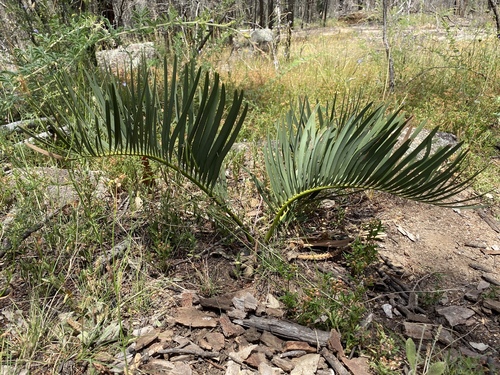
Zamia chigua
Seemann
Chigua
iNaturalist· cc-by-nc
(c) michaelcalonje, some rights reserved (CC BY-NC)
iNaturalist· cc-by-nc
(c) michaelcalonje, some rights reserved (CC BY-NC)
iNaturalist· cc-by-nc
(c) michaelcalonje, some rights reserved (CC BY-NC)
Summary
Source: WikipediaZamia chigua is a species of plant in the family Zamiaceae. It is found in Choco Department of Colombia and (Chiriquí Province) of Panama. Its natural habitat is subtropical or tropical moist lowland forests.
Description
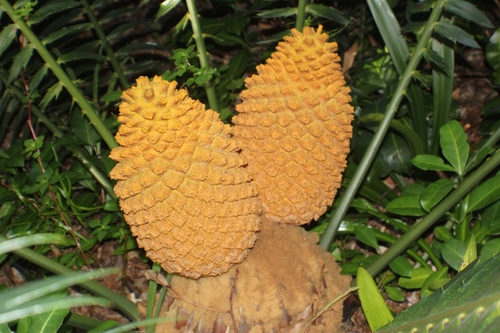
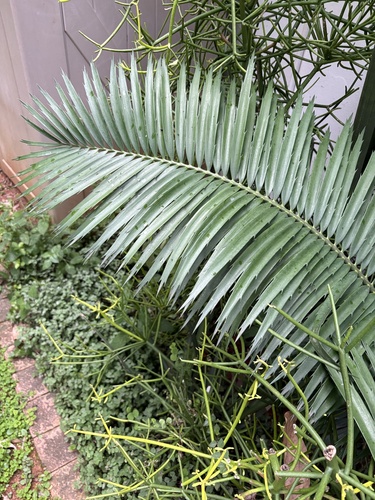
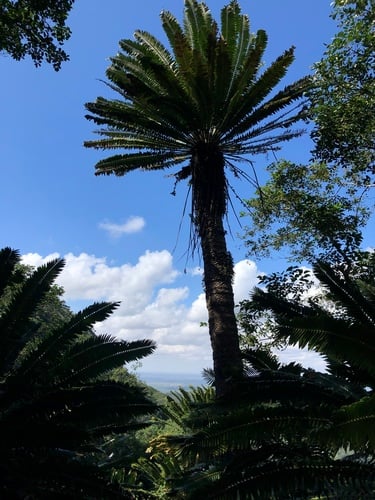
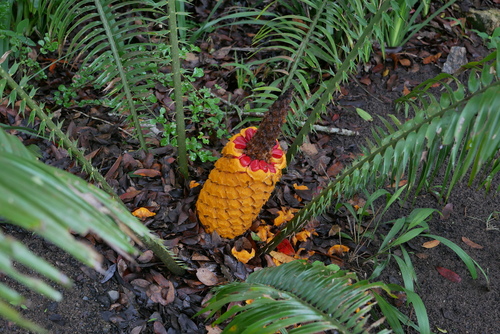
A medium sized cycad. The trunk is 2 m long and 15 cm across. It has a wrinkled appearance. The young leaves are pale green. The mature leaves are 0.5-3 m long. About 3-15 leaves form a graceful arching crown. The leaf stalk is 30-100 cm long. It is swollen at the base and covered with prickles. There are 30-140 leaflets on each leaf. These are 10-30 cm long by 1-1.5 cm wide. They are crowded and overlapping. They are thin textured. They taper to the base. The male cone is 10-20 cm long by 2-3 cm wide. They are light yellow with short hairs. The female cones are 20-30 cm long by 8-12 cm wide. They are barrel shaped and light brown. They have short hairs. The seeds are 3-3.5 cm long by 1.5-2 cm wide. They are red.
Edible Uses
All parts of this plant are potentially toxic and should not be eaten unless effective measures are taken to remove the toxins. Seeds - boiled and mashed before being eaten. The ovoid seeds are 30 - 35mm long and 15 - 20mm in diameter, contained in an oblong cone around 20 - 30cm long and 8 - 12cm in diameter.
Traditional Uses
The seeds are boiled and mashed and served with milk and sugar. They are also used to make bread.
This uses section is brief — help expand it
Known Hazards
We have no specific information for this species, but most if not all members of this genus are believed to contain toxins. The two main toxic compounds that have been identified are cycasin and macrozamin. When ingested in sufficient quantities, these compounds are extremely poisonous to humans and many other animals, and have been shown to cause liver damage and cancer. Cycasin and macrozamin have a cumulative effect upon the body and are suspected of causing neurological disorders when ingested in small amounts over long periods of time. There is a long history of human use of this genus as a starch-rich food, but it should be noted that the plants needed to be treated in various ways in order to remove any toxic principles. Caution should be exercised even with properly prepared foods, since even then regular consumption may lead to severe health problems and death. Since many of these species are becoming increasingly rare in the wild, this is probably a food best left to times of food shortage when other, better foods, are not available.
Distribution
A tropical plant. In Colombia it grows in lowland rainforest. In Panama it grows between 600-1200 m altitude. It suits tropical and warm subtropical regions. It needs warmth, humidity, shade and free air movement. They are very forst sensitive.
Where It Grows
Central America, Colombia, New Granada, Nicaragua, Panama, South America,
Cultivation
Plants are grown from fresh seed.
Propagation
Seed - remove the fleshy coating and surface sow on damp sand. Germination is best at around 23 - 29°c. Pot up young seedlings into a rich, moist medium, as soon as they are large enough to handle and grow on at high temperatures without any check to growth until 2 - 3 leaves have been produced at one time, otherwise they may enter dormancy.
Notes
There are about 55 Zamia species.
References (5)
- Bot. voy. Herald 201, t. 43. 1854
- Hedrick, U.P., 1919, (Ed.), Sturtevant's edible plants of the world. p 691
- Jones, D.L., 2000, Cycads of the world. Reed New Holland. p 274
- Menninger, E.A., 1977, Edible Nuts of the World. Horticultural Books. Florida p 164
- Wickens, G.E., 1995, Edible Nuts. FAO Non-wood forest products. FAO, Rome. p179